Archive | July, 2024

Deadpool & Wolverine

27 Jul

Mouth meets multiverse in a super sequel, this time inducing some yawns


Bigger isn’t always better. The initial “Deadpool” (2016) entry was crass, curt and ingeniously fresh in its fourth-wall-breaking delivery and dark humor. Ryan Reynolds was a revelation as the potty-mouthed superhero who can’t die, and the plucky gut punch sparked a possible resurrection of an increasingly dull and dying genre. “Deadpool 2” (2018) came out with the same kick and verve, but the trick was starting to thin as the plots thickened – and now, with “Deadpool & Wolverine,” the “more” is too much when the charms of yesteryear (nearly 10 years ago) largely float around like the remains of a bad, high-fiber meal left unflushed.

How did we get here? Let’s keep in mind that “Deadpool” was a Marvel outlier owned by 20th Century Fox while Disney held most of the rest of the Marvel Universe in its IP vault. Now that Disney has gobbled up Fox, it’s an all-for-one cross-breeding box office grab. Match ’em up, shift ’em around and listen to that cash register go ka-ching.  This is not the first time Deadpool and Wolverine have crossed cinematic paths: Deadpool made an appearance in “X-Men Origins: Wolverine” (2009), back before the mega merge. Now coveted eggs nestled under the same corporate structure, they team up – kinda – though oddly there’s no “Hey, remember back when” immortal bro moment.

What we get is Deadpool’s unmasked, badly disfigured street person, Wade Wilson, stashing away his cool red costume and ninja swords for a stapled-on toupee and a job as a car seller. He’s just been rejected by the Avengers as a team member and his girlfriend Vanessa (Morena Baccarin) has moved on too.  The removal of the mask mutes the rapid, rapier wit that usually spew from Deadpool’s mouth – that is, until he’s abducted through a time portal by an agency know as the Time Variance Authority, run by a smug, Trumpian suit named Mr. Paradox (Matthew Macfadyen of “Succession,” having hammy good fun with the part). The long and short is that the universe Wade is from is due to die unless an “anchor being” – an entity critical to a universe’s existence, in this case, the Wolverine – is restored. As you recall, Hugh Jackman’s Wolverine took an honorable exit in “Logan” (2017), but since this is another multiverse of nonsense, anything is possible, including the impossible. “Fox killed him. Disney brought him back. They’ll make him do this until he’s 90,” Deadpool says in one of his many studio-merger-skewering lines, though few, if any, are really funny. There’s even a joke about how the multiverse had been overdone and overused, and yet the story chooses to chew the fat it just urinated on.

When the two immortals first re-meet, it’s as adversaries. They fight, arms are broken, torsos are skewered and blood spurts – it’s Bugs Bunny violence gone guts-and-gore graphic. It’s fun to watch for a second, but to what point? The pair wind up in a wasteland called “The Void” in which they encounter Charles Xavier’s evil twin sister, Cassandra Nova (Emma Corrin, the young Di in “The Crown”) a supreme being who lords over the dregs of superheroes from long-past Marvel franchises you forgot about and a few you never heard of. To give away further details would ruin the fun of the cameos that are one of the few bright spots of the movie, but I can say that Patrick Stewart does not come walking through the door, or even a time portal. 

As plotless as the film is – its’s a series of not-so-meta inside jokes that occasionally land – I have to give it to Disney for taking off the family-values harness.  “I’m going to show you something huge,” someone tells Deadpool, who retorts: “That’s what scoutmaster Kevin used to say.” At the beginning showdown with a legion of TVA henchmen, he says in an aside to the audience, “Get out your special sock.” There’s definitely some short, sharp jabs of dark, sophomoric wit that hit. Part of that’s credited to the return of writers Rhett Reese and Paul Wernick, but their usual tightness gets sapped by including that everything-bagel multiverse and a host of others jumping into the scripting mix, including Reynolds and director Shawn Levy, who seems to be Reynolds go-to guy after pairing on “The Adam Project” (2022) and the Boston-set comedy “Free Guy” (2021).

Other wins are Rob Delaney, as Wade’s best friend and fellow car seller who has certain pull in other universes, and the series’ brilliant casting of Leslie Uggams as Wade’s cocaine-craving roommate, Blind Al. The two rob the few scenes they are in. As the titled leads, Reynolds and Jackman (and he is super jacked) give you what you’d expect: snarky sass, gruff growls and macho-manly bonding just in time to save the world. But all the reality- and alternate-reality rejiggering takes away from anything anyone can bite into, because the reality presented in frame can be rewritten ad infinitum without consequence. The dead and destroyed can come back just as easily as Deadpool and birthday candles. Where’s the emotional stock in that? In genre alone, we’re already dealing with a level of removed disbelief; now we just toss a handful of disparate this-and-that into a blender and take whatever the purée, chop or mince cycle gives us? To infinity and blah!

Short Takes: “Faye,” “Skywalkers,” “Land of Bad” and “A Family Affair”

27 Jul

‘Faye’ (2024)

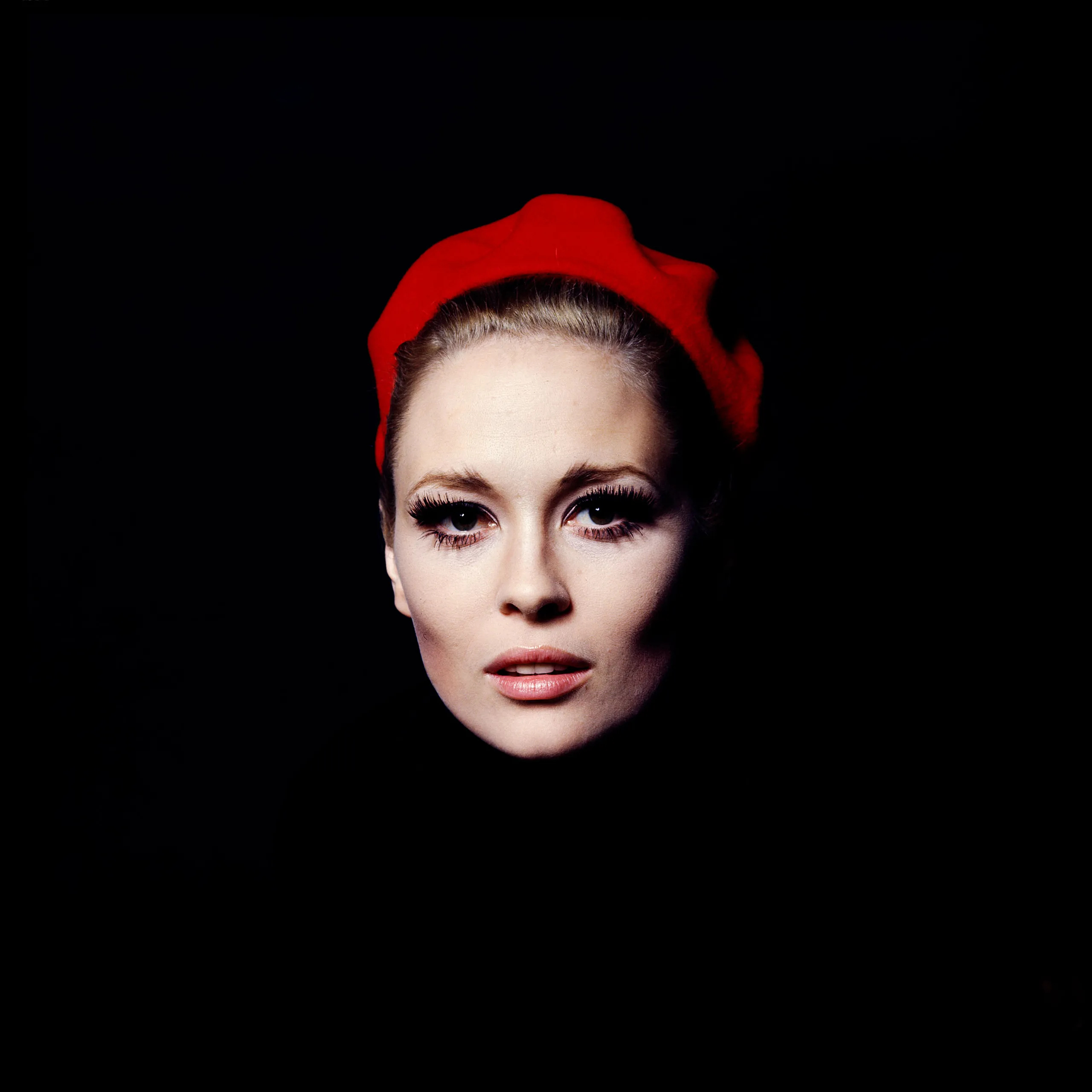
Faye Dunaway, who for my money was the actor who embodied the redefinition of women during the New Hollywood era – “the most exciting time in film,” she calls it in the new documentary from producer-turned-filmmaker Laurent Bouzereau. I couldn’t agree more. Dunaway’s chiseled, alluring countenance cut a striking image, and she was often a barn burner in her onscreen delivery. Dunaway would be Oscar nominated for her performances in “Bonnie and Clyde” (1967) and “Chinatown” (1974) and win the bald, golden guy for “Network” (1976). That body of work practically defined the time, with “Bonnie and Clyde” alone hailed as the cornerstone of a wave of classics that include the “Godfather” films, “The French Connection” (1971) and Monte Hellman’s “Two-Lane Blacktop” (1971). Bouzereau serves up a spry Dunaway (now in her 80s) reflecting on her childhood and marriage, relationships and affairs with Boston rocker Peter Wolf, film director Jerry Schatzberg (“Scarecrow,” “The Panic in Needle Park”) and Marcello Mastroianni among the starry lot. The Southern-born Dunaway had several ties to Boston besides Wolf: She attended Boston University, filmed the original 1968 “Thomas Crown Affair” with Steve McQueen here and sought regular guidance from playwright and Harvard professor William Alfred, whom she describes as the father she never had (her own father was an alcoholic, and her parents divorced when she was young). The jumping-off for the film is the iconic 1977 shot of Dunaway poolside at the Beverly Hills Hotel with her Oscar at an ungodly 6 a.m. the day after her win. The photo would lead to Dunaway marrying photographer Terry O’Neill; the couple would adopt Dunaway’s lone child, Liam, who in the film has much affection to offer about mom. Other talking heads that chime in are Mickey Rourke, who co-starred with Dunaway in the 1987 Charles Bukowski-inspired flick “Barfly” and fan-friend Sharon Stone, who broke a few glass ceilings in her own right, but there’s also no drop-in from “Chinatown” co-star Jack Nicholson. If there’s any downside to the film, it’s that it feels too curated by the actor and thus narrow in scope. Though we get Bette Davis making abundantly clear in one talk show clip that Dunaway was difficult to work with, even the Joan Crawford biopic “Mommie Dearest” (1981), which was critically drubbed at the time – especially Dunaway’s performance – gets spun in a way that pulls blame from Dunaway. The film touches on but does not delve into issues of mental health, a topic that feels so nonchalantly dropped in that it does the topic and the actor a disservice. “Faye” is a great rewind of one of (if not the) most defining periods in filmmaking, but holds the cards too tight on Dunaway as a person.


‘Skywalkers: A Love Story’ (2024)

One part promotion piece and one part jaw-dropping derring-do, this doc by Jeff Zimbalist (“Give Us This Day”) follows Angela Nikolai and Ivan Beerkus, Russian rooftoppers (people who climb skyscrapers illicitly for thrills) who during the last World Cup finals seek to climb the near-completed Merdeka tower in Malaysia – a 2,227-foot structure, the second-tallest in the world. It’s not quite “Man on Wire,” the fantastic 2008 Academy Award-winner that showcased Philippe Petit’s wire walk between the the World Trade Towers in 1974 (neither uses nets or wires, so what’s the difference between 1,368 and 2,227 feet if you fall?), but it grips in its own right. The staging and planning aspects provide intrigue, with World Cup mania leveraged as a distraction, and there’s the added challenge of Covid that shuts off the pair’s sponsorship funding; the couple are undaunted. Zimbalist delves into their strained relationship and backstories to add depth, but it’s not deep enough or blended in seamlessly enough and, if anything, detracts. Much of the stunt footage was shot by the couple, as it’s their bread and butter to garner likes and dollars on social media. It would have been interesting had Zimbalist peeled back more on how social media translate into dollars and how some of the amazing footage is captured – from what’s given, we can infer there are GoPros, selfie sticks and drones, but it’s all so polished there has to be more to it. There are accusations that much of what the pair do is staged and manufactured digitally, and while it doesn’t seem so, it’s another thing the film glosses over. Nikolai and Beerkus are bona fide artists and know how to strike a pose atop the universe (Nikolai will often bring a fancy dress), and the shots looking down are viscerally dizzying – if you have acrophobia, this is your content warning. Everyone else should hang on all the way through: Some of the most impressive stunt footage is at the end as the credits roll.


‘Land of Bad’ (2024)

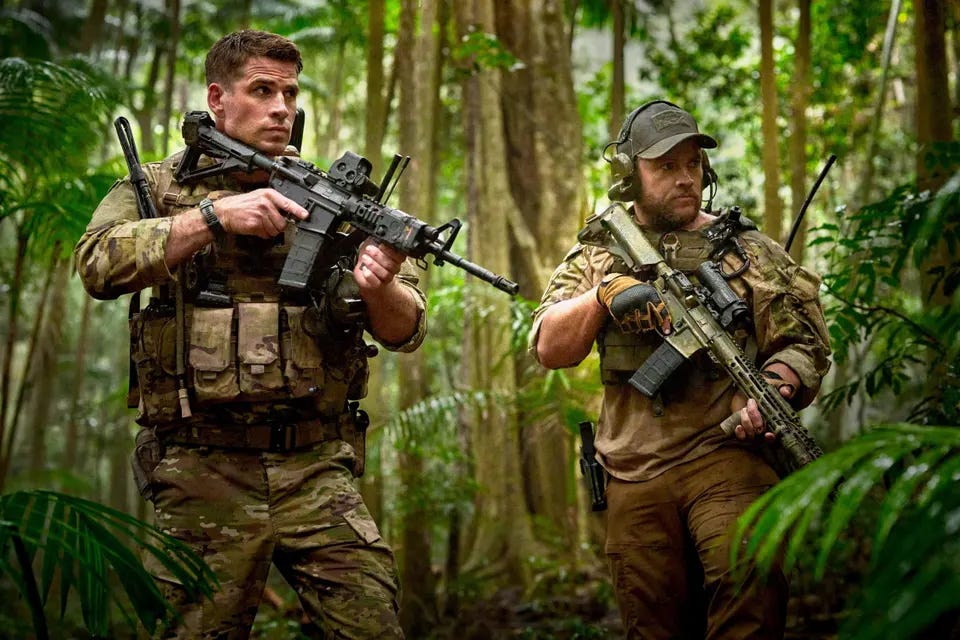
In this military actioner from director William Eubank in which U.S. Army Special Forces get dropped into a Philippine jungle to extract a CIA package, underpowered plot devices go off throughout: Turns out the simple in-and-out extraction isn’t so simple, as the camp the small strike force is sent into is a hive of international terrorists, largely unbeknownst to the smug higher-ups in intelligence. Shit goes south real fast, which leaves one soldier by the call name of Playboy (Liam Hemsworth) on the run from an endless “Assault on Precinct 13” horde of well-armed baddies. Getting to the extraction checkpoint is an endless task that keeps shifting as each possibility erupts into a new hot zone. The whole harrowing ordeal’s not far off from Marc Wahlberg-Peter Berg collaborations “Mile 22” (2020) and “Lone Survivor” (2013). Added to the mix is Russell Crowe as Reaper, a drone pilot back in Nevada keeping eyes on Playboy and occasionally firing off a Hellcat missile or two. (The two paired on the 2022 crime-thriller “Poker Face,” which Crowe directed.) Eubank, known for his lo-fi 2014 sci-fi thriller “The Signal,” delved into action with Kristen Stewart in the disappointingly unimpressive “Underwater” (2020) but improves here in his orchestration of race-against-time pow-bangs. Crowe and Hemsworth make the fairly pat play watchable, but Liam’s big bro, Chris (“Thor,” “Furiosa: A Mad Max Saga”) did the whole shebang a tad better in “Extraction” (2020), and “Guy Ritchie’s the Covenant” (2023) remains the best of the lot.


‘A Family Affair’ (2024)

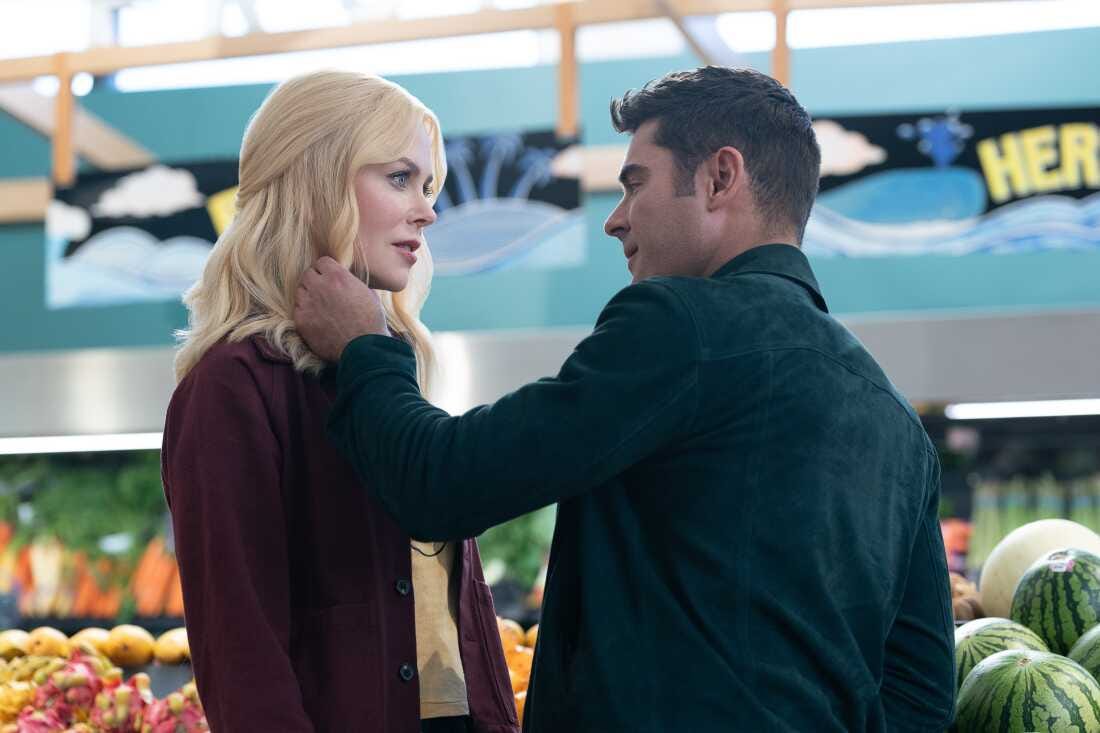
Light, silly rom-coms with predictable plots built around a Hollywood vet or two are a lo-fi way for streaming platforms to garner audiences. The Anne Hathaway mom-dating-younger-boy-band-hunk vehicle “The Idea of You” caught fire on Prime this year, and now on Netflix we have this Nicole Kidman-Zac Efron unlikelies-attract as Kidman’s widowed Brooke Harwood, an L.A. novelist, gets her groove back. She lives in a spacious, photo-worthy bungalow with her adult daughter Zara (Joey King, “The Kissing Booth”) who works for Efron’s Hollywood golden boy Chris Cole, something of a bland, watered-down hybrid of Tom Cruise and Robert Downey Jr. Chris is a dick of a boss who wants magical solutions to his first-world problems – my abs aren’t ripped enough, or my latte isn’t hot enough – and threatens to fire Zara in nearly every other frame. As you can expect, the family connection has him bumping into Brooke. Sparks fly, but Zara freaks out when she catches them in the act, especially knowing Chris is a serial dumper in addition to being a jerk to employees. The “affair” here, directed by Richard LaGravenese (“Living Out Loud”), is a plastic one, driven by hollow, entitled sorts with problems many would envy. Zara’s about the only one with a struggle that resonates (she wants to get into the film biz, but Chris keeps her locked into her gofer role). In the end, meandering the dew-misted produce aisles of a high-end boutique supermarket, she too gets shrink-wrapped.

Film Clips: “Touch” and “Long Legs

20 Jul

‘Touch’ (2024)

Not entirely a “missed connection” or even “the one that got away,” but more “the one that ran away.” Based on Ólafur Jóhann Ólafsson’s novel of the same name, Baltasar Kormákur’s pine-across-time-and-continents is bookended in two globally defining fates: the bombing of Hiroshima and the onset of Covid. Told in two timelines, “Touch” revolves around a 70-something Finnish gentleman by the name of Kristofer (Egill Ólafsson), a widower with a daughter who passes the time singing in a choir. He’s also recently diagnosed with early stage Alzheimer’s, and from his long, reflective face it’s clear he’s unsettled, memories a-flutter, unfulfilled; before the disease or virus can take hold, to London he goes, just as hotels and airlines are starting to mask up and shut down. The “why” we get in the other timeline – the 1960s – as a young Kristofer (played by the director’s son, Pálmi) drops out of school and takes up a job as a dishwasher in a Japanese restaurant. Kristofer bonds with the owner, Takahashi (Masahiro Motoki), who came to London to escape the pain and scars of the bombing, and with Takahashi’s daughter, Miko (Kôki). How events pan out in both timeframes take some painful and surprising turns. The ambient tenor orchestrated by Ólafsson is subtle and quietly moving, coming more from the soul and setting than from the flying of romantic sparks. It’s a reflective, internal story that plumbs tragedy and pain as much as it wells with hope and promise. The action takes place primarily in London with scenes in Finland and Japan; in this journey of the yearning heart, location is largely ancillary. The performers hit their marks well, though it’s hard to reconcile the lanky Pálmi with the stout Egill as the younger and older Kristofer. Given that much of “Touch” takes place in the kitchen of a Japanese restaurant, Ólafsson, the director, does a nice job of bringing the sensuality of the food to the fore, if not quite putting it in the company of “The Taste of Things” (2023) or “Babette’s Feast” (1987). 


‘Longlegs’ (2024)

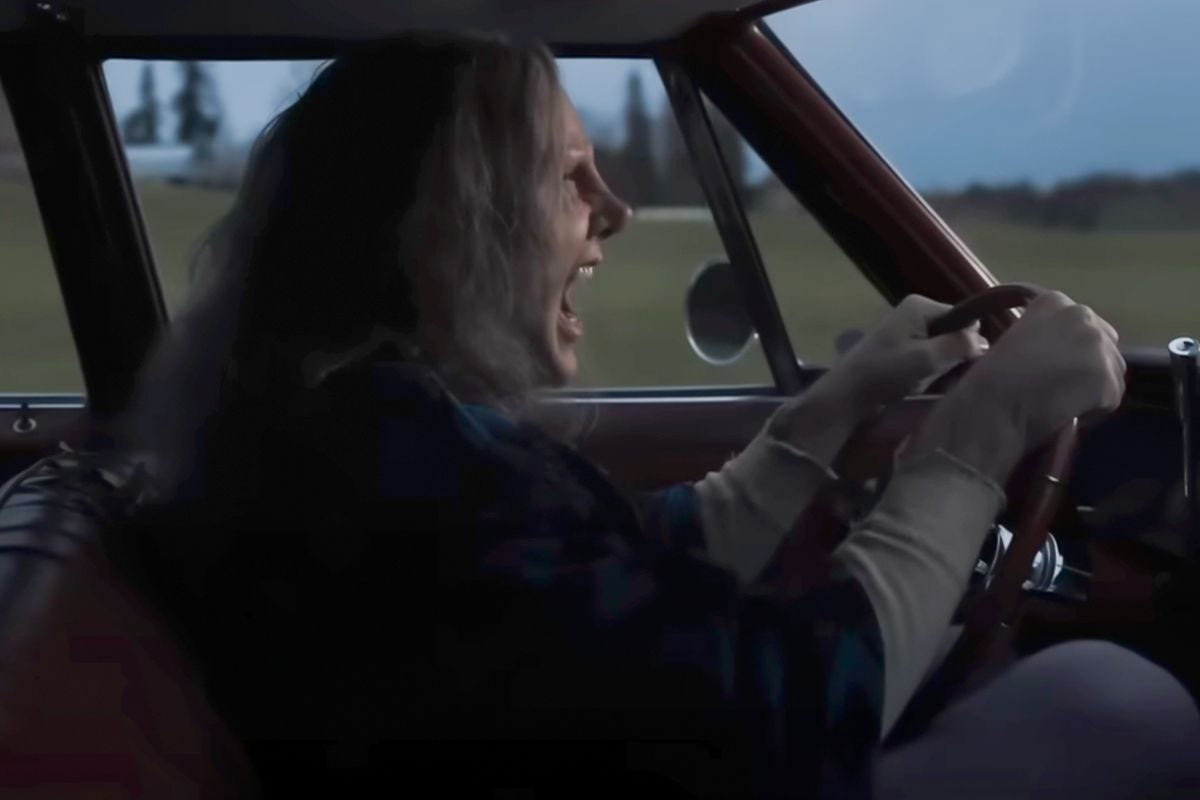
All the hype about this serial killer chiller from Oz Perkins being the next “Silence of the Lambs” (1991) has been well chummed by releasing company Neon, almost to the point of the marketing becoming the reality. Nicolas Cage, also a producer on the film, makes for an unforgettable Hannibal Lecter-Buffalo Bill hybrid as the sadistic psycho of the title, and green FBI agent Lee Harker (Maika Monroe) pops out of the microwave like something of a reheated Clarice Starling as she lurches into dark, forbidding places looking to bag Longlegs. It’s a moody piece propelled by deftly heightened atmospheric dread and some great performances, but it blows its credibility in the final act, and much of what’s thrown onscreen from a crime investigation standpoint makes little sense despite all its ardor and articulation – the hand waving is impressive. Set in Oregon in the 1990s (Bill Clinton is the prez), there’s been a series of families killed over a 20-year period. The crimes look usually like murder-suicide by the dad, except for a series of cryptic notes left at the scenes. Early on we learn that Harker has innate instincts that go beyond profiling and may be tied to a childhood trauma. They get her put on the Longlegs case with senior agent Carter (a dutiful and on-point Blair Underwood). To say more about the plot would be to ruin the tense ride. Monroe was good as a stalked soul who fights back in “Watcher” (2022) and “It Follows” (2014) but is less effective here, if mostly because of the arduous bait-and-switch twists the plot opts for. Cage is unquestionably the reason to see the film: His well-meted appearances as the pasty, androgynous and indelibly ghoulish Longlegs make the film, though the upping of the ante gets to be a little much near the end. Also impressive is Alicia Witt as Lee’s mother, who has a few bad habits and more than a few skeletons in the closet. Perkins’ other films, including “The Blackcoat’s Daughter” (2017), have been equally dark and moody and on point in genre, but yet never quite transcended. “Longlegs,” with the killer turns from Cage and Witt, ups the game, but cliches and a soulless finale hobble it from reaching its full stride.

Share

A Quiet Place: Day One

2 Jul

Killer aliens in NYC? That calls for a slice of pizza, hunted silently

Are prequels necessary? I can say I had a damn good time with “Furiosa,” the “Mad Max: Fury Road” (2015) prequel this year and this, showing how world annihilation by alien invasion came to be a thing in the “Quiet Place” series. What the two films have in common is a can-do – er, make that, kick-ass – lead in the form of Anya Taylor-Joy in George Miller’s post-apocalyptic road-rage flick and here, in an apocalyptic preamble, the infallible Lupita Nyong’o, so compelling – and Oscar winning –  in “12 Years a Slave” (2013) and in two roles in Jordan Peele’s sophomore feature “Us” (2019). Nyong’o is the main reason “Day One” flies as Sam, a young woman who ostensibly has terminal cancer. She’s part of a hospice excursion (the only one without white hair and white skin) bused into New York City for a marionette performance. Then things go crash-bang out on the avenue. Meteors, or the like, are raining down. Explosions and soot and ash are everywhere. 

The imagery is evocative of 9/11. A disoriented Sam walks through the debris and billows of smoke, clinging to her service cat, Frodo, while survivors around her shout out for loved ones. For their efforts they are eviscerated by the velociraptorlike xenomorphs we came to know in the John Krasinski-helmed films. The bloody assault comes on like a flash, akin to the zombies in “World War Z” (2013). People are picked off and picked apart left and right, though as we know from Krasinski’s future chapters, this species of eradicating aliens can’t see; they home in for the kill by sound.

Cut-off survivors hole up in crumbling penthouse-crowned skyscrapers as military Black Hawks fly overhead. Those trapped in Manhattan are told to shelter in place silently and that boats will come to evacuate them – the military has blown the bridges around the island, having learned that water is pretty perilous to the invaders. Sam, with her wide, luminous eyes doing the communicating and Frodo in her clutch, has other ideas and heads for a visit to the old studio apartment where she penned poetry and to get a slice at the best pizza shop in Harlem. She’s going in the opposite direction of everyone else, but a British law school student (Joseph Quinn) tags along with her despite her gestured objections. 

Competently directed by Michael Sarnoski, who punched his ticket with the Nicholas Cage curio “Pig” in 2021, “Day One” builds with purpose and fervor, but ultimately drifts into the predictable.  The use of thunder and rain and a deflating car tire offer up nice flourishes, but not quite to the degree that Krasinski scored on the two chapters starring his wife, Emily Blunt. Djimon Hounsou, who had a significant role as Henri in “Part II” plays the crossover character trapped in the city with Sam. He’s in the film just enough to make the link; this is the Sam show. No Nyong’o, no movie.