‘True History of the Kelly Gang’: In the outback for a bloody, convoluted crime tale, clad in tulle
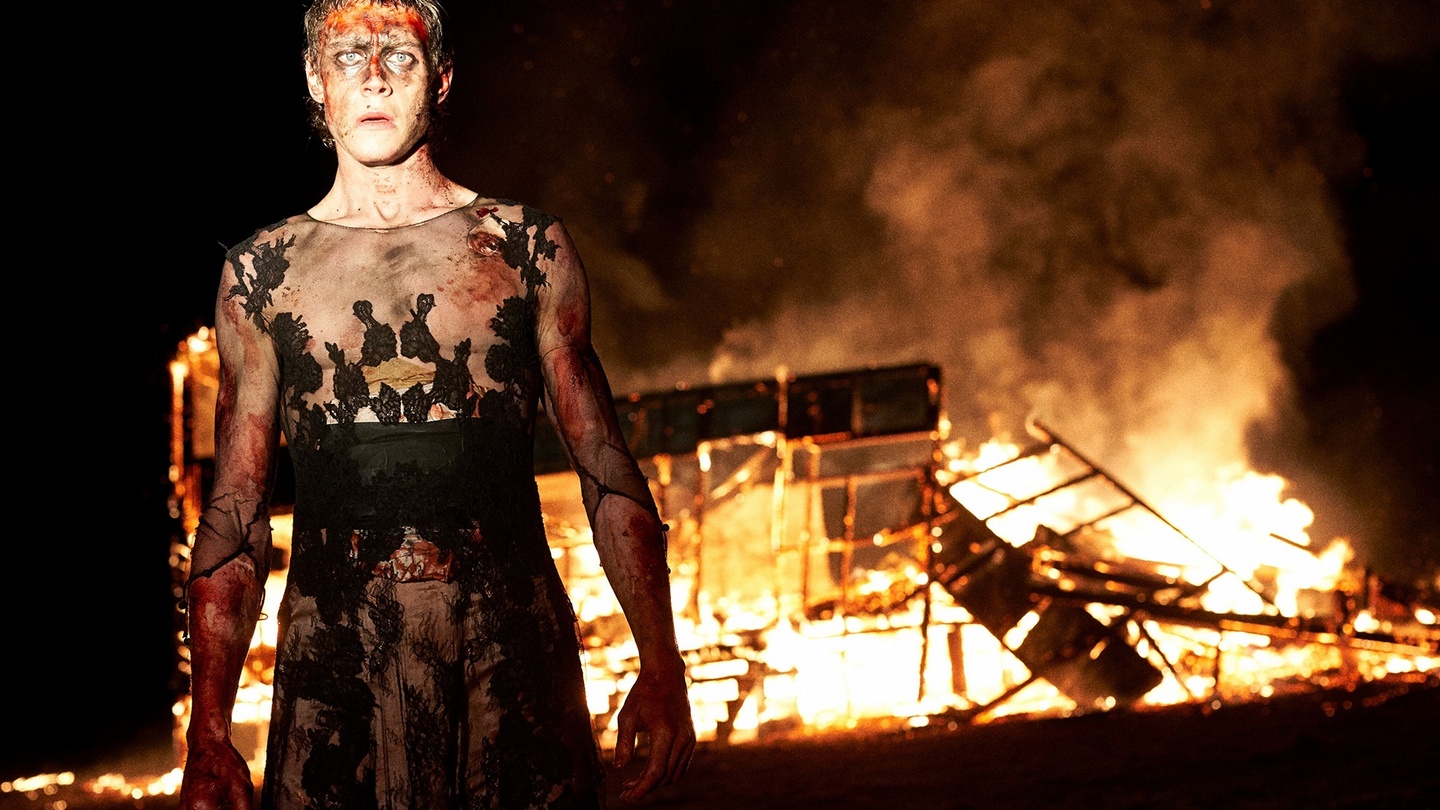
 Director Justin Kurzel jazzed up “Macbeth” in 2015, but that endeavor felt too overstylized to bear the bite of the Bard. Reteaming with Michael Fassbender and Marion Cotillard a year later, Kurzel found a better fit for his arthouse violence with the big-screen adaptation of the video game “Assassin’s Creed.” Now Kurzel enshrines Australia’s version of Billy the Kid – Ned Kelly – in “True History of the Kelly Gang.” In past variations the notorious outlaw was played by icons Mick Jagger (1970) and Heath Ledger (2003). Here it’s George MacKay (“1917”) in a shag mullet; like its predecessors, the take on Kelly by Kurzel is an alluring, muddled meander punctuated with madness, mayhem and tedious backstory.
The film, based on an award-winning 2000 novel by Peter Carey that played it loose with facts (“Nothing about this is true,” reads an opening overlay) the film is broken up into chapters: “Boy,” “Man,” “Monitor.” In “Boy” we get the lay of the land in two quick shakes as the young Ned (an angelic and androgynous Orlando Schwerdt) drinks in the sight of his mother (Essie Davis, Kurzel’s wife and the star of “The Babadook,” giving a fierce, compelling turn here) performing fellatio in a grimy barn on an expectant officer (Charlie Hunnam). Ned’s cuckold pa (Ben Corbett) who likes to dress in ladies wear, pulls the boy from the sight. Kurzel’s outback, like Jennifer Kent’s Tasmanian territory in “The Nightingale” (2019), is a grim, sexually charged place where violence seems on the edge of erupting in every frame.
Eventually Ned comes under the tutelage of Harry Power (a gruff, effective Russell Crowe), a notorious outback criminal – known as a bushranger, the equivalent of Old West outlaws in the United States. It’s horse thievery that puts the Kellys at odds with Hunnam’s officer and later, and far more drastically, with a sadistic constable (Nicholas Hoult) named Fitzpatrick who ingratiates himself to Ned and the Kellys while quietly poisoning them.
The dance with the law is a dicey one, but ultimately Ned falls outside it and forms a brigade of foppish fancies (as Carey’s book has it) who take no issue in cutting down quarry in lipstick and tulle. As depicted, Ned’s both Robin Hood and cold killer; Kurzel clearly wants to romanticize Ned while bathing him stylistically in blood, scene after scene, which is where the film begins to lose its hold on Ned the human being, sliding into ritualized retaliatory strikes. Kurzel takes some chances with the soundtrack with its occasional infusion of modern rock, and with chaotic body cam POVs that disrupt the gorgeous framing of the lush yet spare outback by Ari Wegner (“In Fabric”). MacKay as Ned is starkly overshadowed by Davis’s fuck-all mother and Hoult’s cunning manipulator – the scene where the two confront each other in tight confines late in the film is a powder keg of tension. The nearly final chaotic shootout, like “Butch Cassidy and the Sundance Kid” with Ned and crew in metallic headgear made from farm plows, is done with gorgeously hallucinatory imagery rendered between bullet flashes and accentuated by a balletic rat-tat-tat. It’s one of the many alluring shards of the “Kelly Gang” that envelop the viewer for a moment, but never collectively get to the soul of the man at the epicenter.



 Of 16 films by Roeg, the Brattle will showcase three early works as well as Roger Corman’s 1964 cinematic adaptation of Edgar Allan Poe’s “The Masque of the Red Death,” starring Vincent Price as the lascivious and paranoid prince – Roeg provides the camera work. The three Roeg-helmed works on the slate: “Performance” (1970), “Walkabout” (1971) and “Don’t Look Now” (1973), a trio that could whimsically be classified as pop, peril and outré.

 Pearce plays the barely named Eric, an aloof loner with an ostensible military background. The film opens with the tacit protagonist making a pit stop at an isolated karaoke bar (which looks more like a grimy torture chamber from a “Saw” movie than a place of merriment) for some water and a bite when a speeding truck laden with unsavory lads crashes, and its occupants quickly disembark and carjack Eric’s sleek, lean coupe. That’s it – from there on out, Eric will stop at nothing to reclaim his car. It’s a straight-up one-noter like “Duel,” propelled by Eric’s simmering resolve and the ever pungent question as to what else has to be in that car to make Eric want it that bad.
  For What it's Worth