‘Nosferatu’ (2024)
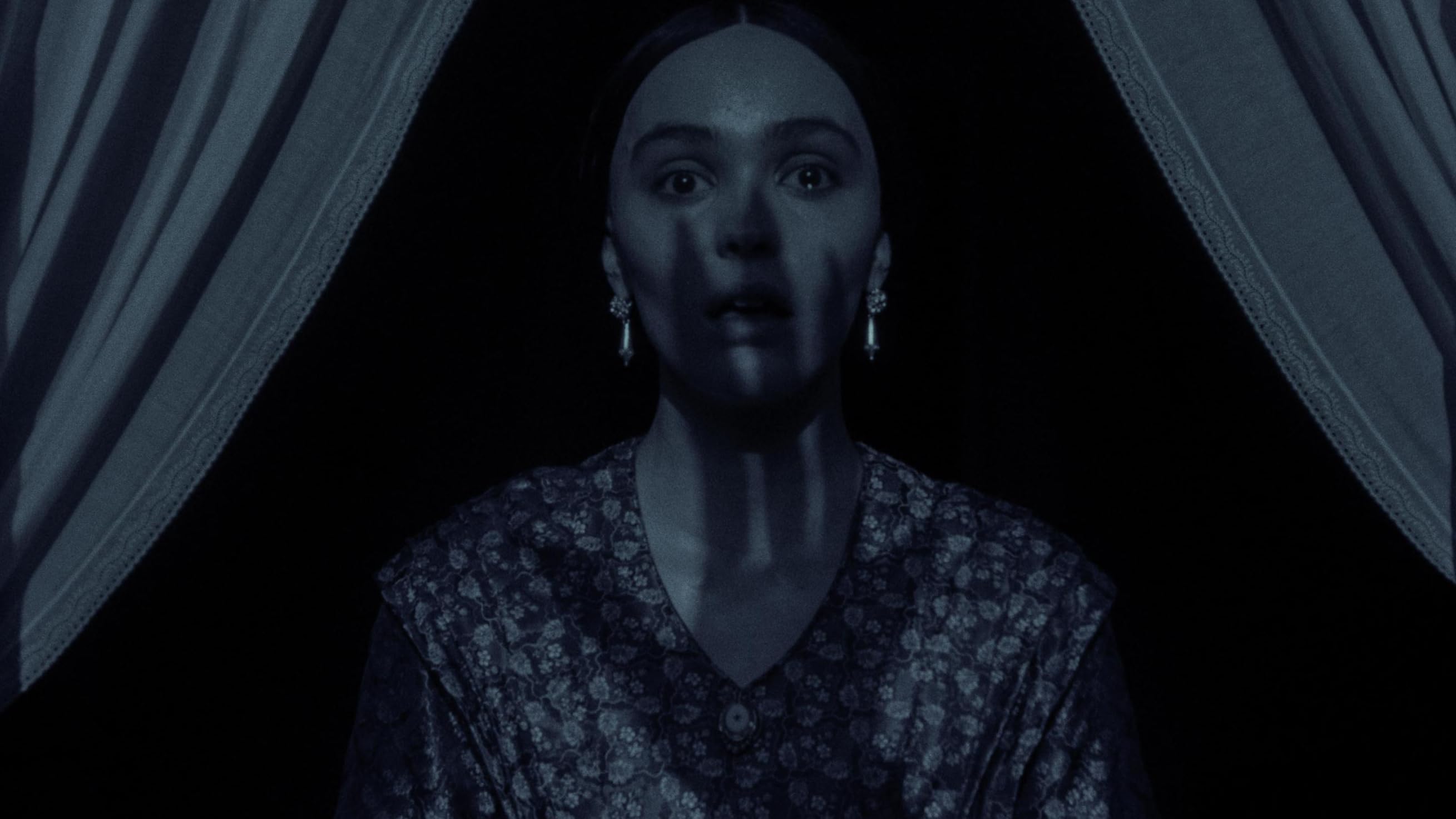

Robert Eggers’ remake of F.W. Murnau’s indelible 1922 classic is more akin in plot and scope to Francis Ford Coppola’s 1992 film “Bram Stoker’s Dracula” than Murnau’s inaugural cinematic adaptation, which was inspired by Stoker’s classic 1897 vampire tale. What’s the difference between Dracula and Nosferatu? Drac’s more dashing and suave, whereas the nosferatu named Count Orlok is a bald, withered being, grotesque by most human norms of comeliness and hygiene. Murnau, a master of practical effects, cranked up the mystical mind control aspects and educed a once-in-a-century performance from Orlok portrayer Max Schreck. Here, as played by Bill Skarsgård, whose brother Alexander worked with Eggers on “The Northman” (2022), Orlok is a shadowy incarnation that never comes into the light the way Schreck or even Klaus Kinski did in Werner Herzog’s 1979 take. Despite the title “Nosferatu the Vampyre” on the Herzog version, Kinski’s count is listed as “Dracula” and was something of a blend of the Bela Lugosi and Schreck incarnations. Eggers, who has made his name with eerie ambient immersions into the outré – “The Witch” (2015) and “The Lighthouse” (2019) – does more of the same here with strong black-and-white visuals delivered by director of photography Jarin Blaschke, who’s worked with Eggers on all his films, and the sonorous bolstering of Orlok’s gravelly intonations. The object of the carnivorous count’s desire is Ellen Hutter (Lily-Rose Depp), a young German woman with whom he forges a psychic connection despite residing far away in Transylvania (a picture can do that). To meet IRL, Orlok summons Ellen’s real-estate lackey husband, Thomas (Nicholas Hoult, now on-screen in “Juror #2”), to his castle to receive a deed to the flat across the way from their apartment in Wisborg. The count drains half the hemoglobin in Thomas’ body – nothing like weakening your rival in love before moving in. Once ashore in Wisborg (the scenes of Orlok dining on the crew while at sea are the most grim and gruesome), Orlok unleashes a plague and takes over the souls of a few townsfolk to employ as minions in pursuit of Ellen. In his adaptation, Eggers pays sincere homage to Murnau and Herzog’s versions. The result feels new in look and posture, but it doesn’t innovate much in the vampiric pantheon. Depp turns in the film’s most palpable performance, and for a Christmas treat, Eggers regular Willem Dafoe drops in as a batty academic and occult expert intent on sending Orlok back to the beyond for good.
‘Babygirl’ (2024)

Keeping with the psychosexual power games, Nicole Kidman notches her second Christmas film that features her bare derrière. That other movie, Stanley Kubrick’s 1999 swan song, “Eyes Wide Shut,” has grown on me over the years, especially the theme of small indulgences having larger, unintended ripples. Here Kidman plays Romy, the very in-charge chief executive of an e-commerce company named Tensile Automation – basically Amazon on crack. Romy lives in a palatial Manhattan condo with her husband Jacob (Antonio Banderas), a noted New York theater director, and two precocious teen daughters (Esther McGregor and Vaughan Reilly), but something’s clearly amiss. After sex, Romy runs off to another room to watch incest porn; then there’s the new intern Samuel (Harris Dickinson) who seems to know how to push every one of Romy’s buttons and regularly challenges her authority and proclamations in public forums – something few if any in the C-suite of Tensile Automation would dare to consider. Samuel chooses Romy as his mentor, and in their one-on-ones, keeps on pushing. Outside the office, the relationship turns physical with Samuel subjecting Romy to the kind of erotic B&D shenanigans that made “9½ Weeks” (1986) a kinky cultural staple for decades. Like Todd Field did with “Tár” (2022), writer-director Halina Reijn (“Bodies Bodies Bodies”) does a deft job of flipping the gender power paradigm. Kidman is superb as she riffles through the masks her character wears – nurturing mother, caring wife, nonapologetic CEO, lonely, unfulfilled soul and object of sexual subservience – often on a dime. Dickinson’s Samuel, by contrast, feels underwritten and hollow, which is a letdown given the strong performances he delivered in “Beach Rats” (2017) and “Triangle of Sadness” (2022). We never get the why of Samuel doing what he does, and when he starts threatening to upend Romy at the office or her coddled home life (he shows up uninvited for one of the girls’ birthday parties), he takes on the role of cruel manipulator as well as wormy opportunist, one we find ourselves rooting for a billionaire exec to take down. Also notable in the web of desire and deceit is Sophie Wilde (“Talk to Me”) as Romy’s protégée, who ends up dating Samuel as the affair becomes combative.
‘The Fire Inside’ (2024)


Cambridge-born filmmaker Rachel Morrison, the first woman cinematographer to receive an Oscar nod (“Mudbound”) in the category, makes her directorial debut with this biopic about Claressa “T-Rex” Shields, the first U.S. woman to win gold in Olympic boxing. The focus of Morrison’s film (working from a script by “Moonlight” director Barry Jenkins), is not her current pinnacle of pow, however, as she is still stalking opponents in the ring and undefeated as a pro, but Shields’ challenging early years in Flint, Michigan, where she was raised by a distracted single mother (the father was in jail) and lacking resources to get by. As Shields, Ryan Destiny brings a fierce pugnaciousness to the part. It’s an impressive, all-in performance not without nuance and a vein of vulnerability. The heat – and heart – of the film lies in Shields’ relationship with trainer Jason Crutchfield (Brian Tyree Henry), who backfills as a father figure. Bigger matters around Shields’ rise to prominence are a persisting gross gender disparity when it comes to compensation, respect and beyond, with a U.S. Olympic Committee publicist on Shields constantly to be more “ladylike.” Well-crafted and shot (by music video pro Rina Yang, not Morrison), with deep, palpable performances from Destiny and Henry, “The Fire Inside” strangely plays out somewhat flat-footed. Part of that’s the overuse of genre clichés (something you would not expect from the normally reliable Jenkins, but then again, consider his new “Mufasa”) and the knowledge that Shields would go on to become the Tom Brady of her sport. I’m not sure what’s next on Morrison’s plate, but “The Fire Inside” displays enough poise and promise to to get me off my stool for another round.
‘Homestead’ (2024)


Angel Studios, the family-themed, faith-based production company behind last year’s box office wonder “Sound of Freedom” (made for a cool 14 mill, it grossed near 200) saddles up with this post-terrorist-attack survival drama in which food, water and other life-sustaining needs become scarce as infrastructure and the law crumbles. The what and the why is a dirty bomb delivered by sailboat, detonated just off the L.A. coastline. Communications go silent, and the folks living on a sprawling, vineyard-esque estate of the title go into lockdown mode. The patriarch of the gorgeous grounds, billionaire Ian Ross (played by the steely eyed Neal McDonough) hires his own security detail headed by ex-Green Beret Jeff Eriksson (Bailey Chase) to keep out the riffraff (people seeking food and shelter). Based on the “Black Autumn” series by Jeff Kirkham and Jason Ross and directed patly by Ben Smallbone, “Homestead” wafts wisps of provocations – the haves versus the have-nots, what to eat when the corner market is bare and commitment to community, i.e., helping your fellow human in the wake of a societal collapse, but none really excite. Part of that is because Ross and his crew are so inherently entitled that you half want to see the hordes at the gate come for them Marie Antoinette style, and Chase’s operative is cold, aloof and always sizes up a situation with a finger on the trigger; neither character is particularly empathetic. The film does work its way around in the end, but feels rote. Alex Garland’s “Civil War,” released this year, covered similar territory with more bite. You do have to marvel at the spread that Ross and his family are holed up in, and much of the film feels like a grand mansion tour (despite the California setting, it’s in Bountiful, Utah, not too far from Angel Studios HQ).
 For What it's Worth