At the Hotel Artemis, you can check in any time you’d like but – like the Eagles tune tells us – it’s pretty damn hard to leave. Why? Well for one thing, it’s a safe house for criminals. And two, outside in the grubby L.A. streets, mobs are rioting over the privatization of water.
 “Hotel Artemis” takes place in the near dystopian future, though it’s hard to get a full register of what that’s really like; similar to Wes Anderson’s “Grand Budapest Hotel,” the film’s mostly an inside job. Lording over the den of thrives is a boozy, disheveled Jodie Foster, referred to as The Nurse, with a Master Blaster of an orderly at her side by the moniker of Everest (played by hulking former wrestler Dave Bautista, so winning in the “Guardians of the Galaxy” and “Avengers” films) who enforces house rules and metes out small doses of medical aid. Among the potpourri of personalities checked in are Sterling K. Brown’s dapper bank robber, Charlie Day channeling his inner Joe Pesci as a jabber-jawed arms dealer and Sofia Boutella’s super sleek assassin (she played a similar role in “Atomic Blonde”). About halfway in, a banged-up capo known as the Wolf King of L.A. (played by a game Jeff Goldblum, who’s onscreen too little) shows up to raise the stakes. If the invocation of another “Wolf” in L.A. crime doesn’t seem like a grab at something from Tarantino’s hip criminal universe (Harvey Keitel’s fixer from “Pulp Fiction”) then maybe the fact that all the “guests” are referred to by their room name – substitute “Niagara” and “Waikiki” for “Mr. Pink” and “Mr. Black” and you get the picture – might tell you what screenwriter/director Drew Pearce is angling for. “Artemis” even has its own McGuffin (a mysterious pen) and a wounded cop (Jenny Slate) with information to share.
Much is packed into a lean 93-minute runtime. First-time helmer Drew Peace, who wrote the screenplays for “Iron Man 3” and “Mission: Impossible – Rogue Nation,” shows a knack for snappy action the way stuntman turned filmmaker David Leitch demonstrated with “Atomic Blonde” and “Deadpool 2.” The rub, however, is that as a narrative, “Artemis” jumps around too much, and not everything quite fits (perhaps over-enthusiastic editing had a role to play). As a result, the only characters that resonate even faintly are Foster’s wheezing hotelier and Brown’s remorseful perp saddled with a blundering older brother. It doesn’t help that in an era of grand set designs, the glimmers of the outer-scape feel cheap, plastic and uninspired – not in the cheesy, good way that “Logan’s Run” made so indelible, but more like the stagy street riots in David Cronenberg’s “Cosmopolis” (2012) or the Orwellian future-scape in “Equilibrium” from 2002, if you even remember that one. Peace is blessed with a great cast, and the actors all provide above-the-bar turns. It’s just too bad in execution “Artemis” feels more like a staged (and very promising) concept than the mean teeth of true criminal intent.
 Moll lives with her controlling mother (an icy-cold Geraldine James), who stalks her progeny and questions her every whereabouts despite the fact Moll’s a mature woman with a full-time job (as a tour bus guide). Given mum’s iron glove, moving out would be a good idea, but there’s that troubled/damaged thing. Can Moll truly be on her own, or does she need constant monitoring? We get the answer to that quickly as Moll goes clubbing one night into the wee hours with a scruffy drifter/handyman by the name of Pascal (Johnny Flynn). Elsewhere, news blips on the TV tell us there’s been a recent murder of a girl nearby, and another girl is missing. The short list of suspects the film and police pursue includes Moll – she had a violent incident back in high school that haunts her – and Pascal. Moll may be somewhat lost and misunderstood, but there’s always deep down inside an ember of hopeful ebullience, and she becomes spirited at the prospect that she and Pascal might hie away together for happier destinations. Darker matters beyond legal suspicion cloud the notion, such as nightmarish incursions that come in the middle of the night or Moll’s ill-conceived insistence on showing up at one of the victim’s funerals. Ultimately “Beast” becomes a tug of war between hope and despair, with an ever-shifting emotional landscape.
 If you’re wondering if any of this seeming free associations has a payoff, it does – sort of – as “Little Pink House” shares the trappings of “Erin Brockovich,” another true-life tale about an iron-willed woman who fights the good fight, taking on bureaucracy and big money against all odds. That 2000 film garnered Roberts a Best Actor Oscar.
  If that sounds like the boilerplate to “Taken” or “Taxi Driver,” you’d be right to think so – at least on paper – but for Ramsay, getting at her protagonist’s state of mind and backstory is anything but a linear exercise. In wisps we catch Joe (Joaquin Phoenix) in military fatigues within the confines of a desert encampment feed a candy bar through a chain-link perimeter to a youth who is promptly shot dead by a surprising source. Later, ostensibly in the FBI or some investigative law enforcement unit, Joe uncovers a van full of dead bodies. And then there are the flashbacks to a highly abusive father and Joe’s attempts at suicide via asphyxiation (dry cleaning bags being the impermeable of choice). These images are littered throughout, giving brushstrokes of insight to the enigmatic Joe, bearded, burly and employing the peen end of a hammer to bash his way through his first assignment. To save the senator’s daughter (Ekaterina Samsonov), he employs the same implement – a new one of course, selected carefully from the hanging racks of a Home Depot, Ace Hardware or the like – working his way through the Manhattan brownstone in a more “Old Boy” style than Travis Bickle might consider.
  Eastwood, who’s heading toward 90, has seen it all before, starring as the “Man With No Name” in Sergio Leone’s spaghetti westerns, then making his own westerns (“Unforgiven”) and other films with subject matter ranging from the afterlife (“Hereafter”) to female boxing (“Million Dollar Baby”) and the end of Apartheid-cum-rugby (“Invictus”), as well as engaging in jingoistic flag waving, as many said of his depiction of American marksman Chris Kyle in

 True to the title, Ingrid heads west after trading one unhealthy obsession for another. In the brief opener we witness her vengefully pepper-spraying a bride at a wedding she’s not invited to. What gives? It turns out the wedding crasher with an ax to grind showed up because of one online thread where she and the bride-to-be briefly connected and, in Ingrid’s delusional mind, believed the two were instant besties. In the wake of the humiliation and shame – and a stay in a psych ward – Ingrid’s next fixation becomes perky Instagram celebrity Taylor Sloane (Elizabeth Olsen), who’s living the fab life in Los Angeles “influencing” followers as to what to buy and where to nosh. Ingrid can’t get enough of Taylor, and with a $60,000 check from her mom’s estate decides to cross the continent to check out the healthy avocado toast at the new-agey cafe Taylor “just loves.”
 The scene smolders in tight closeups, but before the grim gravity of Nick’s prospects can take root fully – or the psychiatrist can dig any deeper – Nick’s brother Connie (Robert Pattinson) bursts through the door and extracts his sibling. Has Nick been saved? For the moment, yes, but not in the bigger scheme of things. The two are incredibly tight (the Safdies are clearly drawing on their own sibling bond) but pretty much have only each other to draw on and limited financial resources; to keep the pack together, Connie cooks up a plan to rob a bank in the middle of the day, the execution and choreography of which is so hauntingly reminiscent of “Dog Day Afternoon” you half expect Al Pacino to pop out with chants of “Attica.” The lads do make off with the cash, but matters with ride sharing, dye packs and Nick’s emotional instability provide steep obstacles. It’s a riveting game of cat and mouse as the brothers dash down littered alleyways and into a mall atrium with the police a hot breath away. Just as they look to be in the clear, Nick crashes through a glass pane and is taken into custody. Where the story goes next is as unpredictable as its protagonist.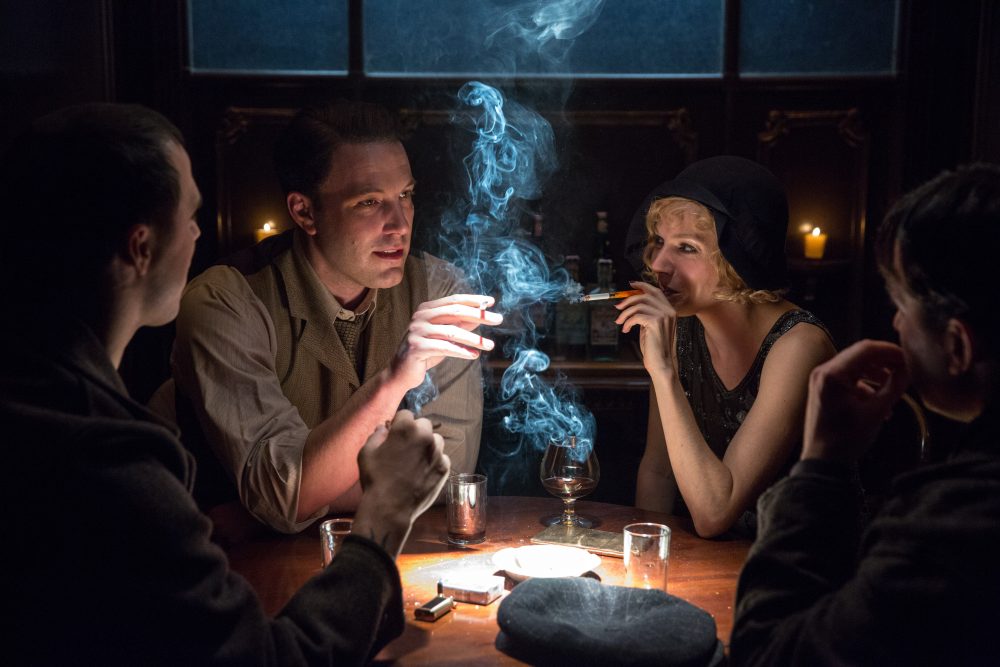

 For What it's Worth