All good things must end, or so they say. But do they have to? This part deux to 2023’s “Mission: Impossible – Dead Reckoning Part One” does have a sheen of finality to it, with plenty of nostalgia.
The key to the MI series is Tom Cruise: No Cruise, no movie. He’s a transcendent (and ageless) actor who sells the brand with bona fide stardom, a renown for performing his own stunts and a drive to be forever outdoing himself – and he usually doesn’t disappoint. In “Final Reckoning,” he succeeds with the help of writer-director Christopher McQuarrie, back for his fourth MI go-round.
Obviously, Cruise has a lot of faith in McQuarrie – and why wouldn’t he? After winning a Best Screenwriting Oscar early on for “The Usual Suspects” in 1996, McQuarrie has had a meteoric shot of a career in Hollywood. Besides these MI shuffles, he was one of the pens on another Cruise franchise, “Top Gun: Maverick,” back in 2022 and four others, directing Cruise in“Jack Reacher” (2012) and with scriptwriting creds on “Valkyrie” (2008), “The Edge of Tomorrow” (2014) and “The Mummy” (2017).
After four years of headlines about the tragic on‑set shooting of cinematographer Halyna Hutchins, “Rust” finally arrives in theaters for a limited run and on streaming platforms with something of a whimper. There’s plenty of gunplay to be sure, and the film’s evocative of Clint Eastwood’s “Pale Rider” (1985) and the Coen brothers’ 2010 remake of the John Wayne classic, “True Grit,” without reaching those lofty heights. Star Alec Baldwin’s now notorious shooting death of Hutchins – and wounding of director Joel Souza – clouds nearly every scene, something underscored by Baldwin’s Harland Rust being a stone-cold killer more than able with a six-shooter. The Wyoming-set Western begins with a bit of a “Little House on the Prairie” preamble as Lucas Hollister (Patrick Scott McDermott), a parentless 13-year-old protecting his younger brother from bullies, inadvertently shoots and kills the ruffians’ father (the eerie tie-ins to real life are endless). Hanging is in order, but before the execution can be carried out Harland shows up, wipes out the jail watch and absconds with the boy. On the trail, conversations between Harland and Lucas are terse. If Lucas asks too many questions, Harland dishes out some of Wayne’s slap-first tough love. Of course the law and a horde of scummy bounty hunters are after the two, with plenty of blazing shootouts along the dusty path. Baldwin looks the part of gruff gunslinger, but his avuncular, wispy voice undercuts his character’s bravado where a Wayne, Eastwood or Jeff Bridges would have tonal command of a scene. Another unavoidable reminder of Hutchins: The film is stunningly shot, with dark and muted texturings and rich, opulent framings of the amber plains akin to the camerawork by Ari Wegner that made “Power of the Dog” (also shot in 2021) jump off the screen. “Rust” makes for a passable Western sojourn that will forever be steeped in tragic ignominy.
Cult camp is an odd genre bucket that collects a vast variety of films dumped there for varying reasons. Some (“El Topo,” “Barbarella” and even the recently released “Sasquatch Sunset”) end up there by design; others (“Showgirls,” “Mommy Dearest”) wind up there because they’re unintended, rubbernecking-worthy spectacles. Two films from this week’s roundup land there with mixed results: “Hundreds of Beavers,” which had a held-over-by-popular-demand extended run at the Somerville Theatre this year and is now available on streaming platforms, and “Boy Kills World,” which played as part of the Boston Underground Film Festival at The Brattle Theatre and opens at Apple Cinemas Fresh Pond on Friday. Two different films with distinctly different outcomes.
‘Hundreds of Beavers’ (2022)
“Beavers,” co-written by director Mike Cheslik and star Ryland Brickson Cole Tews, shoots for something new and markedly left of center. What the pair has concocted is slapstick, silent-era comedy mixed with loopy Looney Tunes animation and modern-day special effects. Made for a mere $150,000, the film has a premise that feels affectionately borrowed from Chaplin or Keaton: A 19th-century applejack seller named Jean Kayak (Tews), perpetually hopped up on his own hooch, gets into a skirmish with an army of beavers in the frozen wilds of the northern Midwest – think “Jeremiah Johnson” (1972) by way of “The Gold Rush” (1925). The beavers aren’t cute CGI creations, but dudes in suits with ginormous buckteeth. There’s something to do with a fur trader (Doug Mancheski) and his winsome daughter (Olivia Graves) whom Jean fancies, but it’s mostly Jean versus the bevy of beavers with cartoonish boinks and bams and some fairly taxing physical comedy performed by Tews as he hops from one log to another in a sawmill and slip-slides his way across the ice as a legion of angry beavers chases after him. No dialogue is spoken, and it’s shot in black and white. The experience (did I mention the daughter is pretty good at disemboweling beavers with a knife?) gets a bit repetitious, but Cheslik and Tews, all in on the hijinks, save some zaniness for the last go-round.
‘Boy Kills World’ (2023)
“Boy Kills World” jumps out of the gate with promise; in the near dystopian future the aristocracy keep the masses in check with an annual lottery/purge called the “Culling.” What the film is, however, is a fairly pat, years-in-waiting revenge drama centered on a warrior known just as Boy (Bill Skarsgård, “Barbarian”) under the tutelage of a sensei (Yayan Ruhian, from the “Raid” films and “John Wick: Chapter 3 – Parabellum”) to beef up and exact revenge on Hilda Van Der Koy (Famke Janssen), the elitist who sanctioned the execution of his parents when he was an adolescent. The gimmick is that Boy can’t talk, yet the whole movie is narrated by him in voiceover. That’s done by H. Jon Benjamin (the voice of “Archer”), who makes Boy sound something like a cross between the gruff growl of Christian Bale’s caped crusader in Christopher Nolan’s “Batman” trilogy with the wily witticisms of Bruce Campbell in any of the Sam Raimi “Evil Dead” flicks. That is somewhat fitting, as Raimi serves as executive producer here, and though directed by Moritz Mohr, “Boy Kills World” has plenty of Raimi influences. The plot of rebel forces fighting an aristocratic tyranny means comparisons to films such as “V for Vendetta” (2005) are sure to drop, but the lesser, forgotten 1992 Mick Jagger vehicle “Freejack” is the more apt comparison, as the fun of watching Skarsgård the avenger’s parkour-propelled takedown of legions of baddies ultimately palls. Skarsgård, almost as jacked as older bro Alexander was in “The Northman” (2022), makes for an impressive onscreen presence, as does Jessica Rothe as the skilled assassin known as June27 equipped with a neat combat helmet that’s a cerebral message board of sorts. It’s too bad the narrative arc they ride isn’t as sleek and mean
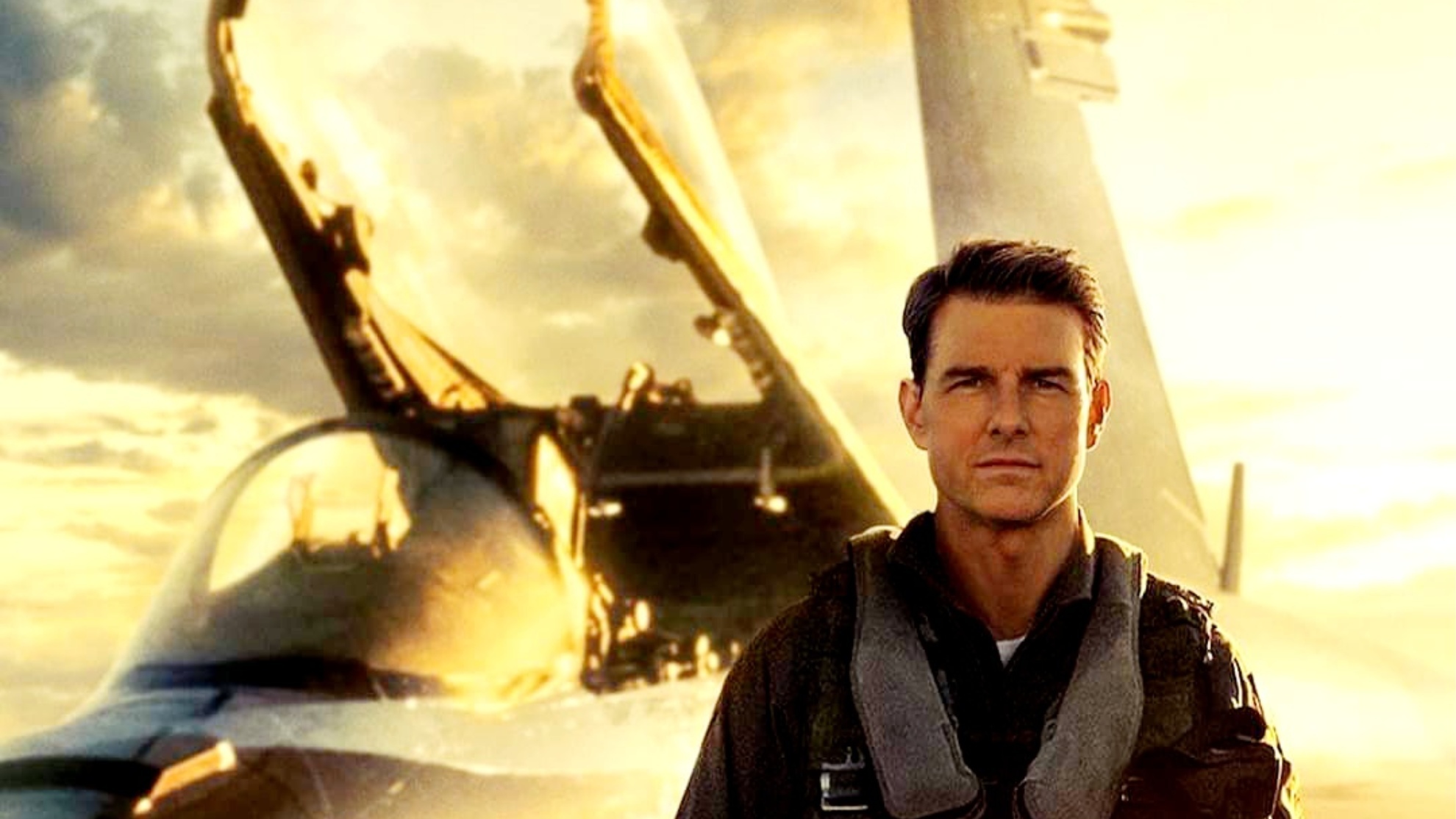
Hard to believe it’s been 35 years since Tom Cruise and Val Kilmer tangled in the Danger Zone. The original “Top Gun” (1986) was branded by ’80s flair (the hair), music (Kenny Loggins and Berlin’s hauntingly excellent “Take My Breath Away”) and the era’s go-for-broke excess (cocaine and unregulated Wall Street), something that got amped up for effect by producers Don Simpson and Jerry Bruckheimer and director Tony Scott; amazingly, what’s on screen in the long-cooking sequel, “Top Gun: Maverick” eerily channels the spirit and vibe of that earlier film while sliding seamlessly into the now. It’s a neat parlor trick pulled off by director Joseph Kosinski, who worked with Cruise on the sci-fi thriller “Oblivion” (2013), and Bruckheimer (he’s back; Scott and Simpson died during the in-between years). The ace in the hole, as it was then, is Cruise. Do the math: Cruise was 25ish when he made the first one and near 60 here. If you look at him in both you’d be hard pressed to think that 10, let alone 20 or, god forbid, 35 years have passed. Sure, there are some crows feet, but the man is a movie star who maintains his asset like Tom Brady does – the main difference being that Cruise has to look good doing it, and you could argue that doing his own stunts at his age is as dangerous as avoiding oncoming linemen when you’re 15 years younger.
If you put the two “Top Gun” movies on the tarmac together, the newer one would leave the other in its vapor trail with relative ease. The 1986 chapter was steeped in macho cliches, the tang of pre-#MeToo sexism and thin characters pumped up to be more than they were. “Maverick” is more about soul finding than chest beating; while there’s some of the latter, it’s reserved mostly for the new young guns.
Takashi Miike, the Japanese auteur of such intimate torture ditties as “Audition” (1999) and “Ichi the Killer” (2001) and the Kurosawa-worthy swordplay of “13 Assassins” (2010), returns to his roots with “First Love,” which, while lacking the intimacy of his other works, delivers the anticipated cringe-worthy beatdowns and unfolds in a freer and more conventional fashion. Taking place almost exclusively at night, amid the seedier side of a neon-bathed cityscape, “First Love” borrows some from Tarantino’s gangster dramas as it centers around a taciturn boxer (Masataka Kubota) and a young woman haunted by ghosts and forced into prostitution (Sakurako Konishi), thrown together and sucked into a criminal underbelly of yakuza heavies, drug dealers and one super badass moll.
That boxer, Leo has his own ghosts – abandoned as a child, he’s recently learned he has a brain tumor. Yuri (Konishi), as a means for her handlers to hold her to her trade, is often hopped up on drugs that only expounds her frenetic paranoia; the specter only she can see comes charging at her in nothing but tighty-whities. Yes, “First Love” is that kind of of gonzo good WTF. It’s a deft professional jab by Leo that brings the the two together, but before they can pause to fall in love – because you know they should be together, no matter how hopeless and desperate their futures seem – bigger machinations rise up and engulf then. A midlevel enforcer named Kase (Shôta Sometani), seeking a greater slice of the action, hatches a plan to play his mafioso boss against a rival while mixing in a squad of corrupt cops. It’s a crapshoot that goes wildly astray. There’s little redeeming about Kase, though the fact that he thinks he’s smarter than he is helps make “First Love” such an enjoyable shit show of madness and mayhem.
Kubota, who also starred in Miike’s “13 Assassins,” carries the silent accidental hero part with aplomb as Konishi’s imperiled damsel dances about him, weaving in and out of bouts of hysteria. It’s great cinematic chemistry, but the real scene stealer here is Becky Rabone as Julie, the girlfriend of the gangster henchman who was Yuri’s protector/pimp. She’s pretty good with a blade, and if there’s not one around she’s just as happy to go hand-to-hand with a larger male counterpart, stomping his brains out once she’s got him down. Talk about a take-no-prisoners attitude (though the name Julie just feels wrong for such a luridly alluring incarnation): For most the film, she rolls through the streets sans pants or skirt, just blood-splattered stockings and stiletto heels. There’s one hilariously grim scene in which a gangster has his gun-wielding arm lopped off and tries to pry the the firearm away with his remaining hand, but his dismembered arm is clutching the pistol too tightly. (“Fist Love”?) It’s classic Miike, and sure to be an elating moment for fire-branded fans. “First Love” may be a bit of a changeup, but all the twisted, dark wit is in there and served up with a wry, bloody smile. Also too, not enough can be said about Nobuyasu Kita’s fine cinematography, which captures the rain-slicked, trash-strewn streets in vibrant neon splashes.
Action and intrigue abound in this hyper-stylized spy thriller that takes the former quite seriously, boasting some of the best fight choreography on screen in recent years and a car chase worthy of Baby Driver. It’s also violent as hell and makes no apologies as it punches its way through end-of-the-Cold War Berlin — on the eve of the Wall coming down — where a crucial “list” of British intel assets is up for grabs with the KGB, MI6, and other interested middlemen locked in a bloody game of chess to procure it.
The driving fear at British HQ is that if the list falls into Russian hands, it could extend the Cold War by decades, and while that might have factored mightily in Antony Johnston and Sam Hart’s 2012 graphic novel that the film’s based on, The Coldest City, it’s nothing more than a McGuffin here and a catalyst for Charlize Theron’s MI6 operative, Lorraine Broughton, to drop from one gonzo battle royale to the next — even a same-sex hookup in a night club bathroom ends at the barrel of a gun.
The film begins inauspiciously enough as a British agent with the list on his person is stalked through the streets of Berlin and taken out smash-bang style. We then catch up with Lorraine 10 days later in London rising naked out of a tub of ice and covered in bruises. The connection between the two events and the framework for the film becomes a jigsaw puzzle of slow reveals fed to us in flashback snippets as Lorraine’s debriefed by her MI6 higher up (Toby Jones, who seems made for the part) and a curmudgeonly CIA handler (John Goodman). Part of the fun here is drinking in Lorraine’s sultry resistance to their inquiry, which bears a certain familiarity to Sharon Stone’s Catherine Tramell — another can-do blonde under the thumb of authority — in Paul Verhoeven’s Basic Instinct. Continue reading →
Sean Penn jumps into the action genre – or that’s the tag everyone’s layering onto his involvement in “The Gunman.” In concept the film, a thinking person’s espionage thriller with a serious thespian at the fore and an international slant, has the bones of “A Most Wanted Man,” “The Constant Gardener” and even the Bourne films, but that’s as far the genetic similarities go. In the bigger kinetic rendering, the uneven pacing and seemingly smart twists that suddenly nosedive into cliché confine the film much the same way its uninspired title does: The obvious is floated as a banner that implies something more and deeper to come, but it never does.
Penn’s up for the role as a gun for hire, employed by a Blackwater type org that pulls the strings behind the soldiers of fortune in movies such as “Dogs of War.” His Jack Terrier (I kept thinking dog too) is buff, physically well oiled and ready for action at the drop of a pin. His only weaknesses are that he smokes and, while on assignment in the Congo, falls for an idealistic aid worker, Annie (a fetching Jasmine Trinca).
Given the film is directed by Pierre Morel, who steered Liam Neeson through much mayhem in “Taken,” you’d think Annie’s safety would be that catalyst for the gloves to come off, but the film (based on the 1981 novel by Jean-Patrick Manchette) is more concerned with corporations deploying operatives in third world hell-holes to tip the balance of power for profit. Annie serves mostly as a raw point between Jack and his handler Felix (a misused Javier Bardem) after an assassination of the Congo’s mining minister ripples across the years and continents. Continue reading →
Ah, “The Expendables,” the low-fi, big (former-)star-fueled franchise that started as a amiable insider joke but with “The Expendables 3” has grown big and bloated – like many of its mothballed stars – and thrown aside its agility and sense of humor. The previous two installments, directed by creator Sylvester Stallone and Simon West, smartly ran spry at under two hours; here in the hands of relative newcomer Patrick Hughes and at more than two hours, the film is not only overlong and annoyingly stilted at times, but also, clearly long in the tooth.
Old-school old guys schooling buff newbies with plenty of tongue-in-cheek ha-has was the way of the first films. “Expendables 3” starts off that way, somewhere in a Baltic/Eastern Bloc country with Barney Ross (Stallone), the series quarterback of a covert military ops group, springing an old colleague (Wesley Snipes) amid great, witty barbs about “tax evasion” and “blades.” Then it’s onto Mogadishu, where Barney and crew go on a routine mission to stop an arms trade and get their asses handed to them. The fly in the ointment, and adding to the heavy list of new names, is Mel Gibson as Conrad Stonebanks, who’s as bad-assed as the whole Expendables crew and arguably the dark side of Gibson’s already certifiable Riggs persona from the “Lethal Weapon” franchise.
Realizing he might get old chums – Dolph Lundgren and Jason Statham among the lot – killed going back after Stonebanks, Barney kicks off a youth movement and winds up with a series of generic 20-something hunks (Kellan Lutz of the “Twilight” series among them) and a woman named Luna (MMA fighter Ronda Rousey) who looks fetching enough in a red dress but can throw down with the best of the lads. Rousey isn’t much of an actress, but boy can she spin, flip and make the stunts look extra authentic. Of course she shows up most of the cast. Continue reading →





 Penn’s up for the role as a gun for hire, employed by a Blackwater type org that pulls the strings behind the soldiers of fortune in movies such as “Dogs of War.” His Jack Terrier (I kept thinking dog too) is buff, physically well oiled and ready for action at the drop of a pin. His only weaknesses are that he smokes and, while on assignment in the Congo, falls for an idealistic aid worker, Annie (a fetching Jasmine Trinca).
 Old-school old guys schooling buff newbies with plenty of tongue-in-cheek ha-has was the way of the first films. “Expendables 3” starts off that way, somewhere in a Baltic/Eastern Bloc country with Barney Ross (Stallone), the series quarterback of a covert military ops group, springing an old colleague (Wesley Snipes) amid great, witty barbs about “tax evasion” and “blades.” Then it’s onto Mogadishu, where Barney and crew go on a routine mission to stop an arms trade and get their asses handed to them. The fly in the ointment, and adding to the heavy list of new names, is Mel Gibson as Conrad Stonebanks, who’s as bad-assed as the whole Expendables crew and arguably the dark side of Gibson’s already certifiable Riggs persona from the “Lethal Weapon” franchise.
 For What it's Worth