It’ll be interesting to see if “Raw” lives up to its hype from the Toronto International Film Festival, where people reportedly passed out in response to its graphic gore.
The French film by Julia Ducournau is something of a feminist anthem built around a demurring young vegan who transforms into a flesh-crazed cannibal during her stint at veterinary school. In more fantastical fare — vampire, zombie, or cannibalistic tribe flicks (like the cult classic “Cannibal Holocaust”) — people eat people all the time, almost to the point of normalizing it. What’s more unsettling and provocative is when regular folk, like Ducournau’s voracious heroine, prey on their fellow humans — sometimes covertly so, skirting the law, norms, and even opportunistically turning their friends and family into a bloody feed.
The most famous of the lot is of course Hannibal Lecter, the Thomas Harris literary creation that spurred a film franchise and TV series. Here’s a list of other “cannibals among us” films, with an eye on the esoteric and outré.
Other femmes who feast on flesh
David Cronenberg’s “Rabid” (1977) intended to star Sissy Spacek as the ingenue who, after an accident and a radical operation, can only subsist on human blood. The studio nixed the idea, and producer Ivan Reitman (who would go on to make “Ghostbusters” and four years prior made the lame camp comedy-horror “Cannibal Girls”) decided to cast porn star Marilyn Chambers. Spacek would end up making “Carrie,” and Chambers, leveraging her raw sexuality, proved eerily effective as the reluctant predator of “Rabid.” Also worthy, Nicholas Winding Refn’s tale of Hollywood dreams and lurid excess, “The Neon Demon” (2016), and “Under the Skin” (2013), where an otherworldly Scarlett Johansson patrols the streets of Glasgow seeking lads who don’t have anyone waiting up for them. Continue reading →
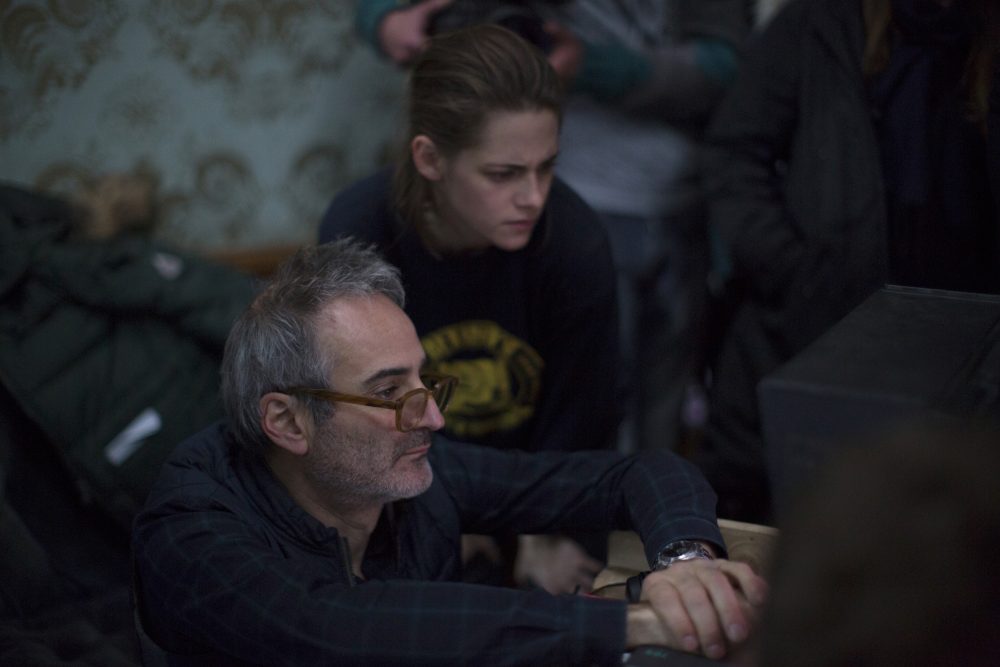
French auteur Olivier Assayas, whose kinetic style and eclectic works have enchanted cinephiles over the past 30 years, doesn’t particularly relish the term “muse.” “It’s somewhat cheesy,” he notes during an interview to discuss his latest release “Personal Shopper.” The inspiration garnered from his lead actresses, Assayas says, germinates from a more genuine and iterative process.
Past partnerings with Maggie Cheung, his wife from 1998 to 2001, yielded the deconstructive melodrama “Irma Vep” (1996) and the sobering “Clean” (2004). With fellow countrymate and longtime friend Juliette Binoche, he churned out “Summer Hours” (2008) and the top 10 list-maker “Clouds of Sils Maria” (2014).
“Personal Shopper,” which opens in Boston this Friday, marks Assayas’ second collaboration with American actress Kristen Stewart, who starred alongside Binoche in “Sils Maria” and has since become a highly sought-after talent. Stewart made the unlikely transition from the box-office bait, teen-targeted “Twilight” saga, to an art house darling collecting raves for her recent efforts in “Café Society,” “Still Alice” and “Certain Women.” And “Personal Shopper,” which scored Assayas Best Director honors at last year’s Cannes Film Festival, will likely only raise Stewart’s stock.
“I discovered Kristen when doing ‘Clouds,’” Assayas says, “and [during filming] I learned how capable she was and I was fascinated. Once that was done, I was inspired by her and wrote the part [of Maureen Cartwright in ‘Shopper’] with her in mind.” Continue reading →
Hugh Jackman grunts and grimaces through his (possibly) final outing as the Wolverine
Logan, the third Wolverine spin-off from the X-Men movie empire, which has grown terribly long in the tooth (or is that claw?), does a nice job of righting the ship with this elegiac closing chapter. Part of the reason for the franchise’s demise has been its lack of innovation, but also, and more to the point, the superhero market oversaturation with the Avengers and Justice League entries out there chasing fanboy dollars as well. Besides Professor Charles Xavier (Patrick Stewart) the best thing about the X-Men series has always been the tortured soul of Logan. Brought so palpably to the screen by Hugh Jackman, his badger-like sneer, tang of feral sexuality, and discernible sense of conflicted rage has always raced around inside the character’s metal-reinforced body.
The good news for fans, and even more so those losing faith, is that Xavier and Logan find themselves back together and without a cavalcade of other mutants and two-dimensional bad guys to weigh them down. It essentially allows the two classically trained thespians to dig in deep and get at the core of their characters’ beaten-down and mercurial personas. As far as acting goes, Logan may just be the grand dame of slumming it. It takes place in the not-too-distant future (2029) and finds our two uber-beings on tough times. Mutants and mutations have been culled way down, and we’re fed the factoid that there hasn’t been a mutant born in a decade or so, making Logan and Xavier perhaps the last of their line. Continue reading →
Jordan Peele’s “Get Out” is a devilish little bit of social commentary that takes the essence of “Guess Who’s Coming to Diner” and forces it, with vehemence but also panache, into a “Wicker Man”/“Stepford Wives” construct. The result is something clearly borrowed, incredibly fresh and nearly perfect in light of the current political climate. What’s also remarkable is that the horror flick-cum-black comedy marks Peele’s directorial debut, and a surprising one at that – not only because is it so sharp and confident, but also because Mr. Peele is better known as half of the comedy team of Key and Peele on Comedy Central.
The setup’s simple enough. Chris (Daniel Kaluuya), an aspiring photog, agrees reluctantly to meet the parents of his girlfriend, Rose (Allison Williams of “Girls”), whom he’s been dating for five months – just long enough to have to take these things seriously.
“Do they know I’m black?” Chris asks, a question that the lily-white Rose shrugs off, telling him that her dad would have voted for a Obama for a third time if he had the chance. It’s a pointed little barb, but since “Get Out” started filming long before it played at Sundance in January, I’m not certain Peele understood the whole political backdrop he’d be facing. Given the results of the election, the daggers the film throws couldn’t be any more on point. Continue reading →
For anyone with a young daughter, the testimony by victims of human trafficking and their families in the new documentary “I am Jane Doe” will come as a bone cutter. Others too will be palpably moved and more so, outraged by the willful complicity of Backpage in helping relegate underaged girls into a purgatory of prostitution, drugs and physical abuse.
If you’re unfamiliar with Backpage (owned by the revered alternative newspaper company Village Voice Media), it’s a service like Craigslist where people exchange goods and services like sofas, cars, housecleaning and sex (disguised as escort services) with great autonomy. That freedom comes as a result of Section 230 of the Communications Decency Act (ironically also known as “Great Internet Sex Panic Act of 1995”), which essentially grants online providers impunity for the content posted on their sites by third parties. That said, illegal sex solicitation — minor or not — has to be reported, but Backpage instituted a policy of circumvention to knowingly sanitize posts so they would not get flagged by enforcement authorities, as noted by a former employee whose voice and identity are disguised in the film. Continue reading →
There’s a quirky poetic flow to “Paterson” as in nearly every Jim Jarmusch film, seeping outward in languorous yet artful movements, and while “Paterson” is tightly coddled, it’s also one of the director’s more earthy and accessible efforts – something akin to the universality of a Frost poem, possessing the ability to sate on many levels while appealing to a diverse audience. And poetry is the operative word, as the film revolves around an aspiring poet by the name of Paterson (Adam Driver, finally in this film and “Silence” able to step out to the fore) who by day guides a boxy bus around the city of (you guessed it) Paterson, N.J.
The beauty of Driver’s performance is the quiet, soulful humanity imbued in the character. Paterson doesn’t drive his bus with contempt for the menial job or harbor any grand delusions of his higher mission as an artist – he’s not that arrogant douche! Quite the opposite. Poetry, we learn early on, is a passion that fills a hole in Paterson’s life, but he writes and observes quietly; Jarmusch, as the penning poet sits in his bus at the station waiting for the signal to hit the roads, superimposes the scrawlings onscreen with Driver in his purposeful drawl doing the narrative voiceovers. The poems are works by the poet Ron Padgett; the recurring “Love Poem” has a great talky line about matches: “Currently our favorite brand is the Ohio Blue Tip.” (If you’ve ever read Nicholson Baker, this will call to mind the mundane yet plumbing ditherings of “A Box of Matches.”)
Not much really happens in “Paterson,” though there is a slight, surreal crescendo toward the end, but what drives the film beyond Driver’s solid anchoring is Jarmusch’s idiosyncratic eye and the potpourri of personality that inhabits Paterson (the city). That’s especially so at Paterson’s home, where his partner and muse Laura (Golshifteh Farahani, channeling the playfully alluring foreign ingenue that Maria de Medeiros brought so vivaciously to life as Butch’s girlfriend Fabienne in “Pulp Fiction”) undertakes a different art project each day, mostly turning whatever it is she touches (curtains, cupcakes or a random wall in the small ranch home) into a black-and-white tiled mosaic, and the racially integrated bar where a pantheon of Paterson’s famous are hung as photos above the till. There’s an early mention of Rubin “Hurricane” Carter and the Bob Dylan ballad that rings a bit off-tone, but the recursive reference to doctor and poet William Carlos Williams – who practiced medicine near Paterson during the first half of the last century and wrote an anthology titled for and about the town (containing several letters of fellow New Jersey poet Allen Ginsberg) – as Paterson’s idol and inspiration is a smartly baked layer of lyric genius that subtly yields background about the man and the town of the same name. Continue reading →
On Tuesday, the Academy of Motion Picture Arts and Sciences will announce their slate of Oscar nominees, a lineup that will certainly be eyed with much scrutiny for its diversity. Last year, the #OscarsSoWhite controversy exploded after people of color were noticeably left off the Academy’s ballot for the second year in a row — a move backward considering 2014’s Best Picture winner, “12 Years A Slave.” Given the films that found success in 2016, both critically and commercially, the list of nominees should successfully change the tide.
The origins of the hash-tagged tumult, which had notables like Spike Lee and Jada Pinkett Smith boycotting the ceremony last year, are two-fold. For starters, the Academy’s makeup is not diverse by any measure — a Los Angeles Times analysis in 2016 found it was 91 percent white and 76 percent male. Secondly, the industry was not producing many quality films made by, or featuring, people of color.
The cast and crew of “Spotlight” accept the Oscar for Best Picture in 2016. (Chris Pizzello/Invision/AP)
When the nominations came out last year, Academy President Cheryl Boone Isaacs, who is black, promised immediate action. Following a unanimous vote by the board eight days later, rule changes stipulated that members who had been dormant in the industry for over a decade would be be moved to emeritus status (effectively losing their voting rights) and the recruitment of new members would begin immediately. Though, past winners and nominees retain full membership status and voting rights. The list of 683 invitees contained a notable presence of women and people of color (Rita Wilson, American Repertory Theater stalwart Cherry Jones, Nia Long, Mahershala Ali now in “Moonlight” and “Hidden Figures,” and John Boyega).
The industry too, almost as if on cue, made an initial, responsive roar when Nate Parker’s slave uprising saga, “Birth of a Nation,” garnered a record-setting $17 million distribution deal at the Sundance Film Festival in late January of last year. Expectations for the film were high, but when it finally poured into theaters, the edgy concept of a bloody revolt against injustice, while admirable, didn’t measure up at the box office. “12 Years a Slave” it was not and Parker’s past allegations of rape (he was acquitted) didn’t help either.
Colman Domingo as Hark, Nate Parker as Nat Turner and Chike Okonkwo as Will in “The Birth of a Nation.” (Courtesy Fox Searchlight Pictures)
In light of “Oscars So White,” “Birth of a Nation” registered something of a disappointment, but the industry, in its own organic way, was quietly on the mend. The later crop of films featuring diverse filmmakers, casts and subjects shone — from “Moonlight,” the saga of a gay black youth, bullied and growing up under the negligent eye of a crack-addicted mother, to “Loving,” the haunting recount of the interracial couple who boldly broke the anti-miscegenation law in segregated Virginia and, more recently “Hidden Figures,” another based on true events, pre-civil rights movement drama about African-American female mathematicians working at NASA during the space race. Overall, 2016 was a year the blockbuster faltered and small films about people with varying backgrounds and experiences, navigating adversity, took center stage.
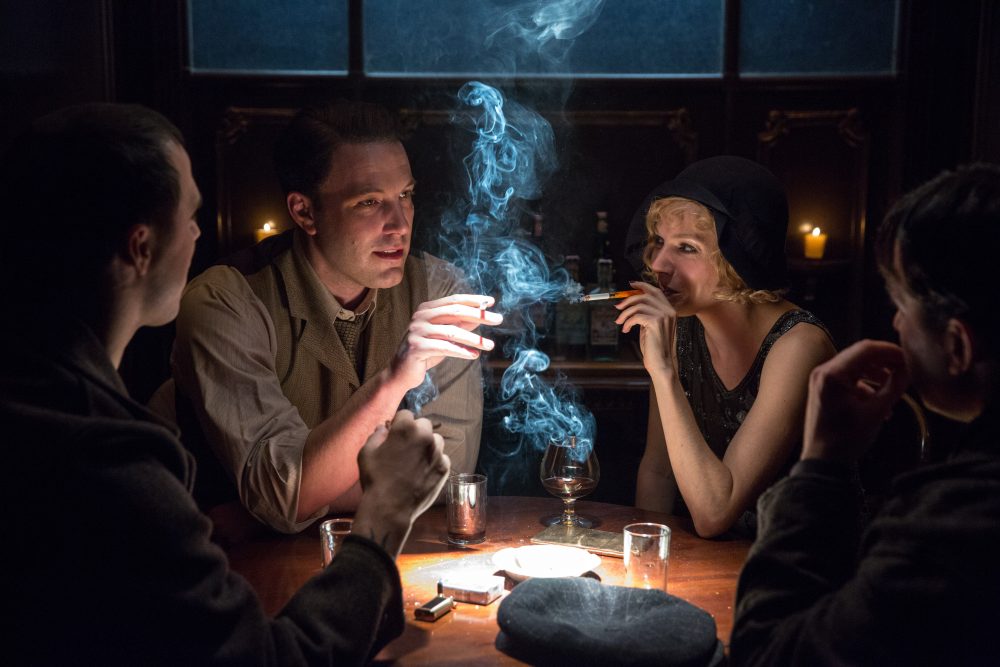
Ben Affleck, the good-looking, locally-reared actor, who from time to time has projected a wooden on-screen presence, has turned out to be a reliably decent director. His debut, “Gone Baby Gone” back in 2007, transformed Dennis Lehane’s Boston-seated crime novel into a cinematic pulp noir. That edgy effort had cinephiles anxious for more and Affleck rewarded their patience with another gritty crime drama, “The Town,” in 2010 and then “Argo” in 2012. His latest effort, “Live By Night,” brings another Lehane crime story to the screen.
It begins during the Prohibition Era in Boston, where the Irish and Italians are locked in a blood feud over the bootleg trade, and later transitions to Ybor City, the developing section of Tampa, Florida, where Italian and Latino crime coalitions govern the town and control the flow of molasses — critical for rum.
Brendan Gleeson as Officer Thomas Coughlin in “Live By Night.” (Courtesy Warner Bros. Pictures) Continue reading →
One of the best films of 2016 (yes, it opened in New York City and Los Angeles a few weeks ago as part of awards season’s annual bait-and-switch shenanigans) happens to be a sentimental crowdpleaser that, for all its potential schmaltz and didactic pitfalls, maintains an incredibly poignant balance especially when it comes to matters of race – and there’s plenty of them; “Hidden Figures” is about three African-American women employed as engineers and mathematicians by NASA during the first space launch, just as Martin Luther King Jr.’s historic push for Civil Rights was gaining its groundswell.
It’s not a widely known bit of history, but Katherine Johnson (Taraji P. Henson), Mary Jackson (singer Janelle Monáe, successfully doubling up as an actor) and Dorothy Vaughan (Oscar winner Octavia Spencer, killer good) toiled for NASA during the Mercury space program as engineers and computers – mathematicians doing the technical legwork before Big Blue dropped its first mainframe – and proved critical in getting John Glenn up and into orbit. One of the film’s most telling – and touching – moments comes when Glenn (Glen Powell) meets Johnson during a technical assembly of scientists and mucky-mucks where she’s not only the only woman or person of color in the room, but the only one able to solve complicated flight variables mathematically. Later, when there’s a snag in the mission and the reentry point needs recalculating, he asks for her aid, referring to her simply as the “the smart one.” Continue reading →
Diego Luna and Felicity Jones go rogue in this stand-alone entry in the Star Wars franchise
Rogue One: A Star Wars Story postures itself as a one-off stand alone, the first (and only?) entry in the “anthology” series versus the “saga” series where the other seven franchise films fall. Just to set the table right, Rogue One does slide into the deck seamlessly in terms of chronology, just where exactly shall remain a mystery as one of the things Disney has done with this change-up is to pack it with nuggets of surprise — so much so that they pleaded with the critical masses to not burst their bubble in their reviews, “that you as press continue to be our partners on this journey.” Such requests generally go unheard as most critics are aware of their responsibility to audiences and art, but having seen the film I get it, and you will too. Though I am sure there are those out there who will spoil, I will not.
The big win for the series and fans overall when Disney took over the franchise from LucasFilms back in 2012, was the infusion of new blood and reined-in filmmaking. No disrespect to creator George Lucas, but Return of the Jedi (1983) couldn’t hold a torch to the darker and meatier The Empire Strikes Back (1980) and the three films in the prequel trilogy (1998-2005) were wooden and so overpacked with CGI magic, that all the character and mythos that cemented the original series got lost in a vortex of filmmaking overindulgence. The Force Awakens, JJ Abrams’ 2015 initial go at the sequel series, was an admirable reboot, leveraging its ancestral roots while setting the stage for the next new adventure, even if it was too much a plot redux of A New Hope (the 1977 original that anointed and defined the blockbuster). Now comes Rogue One charging out of the gate, a breath of fresh air and more restrained in all the right places, but primarily in that it saves its best for last and is orchestrated in a way that every laser blast and saber slash bears profound impact. There’s nothing indiscriminate about what’s placed on screen. Continue reading →


 The setup’s simple enough. Chris (Daniel Kaluuya), an aspiring photog, agrees reluctantly to meet the parents of his girlfriend, Rose (Allison Williams of “Girls”), whom he’s been dating for five months – just long enough to have to take these things seriously.
 The beauty of Driver’s performance is the quiet, soulful humanity imbued in the character. Paterson doesn’t drive his bus with contempt for the menial job or harbor any grand delusions of his higher mission as an artist – he’s not that arrogant douche! Quite the opposite. Poetry, we learn early on, is a passion that fills a hole in Paterson’s life, but he writes and observes quietly; Jarmusch, as the penning poet sits in his bus at the station waiting for the signal to hit the roads, superimposes the scrawlings onscreen with Driver in his purposeful drawl doing the narrative voiceovers. The poems are works by the poet Ron Padgett; the recurring “Love Poem” has a great talky line about matches: “Currently our favorite brand is the Ohio Blue Tip.” (If you’ve ever read Nicholson Baker, this will call to mind the mundane yet plumbing ditherings of “A Box of Matches.”)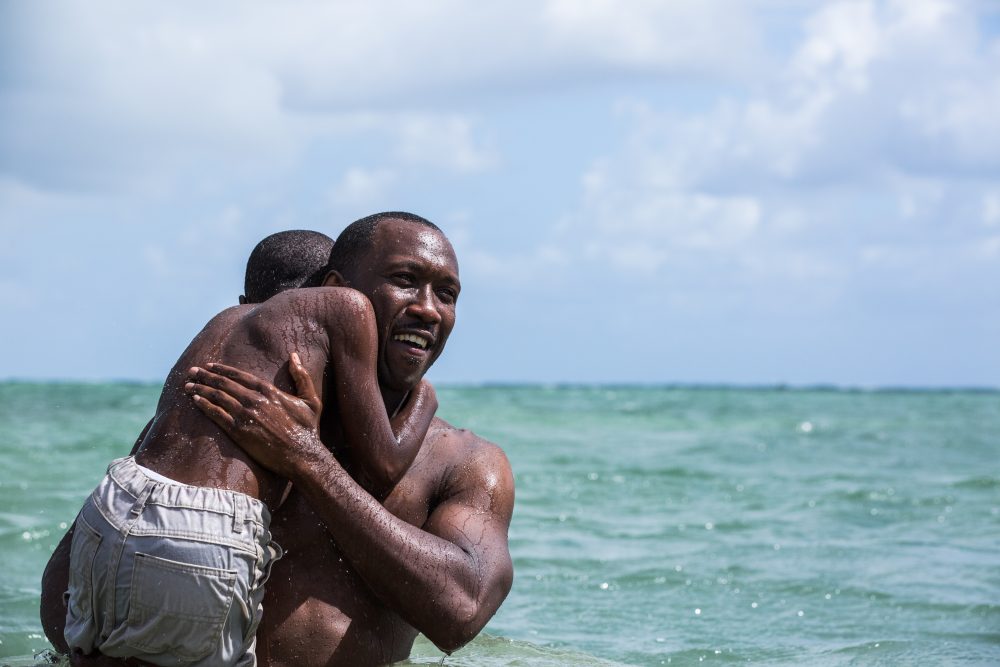



 It’s not a widely known bit of history, but Katherine Johnson (Taraji P. Henson), Mary Jackson (singer Janelle Monáe, successfully doubling up as an actor) and Dorothy Vaughan (Oscar winner Octavia Spencer, killer good) toiled for NASA during the Mercury space program as engineers and computers – mathematicians doing the technical legwork before Big Blue dropped its first mainframe – and proved critical in getting John Glenn up and into orbit. One of the film’s most telling – and touching – moments comes when Glenn (Glen Powell) meets Johnson during a technical assembly of scientists and mucky-mucks where she’s not only the only woman or person of color in the room, but the only one able to solve complicated flight variables mathematically. Later, when there’s a snag in the mission and the reentry point needs recalculating, he asks for her aid, referring to her simply as the “the smart one.”

