Archive | Review RSS feed for this section

Peppermint

9 Sep

‘Peppermint’: Jennifer Garner takes her turn in not-so-fresh parental revenge action genre

Image result for peppermint movie

There’s nothing minty or fresh to “Peppermint,” the hard-boiled throwback from Pierre Morel who covered similar terrain with “Taken” back in 2008. That psychological actioner starring Liam Neeson as a relentless pa out to reclaim his daughter from kidnappers proved a surprisingly effective B-grade thriller. Here, unfortunately, the amiable Jennifer Garner spreading her wings as an avenging angel has a lot less to work with in terms of nuance and character, though the film far exceeds “Taken” in brutality and head count. Comparisons to “Old Boy” or “John Wick” would be fair.

The film begins accordingly with a bloody struggle inside a boxy sedan in predawn Los Angeles. In those tight confines, Garner’s Riley North eventually gains the upper hand and lets a bullet fly into the cranium of a highly tatted gangbanger. The thing you admire most about the whole affair and its aftermath is Riley’s steely resolve and professional efficiency. You know she’s done this before. The how and why of that get answered quickly as we flash back five years, with Riley now a Girl Scout-leading soccer mom. Things are pretty tight for the Norths: Riley works part time in a bank while her loving yet flawed husband Chris (Jeffery Hephner) labors in a garage while figuring out his next big move. Unwisely, he listens (just listens) to an offer to be part of a crew to rob a drug lord by the fantastically generic name of Diego Garcia (Juan Pablo Raba), who, as the film says over and over, is the Mr. Big of the L.A. crime scene. The offer gets turned down, but Garcia’s already caught wind of the job and takes out Chris and Riley’s 9-year-old daughter (Cailey Fleming) in a drive-by. Riley sees the whole ordeal – in repeat slow-mo – and even though she IDs the shooters to the police, once in court, the defense attorney smugly flips the case. The judge won’t listen to Riley’s plea and the prosecutors don’t seem to care. The shooter goes free. An enraged Riley is cuffed, dragged out of court and prepped for a mental institution. Continue reading

Crazy Rich Asians

19 Aug


Image result for crazy rich asians

There’s been much ado about “Crazy Rich Asians” being the first all-Asian film to hit English screens since the screen adaptation of Amy Tan’s “The Joy Luck Club” back in 1993. While that sentiment holds largely true, it’s not wholly accurate; those behind the labeling likely forgot about “Better Luck Tomorrow,” the 2002 curio from director Justin Lin (of the “Fast and Furious” and “Star Trek” franchises) about overachieving high schoolers. (Granted, it was made for only $250,000, so maybe it doesn’t qualify, but it did earn more than 1,400 percent that at the box office, which is crazy by any standard.) And “Crazy Rich Asians,” like “Tomorrow,” orbits around the tip of the social spire – the very tip of the top in this case, as it concerns the one-percent of all one-percenters.

If that sounds like a tough sell – trying to invoke empathy for the wildly entitled – that would be fair (the don’t-haves here have doctorates) but keep in mind, “Crazy Rich Asians” is a comedy, and one that revels smartly in the excess of its subjects without being trite, superficial or dismissive. Also, the problems the folks face along the way are universal people problems, not rich-people problems, though class does play a major factor. You could think of its as something akin to “Sex and the City” by way of “Four Weddings and a Funeral” with a fuller body, greater nuance and a twist of zest. What makes the whole thing fly is Constance Wu as Rachel Chu, a New York City econ prof who’s dating Nick, the hunky history prof (Henry Golding) from down the hall. She’s the one out of her class element when Nick invites her to attend a wedding in his homeport of Singapore. What she doesn’t know until she boards the luxury airliner and they’re led to a suite with beds and room service is that Nick is slumming it in academia: His family basically owns half of Singapore and his mother (a very regal Michelle Yeoh) is no fan of the poor-bred interloper. (Rachael was raised by a single mother – and worse, she’s American.) 

That’s the primary rub, and several of Nick’s old girlfriend’s are sent in to perform mean-girl stunts that at times feel more like a mafia hit. In short, the odds are stacked against Rachel, but Nick, ever calm, suave, loving and by her side, holds the boat steady – he’s Prince Charming and then some. Also in Rachel’s corner is rapper Awkwafina as Rachel’s bestie from college and Ken Jeong, her friend’s dad. They both try too hard, but provide the necessary comic relief. The one who really walks away with the scenes is Nico Santos as Nick’s cousin Oliver, imbued with barbed wit and a wicked sense of “Queer Eye” makeover panache. 

Wu, best known for her tiger-esque mom on the wonderful “Fresh Off the Boat” TV series, slides into the rom-com format with the same ease as Jennifer Aniston; as with Aniston, there’s something that doesn’t quite fit, but also something that endears. Yeoh commands every frame she’s in, but the big winner here is Golding, who has the demurring charm of Hugh Grant, with square-jawed good looks and kindness and intelligence in every glimmer. He’ll be a household name and bankable star before the next presidential election. 

The other stars of “Crazy Rich Asians” are the city of Singapore itself – plush, clean and eternally inviting as framed by director Jon M. Chu and cinematographer Vanja Cernjul – and the food porn rendering of the banquet spreads and dumplings. It’s not on par with “Babette’s Feast” or “Eat Drink Man Woman,” but it will make you lick your chops. Also a nice touch: The American pop tunes sung in Mandarin, including Madonna’s apt “Material Girl.” It’s just another neatly placed garnish that takes the old and known and gives it zing. It’s a thing.

BlacKKKlansman

13 Aug

‘BlacKkKlansman’: True story of infiltration that hardly has to sneak in a modern message


If someone told you there’d be a movie about a black man who infiltrated the Ku Klux Klan, you’d probably call BS. I mean, how could that ever be? But what if the infiltrator were Jewish? You’d likely double down on your BS card – after all, these are the two bloodlines that drive the rallying hate of the white knights whose mission has been to keep America pure and white. Continue reading

Mission: Impossible – Fallout

28 Jul

‘Mission: Impossible – Fallout’: True thrills from aging series that knows to keep it real


Image result for mission impossible fallout

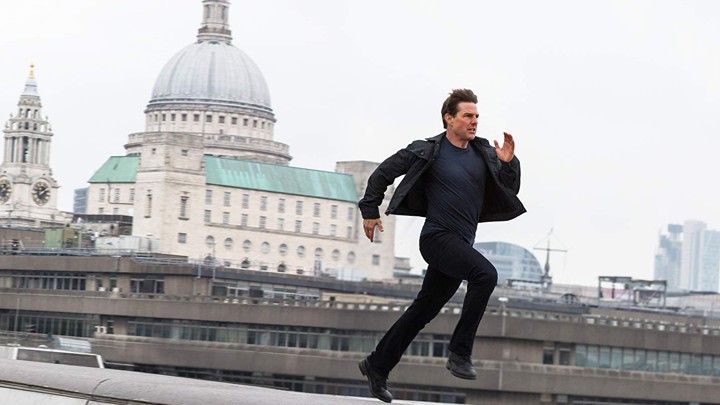
There’s little new or fresh in the latest “Mission: Impossible” chapter, branded way too ominously  for its own good with the term “Fallout” (“Mission: Impossible – Fallout”). Its star, Tom Cruise, isn’t the spry chicken he was in “Risky Business” back in 1982; the television series the film franchise hangs on was a droll, thinking person’s staple back in the 1960s and 1970s; and the stunt work here is mostly old school. These aren’t three strikes, but a gold strike: Blending the three makes for the most exhilarating filmgoing experience of the summer, with Cruise doing most of his own stunts for the painstaking realism – and boy, does it show – and director Christopher McQuarrie choosing to do each crash-bang chase they way they used to when Bill Friedkin was lighting up the screen, eschewing CGI where any “Fast and Furious” helmer would jump in with a dual core processor and a green screen.

The plot’s not all that much to bite into – there’s three mobile nukes on the loose in Europe and IMF agent Ethan Hunt (Cruise)  feels particularly responsible because he let the weapons out of his grasp by opting to save one of his own crew (). Because of said misstep, Hunt’s team is given a watchful CIA presence, a strong-jawed slab by the name of Walker (Henry Cavill, who dons the cape as Superman in a different franchise). In Paris and London there’s a sleek assassin on a motorbike (Rebecca Ferguson) tailing Hunt & Co., as well as a racy arms dealer (Vanessa Kirby, from “The Crown”) in the middle who, without batting an eyelash, whips a stiletto from her garter belt to dispatch an onrushing hitman. Oh yeah, Lane (Sean Harris), the anarchist terrier Hunt put away in his last outing, “Rogue Nation,” factors big into the mix as well.

Needless to say, it’s a crowded affair that reaches its crescendo atop sheer precipices in Kashmir, and while that copter-crashing cliffhanger works effectively – if you hate height like me, you may experience a few churns to the gut – it’s not as raw or adrenaline-pumping as Hunt running the rooftops in London to capture quarry, or the smackdown in a Paris men’s room where Hunt and Walker get their asses handed to them by a very able foe. The scenes are so invigorating that when they’re over you need to catch your breath. The film does too, and it’s in these moments that the lines of artifice to get to the next whopper of a stunt show some. You can tell Cruise and McQuarrie, the scribe behind “The Usual Suspects” who’s worked with Cruise on nearly a half-dozen projects, are on the same page – it shows in almost every scene. McQuarrie, an obvious cinephile, layers in a slew of subtle, tongue-in-cheek film references for the enlightened, be it a nod to Rhames’ gimp scene in “Pulp Fiction” or Hunt spouting Cruise’s “crystal” line from “A Few Good Men.” And boy, can he run – and drive, fly and fall. Instead of “Fallout,” the tag for the film should have been “See Tom Run.”

Don’t Worry, He Won’t Get Far on Foot

28 Jul

‘Don’t Worry, He Won’t Get Far on Foot’: Alcoholic cartoonist was hell on wheels

Image result for picture don't worry he wont get far on foot

The films of Gus Van Sant, be they the good (“To Die For” or “Drugstore Cowboy”), the total miscue (“Psycho” or “Even Cowgirls Get the Blues”) or even a crowd-pleasingly mainliner (“Good Will Hunting” or “Milk”) have always been embossed by a gritty, streetwise authenticity. That’s Van Sant’s gift – plus, by skill, proximity or both, educing some of the great performances of the past 20 or 30 years from actors the likes of Nicole Kidman, Sean Penn, Matt Dillon, Robin Williams, Matt Damon and River Phoenix, to name a few. Here he’s re-teamed with River’s brother Joaquin, who played one of Kidman’s teen lovers-turned-hubby snuffers in “To Die For” (1995).

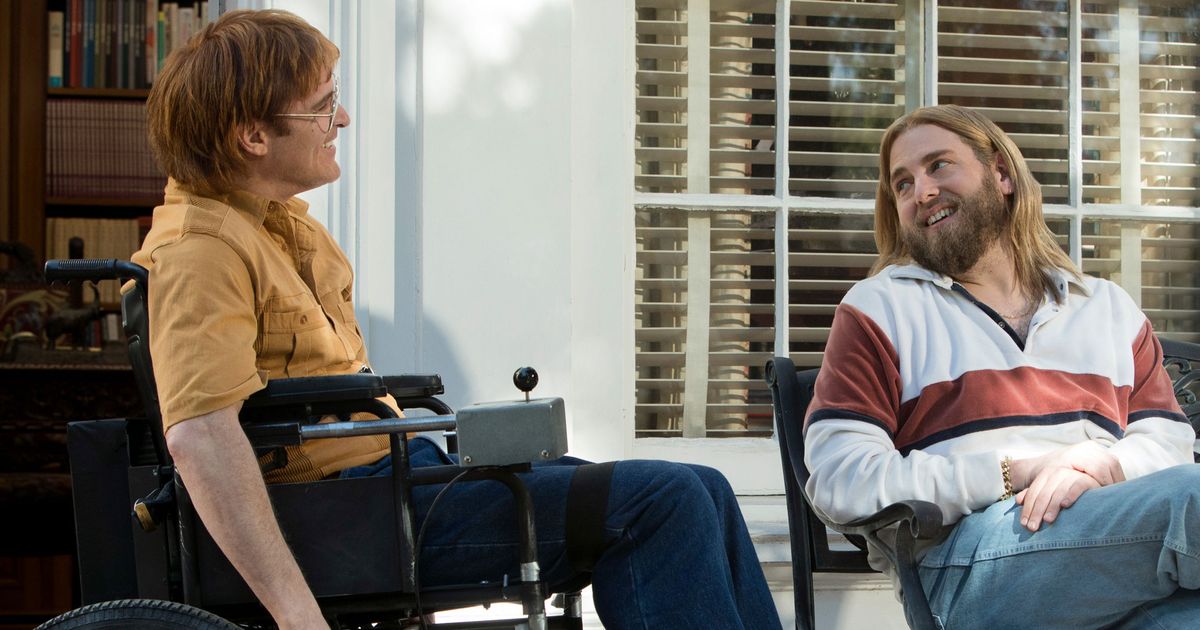
“Don’t Worry, He Won’t Get Far on Foot,” isn’t a topical grabber; it’s a biopic about an esoteric satirist/sketch artist by the name of John Callahan who died in 2010 after spending most of his adult life in a wheelchair, paralyzed from the waist down after a car accident involving a drunken driver. The terrible catch there being that the car was Callahan’s, driven by another (Jack Black) because Callahan was too drunken to drive.

“Don’t Worry,” however, isn’t so much about overcoming physical difficulties and beating the odds, but about confronting one’s demons. As the film has it, Callahan has an angry closet full of ’em. A raging alcoholic from the minute we catch up with him to the alcohol rocket of an evening that ends with Callahan’s VW Bug wrapped around a cement post, the slacker handyman out for the next good time seemingly has little prospects beyond his shaggy good looks and winning smile – and then that too seemingly gets taken from him. Strapped to a hospital gurney in the cold, sterile aftermath, Callahan flirts with his physical therapist (Rooney Mara, impeccable and fetching in the small role) and when peppering his counselor (Rebecca Field) about the functionality of his equipment, she suggests with grave seriousness that he ask the night nurse to sit on his face. Callahan flashes his old smile and accepts the challenge gleefully. Out on his own. Callahan returns to the bottle with self-pitying vehemence. It seems a fast downward spiral, but he also starts drawing acerbic political doodles that get published (“the place that publishes Gary Larson just called”) and elicit strong public reaction. He also checks into an AA group led by Jonah Hill’s ultra-rich gay swami, Donnie, who presides over the flock with the smarmy, manipulative charm of a cocksure charlatan. Callahan takes to Donnie, but keeps boozing on the side with angry-man swagger. All of which makes for a gonzo 12-step ride.

It might be treasonous to say, but Phoenix and Hill don’t have great chemistry. They’re fantastic, mind you, but not in the way Bogie and Bacall or Newman and Redford were, or even Damon and Affleck’s bros in Van Sant’s “Good Will Hunting.” When the two are on screen together the film is undeniably intoxicating in its own quirky right; if you were at a bar with this duo, you’d find it hard to close out your tab before closing time. But they’re just not pouring the same stuff. And sans the bravura performances – self-righteous Hill and self-hating Phoenix – I’m not sure “Don’t Worry” would be that interesting of a film. Cultural icons Kim Gordon, Udo Kier and Carrie Brownstein have small bits and feel plugged in but not necessarily engaged in the presence of the immersed leads. Gordon, best known for her work as a member of edgy ’90s rock band Sonic Youth, also had a small role in Van Sant’s “Last Days” (2006) the last chapter in the filmmaker’s Death Trilogy that reimagined Kurt Cobain’s demise. The other films in that series, “Gerry” (2002) and “Elephant” (2003), a repainting of the Columbine massacre, are similarly fact-based and likewise riveting. “To Die For” (1995) and “Paranoid Park” (2007) too might make apt bookends, and if you added in “Don’t Worry,” an individual alone in a country cabin for a weekend with the ability to stream such a double-triple program might emerge on Sunday depressed, enlightened and oddly invigorated. The most telling and frightening aspect of “Don’t Worry,” however, is its raw and honest depiction of addiction and the grip it has on the ensnared – and the ends they will go to in spinning a false narrative even as the knees of reality betray them.

Ant-Man and the Wasp

7 Jul


There’s plenty big and small in “Ant-Man and the Wasp,” and I’m not talking about the diminutive or gigantic sizes its superheroes can achieve – and do, often and to great effect – but the elements of film. On the small, there’s a hive of plot activity, but little of it resonates or at least feels fresh or smart. On the big (or gigantic) is a kick-ass ensemble that plays off its sharp leads smartly, with fervor and punch in every frame.

For those of you who missed the cornerstone “Ant-Man” a scant few years back in 2015, you don’t need to back up and catch that less interesting flick before diving in. What you do need to know is that “Ant-Man” is part of the whole Marvel Universe run by Disney and that the hero known as Scott Lang (Paul Rudd) sans the suit, is serving the end of a two-year house detention mandated by the FBI for his participation in a fracas over in Germany, seen back in “Captain America: Civil War” (2016). It’s also why Ant-Man didn’t put in a show in Wakanda this year for “Avengers: Infinity Wars.”

All of the crowd-pleasing heat of the film flows through Rudd and his quirky, blue-eyed likability, be it Lang’s wisecracking antagonism of an FBI caseworker (Randall Park, bringing the same sourpuss charm he’s made a career of on “Fresh Off the Boat”) who pops in for random house searches, or his parries with testy ant-suit inventor Hank Pym (Michael Douglas). The on-again-off-again romantic dynamic with Pym’s daughter Hope (Evangeline Lilly), which gave the first film a reason to be seen, bears fruit again and elevates Hope to superhero status as the other half of a bill that can shrink or enlarge. Hank’s also got a magic remote that can shrink cars and even entire buildings if properly configured; and there are those German shepherd-sized ants with massive mandibles that help run Hank’s shrinkable lab.

Fun stuff, but Hope and Hank newly believe they have a chance to rescue mother/wife Janet (Michelle Pfeiffer, who’s not in the film enough) from the quantum plane purgatory she’s been lost in for the past decades (there’s plenty of highfaluting mumbo-jumbo like this, and it’s best to just roll with it). The key to getting the right coordinates to her locale is implanted in Lang’s head through a dream or something of an out-of-body experience. To get there’s something akin to “Fantastic Voyage” (1966), but also one of the least interesting plot threads. Meanwhile, Lang, saddled with an FBI ankle monitor, has gone AWOL and there’s a Tom Wolfe-style restaurateur (Walton Goggins) who moonlights in black-market technology and wants Hank’s shrunken lab, while an entity known as Ghost (Hannah John-Kamen), ever angry and able to walk through walls, wants to disrupt the quantum plane quest for her own ends. Perhaps the most daunting obstacles are Lang’s ex-wife (Judy Greer) and daughter Cassie (Abby Ryder Fortson) who pop in via FaceTime at the most ill-timed moments looking for soccer cleats; even better is Lang’s security firm business partners, Luis (Michael Peña), Kurt (David Dastmalchian), and Dave (Tip “T.I.’’ Harris), who are both burdens and saviors, and quite effective as comic relief.

Peyton Reed, who test drove the cast for the 2015 outing, feels more comfortable and in control this go-round. The action sequences are seamless, funny and, with their use of big-small toggles, ever surprising and fresh. As much as Lilly gets near equal time – and she’s more than worthy – this is the Rudd show, and that’s not a bad thing; he’s just more the loose cannon, while the former “Lost” star anchors the film with emotional stability and grit. The combination of the personal and uproarious scenes such as Ant-Man summoning winged ants for transport that get picked off by a seagull put “Ant-Man and the Wasp” in the comedy-cum-action camp with the first “Guardians of the Galaxy” and “Deadpool.”

Leave No Trace

29 Jun

‘Leave No Trace’: Cambridge’s Granik returns with ‘Bone’-deep tale of haunted duo on the run


Fans of 2010’s “Winter’s Bone,” which launched the careers of Jennifer Lawrence and John Hawkes, are bound to rejoice at Cambridge native Debra Granik’s first feature since. There’s plenty of common DNA between the two films. “Bone” was a deeply internal and character-driven narrative nested in parts of the Ozarks where culture, law and civility don’t penetrate, and “Leave No Trace” lands in a similarly remote environment, farther west in the Pacific Northwest where Will (Ben Foster) and his 13-year-old daughter, Tom (Thomasin McKenzie) hang out in the woods, away from civilization, TV and the law. The reasons they live under a green canopy abutting Portland and run from any crack of a branch triggered by a passing dog walker or jogger remains enigmatic for much of the film. Full answers never really materialize, but Granik, working with material from Peter Rock’s novel, leverages that as a strength, drawing and pulling provocatively throughout.

Early on, it’s pretty clear Will has military training and suffers form some form of PTSD or a similar condition. He’s a good dad, however, making sure Tom is well-educated (advanced for her age, a social worker later remarks) and he teaches her survival and avoidance skills. They’re good at evading and make occasional forays into the city (he gets his PTSD meds and resells them for cash), but eventually authorities catch up with Will – turns out he’s not the only recluse living in the state forest. As if on cue from our daily newsfeed, the sudden fear that Will and his daughter will be separated fills the screen. They are for a brief period, but thankfully Oregon family services show more compassion than the current regime in Washington and the two are set up in a nice cottage on a farm where Will is given a job. First thing Will does is to put the TV in the closet, and it’s not too long until he and Tom have packed up and headed back into the woods.

How the film moves into the final chapter is driven more through Tom’s POV than Will’s. She’s clearly torn, wanting human interaction and the other things she thinks she may be missing out on, despite her love and care for her father. The two actors themselves feel so fully immersed in their characters that you wonder if they didn’t spend the entirety of the shoot in the woods eating bark and bugs, and there’s emotional depth in every scan of their faces – you know what they are thinking and feeling without a word. The film’s so tight and intimate and quiet you feel as if you’re at the campfire sipping pine needle tea with Tom and Will. Granik, a quiet, reflective soul, herself knows that the real story comes from inside, and the best way to tell it is to feel it.

Jurassic World: Fallen Kingdom

28 Jun


“Jurassic World: Fallen Kingdom” arrives in theaters this week with plenty of dino-wow, as one might hope, but with a bronto-sized side of mommy issues and some sustainability woes to boot. Which to tackle first? Hopefully you’re up on what went down in “Jurassic World,” the 2015 relaunch of the “Jurassic Park” franchise made so indelibly by Steven Spielberg and Michael Crichton back in the 1990s. Those first three “Parks” dug deep into our imaginations, with their all-too realistic renderings of T-Rex and lethally heeled velociraptors, and they slew at the box office. “World” marked a respectable redux, but “Fallen Kingdom,” gets weighed down with a fossil-heavy backstory and never quite achieves the amusement ride thrill that made its ancestors such scary good fun.

As with all the “Jurassic” flicks, the action begins down in Costa Rica, at the theme park from the last chapter that’s been abandoned and overrun by rampaging dinos. The crisis du jour becomes increasing volcanic activity that threatens to “re-extinct” the “de-extinct” lizards (okay, birds). Congressional debate rages about saving them or not and, blessedly, Jeff Goldblum looms at the epicenter with rapturous logician metababble; then, just like that, the crew from the last “World” – the park overseer (Bryce Dallas Howard) and raptor wrangler (Chris Pratt) – are back as part of a conservation effort to get as many of the dinos as possible off the island and to a “sanctuary.”

The pair go in at the behest of a benevolent billionaire (James Cromwell, in a requisite but wispy role) who partners them with a team of big game hunters that feel a lot like the bunch from the second film, “The Lost World: Jurassic Park,” (1997) and are led by Ted Levine, surprisingly not too far from his Buffalo Bill in “Silence of the Lambs.” There’s a lot of Spielberg DNA to be found in “Fallen Kingdom” – Pratt’s smug, everyman posturing and action sequences feel right out of “Raiders of the Lost Ark,” but just because you clone something doesn’t mean you get exactly what came before. That brings us back to those mommy issues: There’s a precocious little girl by the name of Maisie (Isabella Sermon), who may or may not be the billionaire’s granddaughter, and there’s Blue, the empathetic raptor from the last “World” raised by Pratt’s Owen, who holds the key to controlling the new line of mega-raptors being weaponized for trade and profit. Yes, sadly it all comes down to military-industrial complex shenanigans, avarice and hidden agendas.

Given the one-percenter station of many of the players in the film with their fingers on the stings, I kept asking myself, how much is too much? Why do billionaires need a lousy 20 million for ankylosaurs? The answer to which can only be power and control. The pomp and arrogance through which it’s executed feels far too profound a metaphor for the carnivorous control that’s taking hold across the country these days. Perhaps I’m reading too much into it, but given the big, bloody slab being dangled, one has to bite.

The film’s natural subtext of “don’t mess with Mother Nature” – because payback’s a tooth and claw feng shui session – gets executed with perfunctory perfection at the apt hour. The wrap-up of the film, directed by Spanish director J. A. Bayona, best known for the arthouse horror film “The Orphanage” (2007), becomes its most provocative and resonant moment. Much of what precedes it is dull despite all the thrashing, and it doesn’t help that all the combative-romantic chemistry between Pratt and Howard in the last “World” has seemingly gone the way of the dodo (no, they have not been brought back yet). Overall, “Fallen Kingdom” makes it feel like the series might be done for, even though where we end feels like a launching pad – a place of opportunity, laden with possibility.

Hotel Artemis

9 Jun


At the Hotel Artemis, you can check in any time you’d like but – like the Eagles tune tells us – it’s pretty damn hard to leave. Why? Well for one thing, it’s a safe house for criminals. And two, outside in the grubby L.A. streets, mobs are rioting over the privatization of water.

“Hotel Artemis” takes place in the near dystopian future, though it’s hard to get a full register of what that’s really like; similar to Wes Anderson’s “Grand Budapest Hotel,” the film’s mostly an inside job. Lording over the den of thrives is a boozy, disheveled Jodie Foster, referred to as The Nurse, with a Master Blaster of an orderly at her side by the moniker of Everest (played by hulking former wrestler Dave Bautista, so winning in the “Guardians of the Galaxy” and “Avengers” films) who enforces house rules and metes out small doses of medical aid. Among the potpourri of personalities checked in are Sterling K. Brown’s dapper bank robber, Charlie Day channeling his inner Joe Pesci as a jabber-jawed arms dealer and Sofia Boutella’s super sleek assassin (she played a similar role in “Atomic Blonde”). About halfway in, a banged-up capo known as the Wolf King of L.A. (played by a game Jeff Goldblum, who’s onscreen too little) shows up to raise the stakes. If the invocation of another “Wolf” in L.A. crime doesn’t seem like a grab at something from Tarantino’s hip criminal universe (Harvey Keitel’s fixer from “Pulp Fiction”) then maybe the fact that all the “guests” are referred to by their room name – substitute “Niagara” and “Waikiki” for “Mr. Pink” and “Mr. Black” and you get the picture – might tell you what screenwriter/director Drew Pearce is angling for. “Artemis” even has its own McGuffin (a mysterious pen) and a wounded cop (Jenny Slate) with information to share. 

Much is packed into a lean 93-minute runtime. First-time helmer Drew Peace, who wrote the screenplays for “Iron Man 3” and “Mission: Impossible – Rogue Nation,” shows a knack for snappy action the way stuntman turned filmmaker David Leitch demonstrated with “Atomic Blonde” and “Deadpool 2.” The rub, however, is that as a narrative, “Artemis” jumps around too much, and not everything quite fits (perhaps over-enthusiastic editing had a role to play). As a result, the only characters that resonate even faintly are Foster’s wheezing hotelier and Brown’s remorseful perp saddled with a blundering older brother. It doesn’t help that in an era of grand set designs, the glimmers of the outer-scape feel cheap, plastic and uninspired – not in the cheesy, good way that “Logan’s Run” made so indelible, but more like the stagy street riots in David Cronenberg’s “Cosmopolis” (2012) or the Orwellian future-scape in “Equilibrium” from 2002, if you even remember that one. Peace is blessed with a great cast, and the actors all provide above-the-bar turns. It’s just too bad in execution “Artemis” feels more like a staged (and very promising) concept than the mean teeth of true criminal intent.

Upgrade

5 Jun

‘Upgrade’: Victim of attack has a question: ‘Siri, how do I get my gruesome revenge?’


The name Logan Marshall-Green might not ring a bell immediately; he played the first scientist in Ridley Scott’s “Alien” reboot, “Prometheus” (2013) affected by the alien, his eyes going black and turning into something of a berserker before getting torched by a flamethrower and run over by a bus. Seeing “Upgrade,” a sci-fi take by longtime “Saw” collaborator Leigh Whannell (working with James Wan), it seems these are desirable acting skills, as rough, good-looking Marshall-Green plays another intrepid protagonist similarly subjected to violent torment and put through a nasty physical transformation. The good news for his Grey Trace is that the brutal smackdown happens upfront in this film; then it’s time for the upgraded Grey to lay down his own brand of ass-kicking.

Set in the near future where driverless cars are the norm and criminals and vagrants roam the littered cityscape, Grey and his wife are beset upon in a vehicle that goes way off course. It doesn’t end well – she’s dead; he might as well be. A few days later Grey’s up, learning to walk again, a super computer chip implanted in his head to help make all connections to the nerves that make him go. He also hears voices in his head: his own personal Siri, that, if Grey grants permission to take control, can use his body in lightning-fast ways. In short, he becomes his own personal “Terminator” on the trail of getting revenge on the posse of vermin who offed his wife. 

Natch, there’s a fly in the ointment – corporate espionage, bottom lines and more that drive the bigger picture, and themes right out of “Frankenstein” or “Blade Runner” (1982) – but it’s all a device for Grey to tap into his inner HAL and hack up henchmen, some of whom have guns implanted in their arms; one who can sneeze deadly spores.

In the end, the clear borrowing from the great, snarky original 1987 “RoboCop” (near-future cityscape and all) almost overpowers “Upgrade.” It’s not nearly as sharp or socially biting, but does have a fresh, whimsical take on tomorrow – “Her” (2013) on crack and very angry. Whannell could have played the camp angle for more; as is, the dark and violent approach works largely thanks to Marshall-Green selling his wonder and horror so effectively. Besides genre fans, “Upgrade” is likely to prove a fun, forgettable watch, more a reboot than the next version.