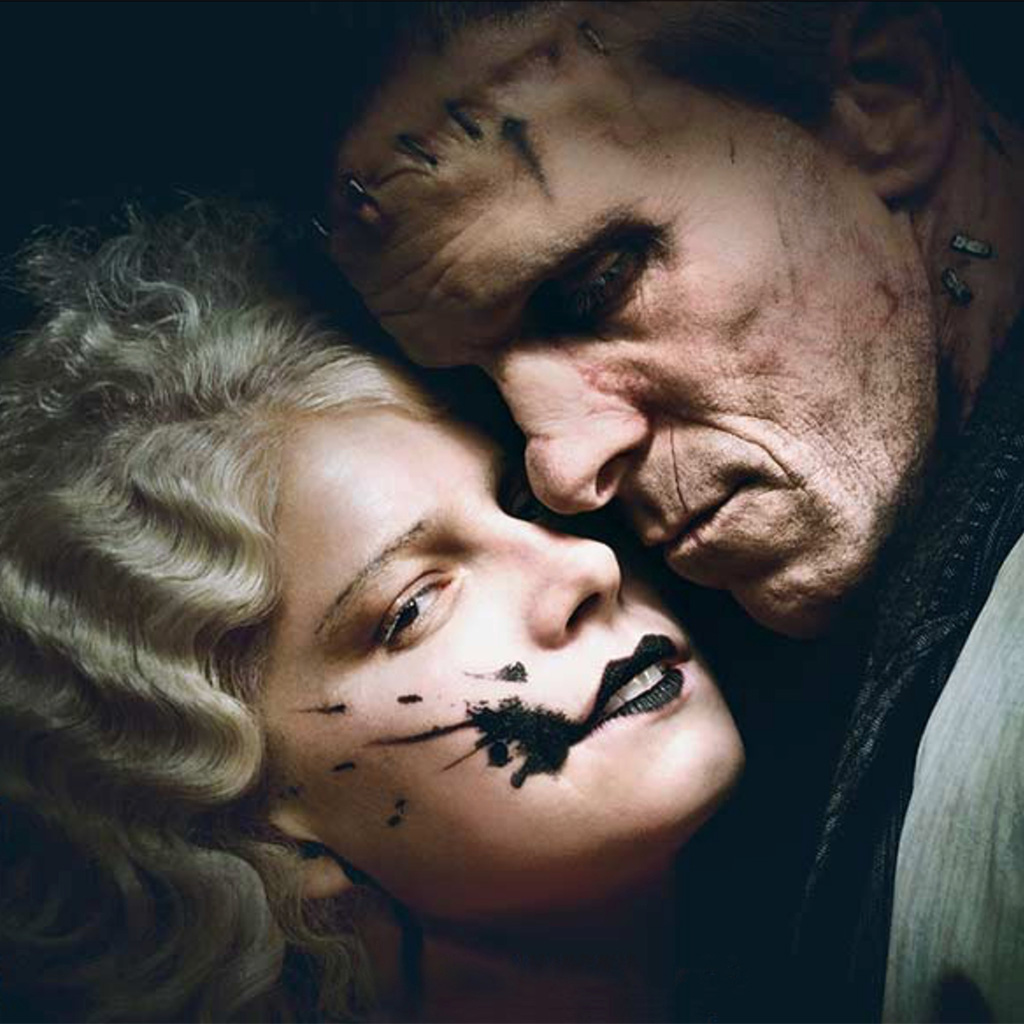
Jessie Buckley and Christian Bale in Maggie Gyllenhaal’s “The Bride!”
Right now cinemagoers can double their Frankenstein pleasure with “The Bride!” and Guillermo del Toro’s “Frankenstein,” up for the Best Picture Oscar this Sunday. Sure, “Frankenstein” is streaming on Netflix – it’s practically left theaters – but it is one of those films best seen on the big screen, as is Maggie Gyllenhaal’s newly opened grand spectacle. They play like bookends to the original story by Mary Shelley, just 18 at the time she wrote her 1818 novel subtitled “The Modern Prometheus.”
In the book, The Bride was promised but never made. It’s in the 1935 James Whale-directed sequel to “Frankenstein” (1931) and Gyllenhaal’s “The Bride!” that we get the realization of the corpse bride via very different narratives. Wedding crashers in the genre are “Frankenstein: The True Story” (1973), starring Jane Seymour and David McCallum of the “Man from U.N.C.L.E.,” and an emotionally inert 1985 version of “The Bride” pairing Jennifer Beals (“Flashdance”) with Sting, in which the rendering of The Bride was defined by the performer’s comely, magazine-cover self.
Thematically Whale’s films were about loneliness and acceptance; del Toro homes in on creation and revenge. Gyllenhaal’s “The Bride!” is a hot mess and something of an ambitious miss, set cheekily in 1930s post-Prohibition Chicago but, like Whale’s emotional engine, driven by The Creature’s loneliness: The flamboyant monster, played by Christian Bale and going by the moniker of “Frank,” arrives in Chicago to implore Annette Bening’s Dr. Euphronious to make him a mate.
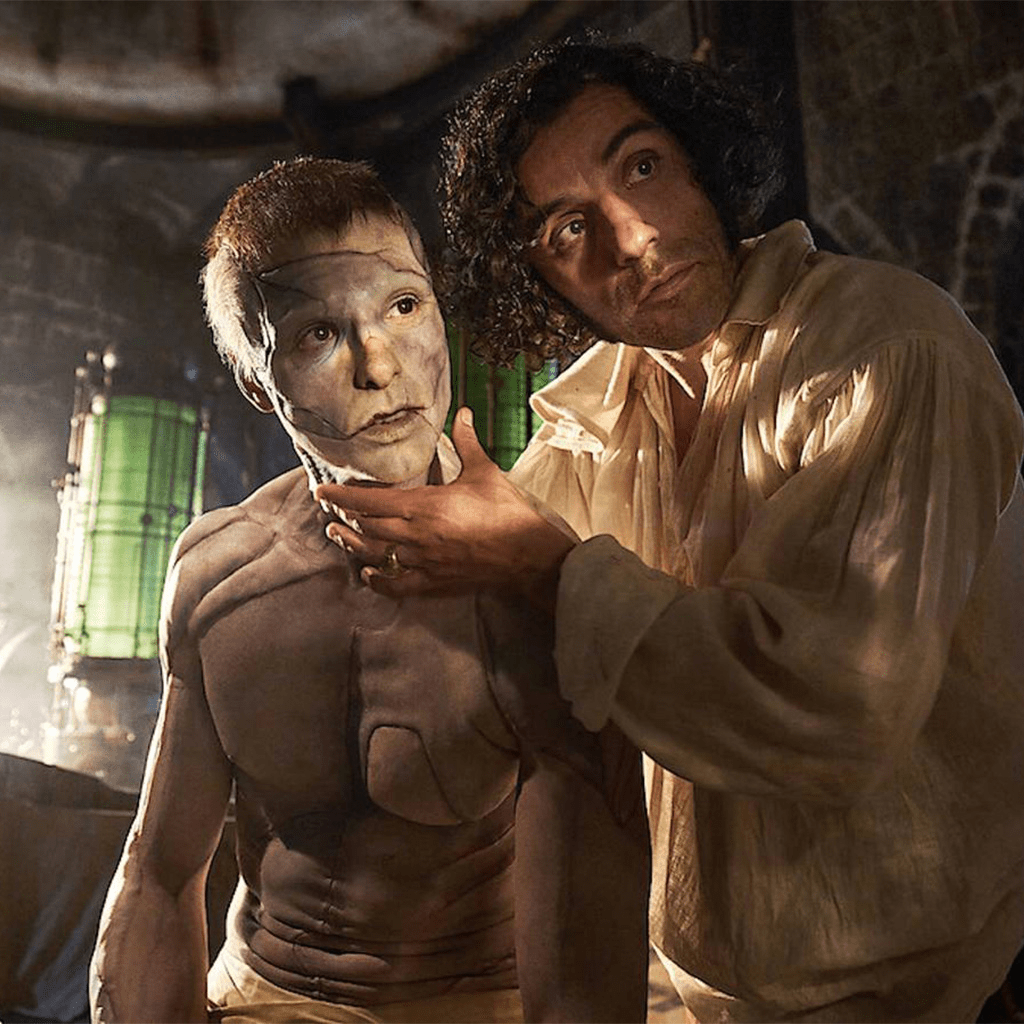
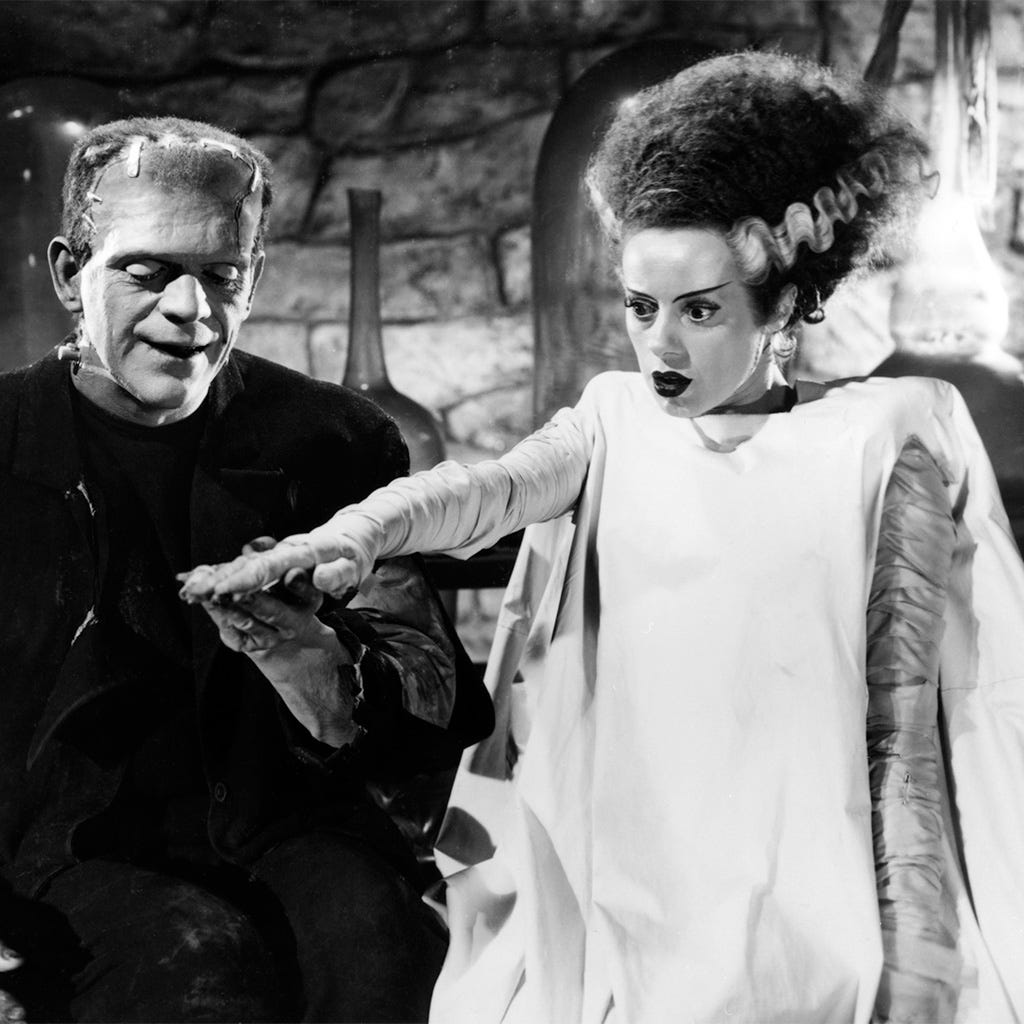
In Whale’s “Bride,” the female counterpart is clearly the better looking of the two, and it cuts like a knife: When brought to life, The Bride is horrified by the sight of The Creature. In contrast, in Gyllenhaal’s romantic revamp the pair become something of a Bonnie and Clyde, and like that couple, are on the run from the law.
From a narrative point of view it’s interesting to contrast the Whale movies, the currently playing pair and Shelley’s source material.
In the book, The Monster is self-educated as a result of eavesdropping on English lessons given by the family of a blind man, and becomes somewhat accomplished. In del Toro’s “Frankenstein,” Jacob Elordi’s Creature meets the blind man – the only human to accept The Creature for who he is – and is taught to speak and read well. In Whale’s films, Boris Karloff’s Creature grunts, roars and gesticulates like one of our ancestors in “Quest for Fire.” He learns how to string a loose sentence together from the blind man in “Bride of Frankenstein.”
A whole Arctic pursuit that was the central framing device of Shelley’s novel is absent from Whale’s Franken-verse but is in del Toro’s 2025 revisit, decidedly the more loyal to the source material.
There’s a spin on the resurrected bride in Kenneth Branagh’s 1994 film – also simply titled “Frankenstein” – in which Victor’s wife, Elizabeth (Helena Bonham Carter) is killed by The Creature (Robert De Niro), reanimated and, as in Whale’s narrative, horrified by The Creature’s grotesqueness. In Shelley’s book, it is The Creature who kills Elizabeth; in del Toro’s film, Elizabeth (Mia Goth) is shot accidentally by Victor (Isaac Oscar) on the night she is to marry Victor’s younger brother William (Felix Kammerer). Even more confusing, in Whale’s 1931 picture, Dr. Frankenstein’s first name was Henry – not Victor, as Shelley had it – but for the sequel, it was updated to be Henry Victor Frankenstein.
The actors who play The Bride in Whale and Gyllenhaal’s films – the iconic Elsa Lanchester then; the ever impressive Jessie Buckley now – also play brief incarnations of Shelley. Whale’s “Bride” opens with Shelley, her husband Percy, and Lord Byron gathered fireside, with Shelley in effect the narrator of the film, reflecting the origins of the novel as a challenge among a literary circle. In “The Bride!,” Shelley spouts prophecy amid torrents of gibberish and seemingly possesses a party girl named Ida (also Buckley), who ultimately dies and is reanimated as The Bride. It’s a bold undertaking by Buckley to bring all of Ida/The Bride/Shelley’s mercurial tics to the screen with confidence as the film teeters on the precipice of gonzo.
The two brides, while both punked-out goths with white shocks of hair, are vastly different in incarnation: Lanchester’s Bride is mute and onscreen for mere minutes; Buckley, with tinges of Cyndi Lauper and Harley Quinn, is everything to the film and becomes something of a feminist folk hero.
Gyllenhaal actually weaves in Bobby “Boris” Pickett’s 1962 novelty song “Monster Mash” and the #MeToo Movement – I did tell you it borders on gonzo – and pays homage to the Fred Astaire-Ginger Rogers musicals of the era, replacing Fred and his films with a fictional gent by the name of Ronnie Reed played by Gyllenhaal’s brother, Jake. It turns out Frank and The Bride are big Ronnie Reed fans, and later crash a New York City gala that Reed is at. The tie-in with Karloff and Whale is that Karloff later in his career played a version of himself as Hollywood horror legend in the 1968 film “Targets,” a loose dramatization of the 1966 Charles Whitman shooting rampage. In the film, Karloff’s Byron Orlok (a cheeky mashup of Lord Byron and the name of the vampire in “Nosferatu”) and the mass shooter cross paths at a drive-in showing Orlok’s films. The shooter’s a fan.
 For What it's Worth
Leave a comment