‘Anemone’ (2025)
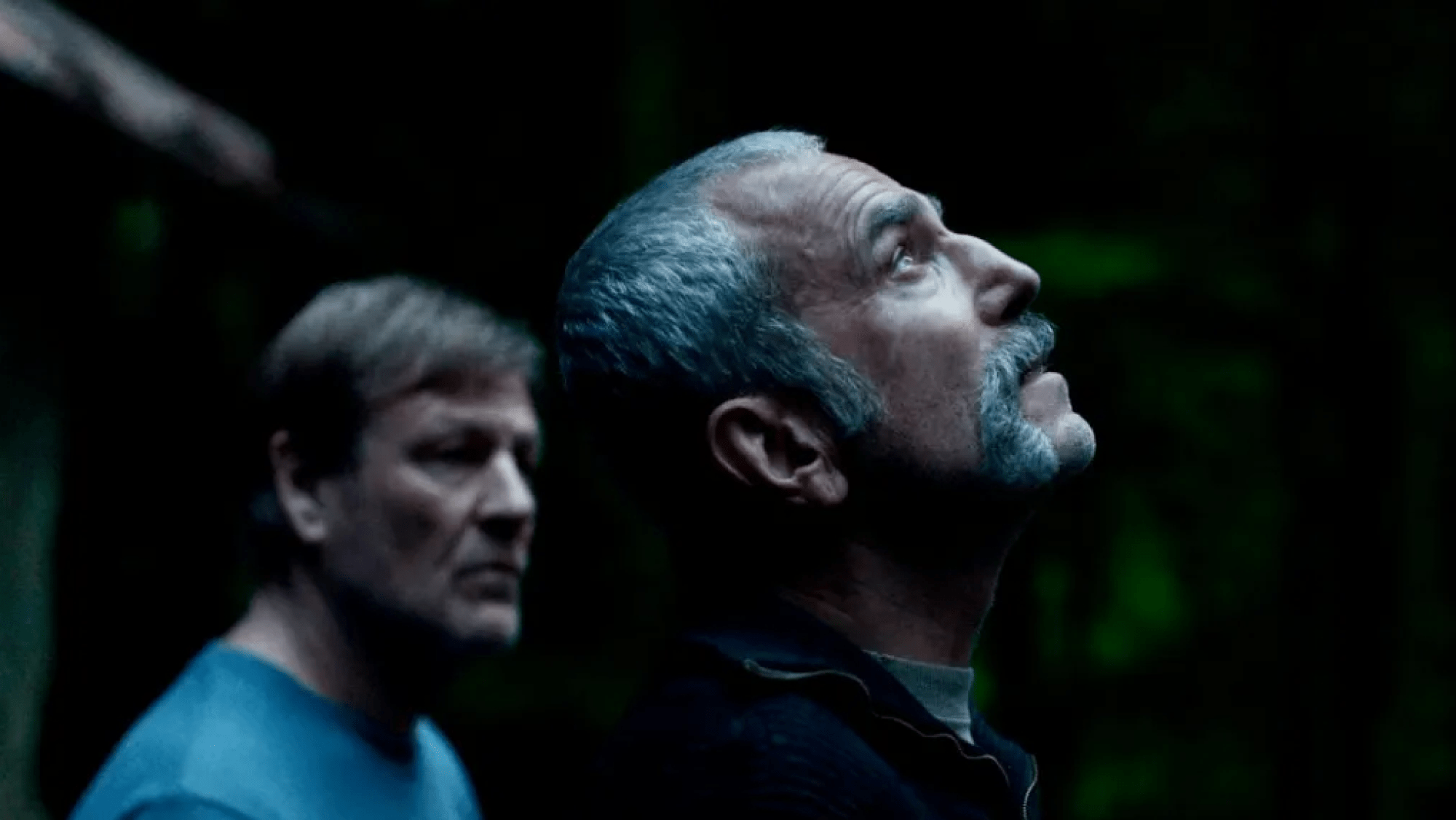

A deeply engrossing, if uneven, sojourn into the realm of reckoning and redemption. The ace in the hole here would be Daniel Day-Lewis, who came out of retirement (in 2017, with the release of “Phantom Thread,” he implied it would be his last film before the camera) to make this deeply emotionally portrait with his writer-director son Ronan in his filmmaking debut. The senior Day-Lewis co-wrote the script, but from the overall scrumptious look and intensity, Ronan is an up-and-comer to watch. The title refers to the delicate and sensitive flower that closes up when touched and is evocative of Day-Lewis’ Ray, who has dropped out of society and is living off the grid in the woods of Northern England. For nearly 20 years, his brother Jem (Sean Bean) has been rearing Ray’s son Brian (Samuel Bottomley, “How to Have Sex”) after marrying Ray’s former lover, Nessa (Samantha Morton). In short, Jem stepped in when Ray stepped out on the pregnant Nessa; Jem ventures out to find Ray now because Brian is struggling. To say why Ray has gone into isolation wouldn’t be a spoiler, but it’s besides the point – involving Ireland’s violent Troubles, with the present-day of “Anemone” set in the early to mid-1990s. Much of the early segments of the film are long, speechless moments between Jem and Ray in the lush, deep forest that offers access to a remote beach and nearby stream. The intensity that defined Day-Lewis and earned him three Best Actor Oscars (the only male lead to do so; Katherine Hepburn notched four) is on full display in the red flicker of his cottage’s fireplace as he delivers two big soliloquies that give us Ray’s “why.” Cutbacks to Nessa and Brian in a distant working-class borough fill out the picture, and Bean and his character know the landscape and their place in it. The film, shot by Ben Fordesman (“Love Lies Bleeding,” “Out of Darkness”) and scored by Bobby Krlic, is a stunning fusion of sound and image – intimate yet expansive with deep eerie chords that conjure wonderment and a haunting sense of foreboding. Not all of it melds, yet it rivets in nearly every frame.
‘The Lost Bus’ (2025)
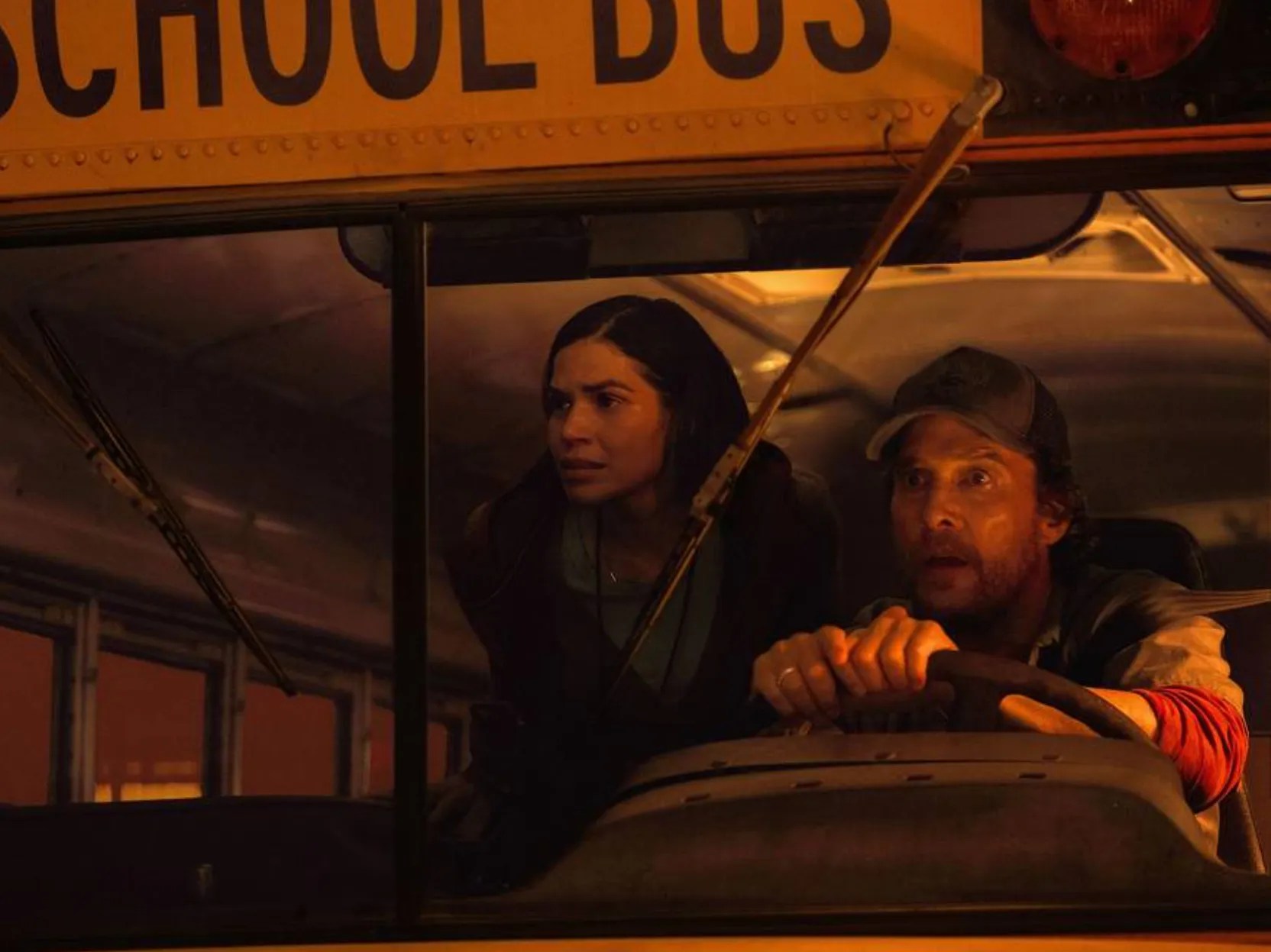

Those terrible wildfires – Eaton and Palisades – that torched Los Angeles this year are still seared in our collective minds with images of people fleeing their homes amid smoke and flame with nowhere to go. More devastating in terms of acres burned and fatalities (85 versus 31) was the Camp Fire in Northern California’s Butte County seven years ago. That fire, and a heroic effort to save 22 trapped school children, are the subject of the latest drama-thriller from Paul Greengrass, the plucky director who kicked ass with three “Jason Bourne” flicks and made “United 93” (2006), the definitive 9/11 film, which put you in an aisle seat aboard the doomed plane. Greengrass brings all that immersive experience to a town ablaze. The visual effects of the smoke and flames closing in on fleeing cars struck in gridlock are so visceral your throat can practically taste the acrid, choking smoke. The heart of the film is a scruffy Matthew McConaughey as Kevin McKay, a single father trying to make ends meet as a fill-in school bus driver. He can’t get enough shifts to cover his bills, and his dispatcher (a highly critical Ashlie Atkinson) doesn’t much like him or care for his excuses about dropping off medicine for his ailing son (McConaughey’s real-life son, Levi). Additional complications come in the form of a series of calls from McKay’s ex telling him she’s on her way out of town with her new beau and can’t help with their son, and his mother (McConaughey’s real-life mom, Kay – it’s a family affair), with news that his estranged father is near death and this could be his chance for a reunion and closure. As the fire takes hold and begins to spread, McKay is in a big, boxy bus caught in the stream of fleeing traffic as the gravity of the situation transforms a calm exodus into a bumper-grinding panic. Then comes a call – and a shot at redemption – in which McKay is asked to go to a nearby elementary school to evacuate children whose parents aren’t able to fetch them. One teacher, Mary Ludwig (America Ferrara) – married, with her own family – tags along to help keep the kids calm and safe. McKay and Ludwig often look a bit like Keanu Reeves and Sandra Bullock in “Speed” (1994), with the look of concern ever etched upon their face as one negative twist after another confronts them. But this is no Hollywood fantasy. The chemistry between McConaughey and Ferrara, as well as the perfectly meted backstory of McKay’s domestic and financial woes, deepen instead of veering into Lifetime maudlinness. The stakes go higher after the bus breaks from the main traffic flow – where cars ahead and behind erupt regularly into flames – to go to the designated drop-off point. Of course, when they get there it’s abandoned and overrun by flames, and with communication down, no one knows where the bus is. The cause of the fire was an electrical wire mishap during extreme drought conditions; energy company Pacific Gas and Electric was found guilty of 84 counts of involuntary manslaughter and ordered to pay $16.5 billion in damages. (The court proceedings are not part of the movie, but an end note.) “The Lost Bus” is a gripping tale of heroism and tragedy that shouldn’t have to be told.
 For What it's Worth
Leave a comment