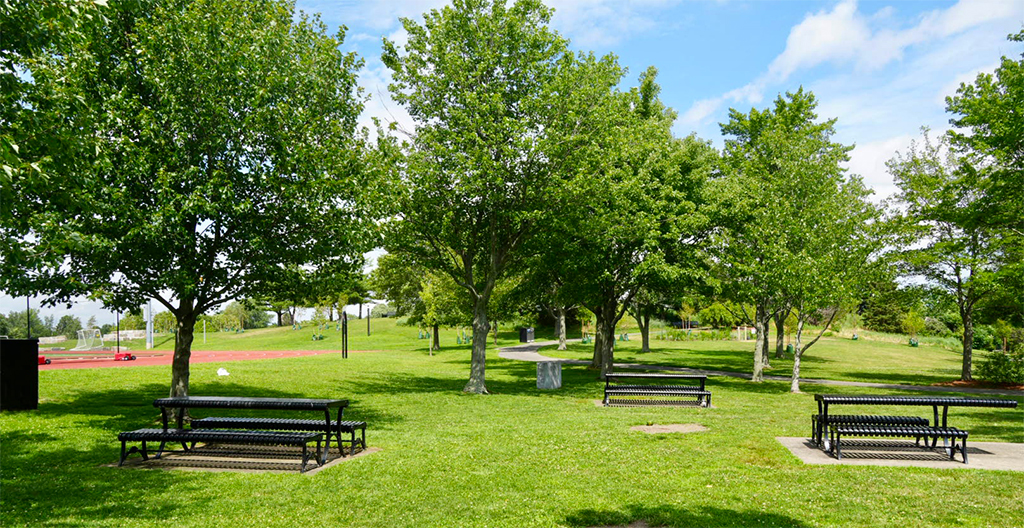
Cambridge’s Danehy Park is a green destination born from a dump.
Hard to believe Danehy Park turns 35 on Monday.
This 50-acre North Cambridge destination for lounging and recreation, picnicking, sports and events big and small hosts the annual Family Day on Saturday; a jazz festival in July; and Shakespeare troupes and the Oldtime Baseball Game, with guests of Red Sox royalty such as Lou Merloni, Oil Can Boyd, Jonathan Papelbon and Pedro Martinez suiting up at St. Peter’s Field.
It seems like yesterday I was tweezing grit from my knees because the playing fields, built upon landfill, had shards of that old junk and plenty of sand and gravel – laid down as a barrier amid newly laid topsoil – bleeding up and turning what seemed to be verdant, grassy fields into unfriendly hazards. Diving and sliding resulted in nasty rash burns, and far too often, skin tears that kept reopening until the season ended. Fun, painful memories.
A year or so after its opening in 1990, the fields at Danehy Park got a regrade and redress. Improvements continued; Now, if you play soccer or ultimate there, you can still get raspberries – but from legitimate turf burn, because most playing fields are now artificial.
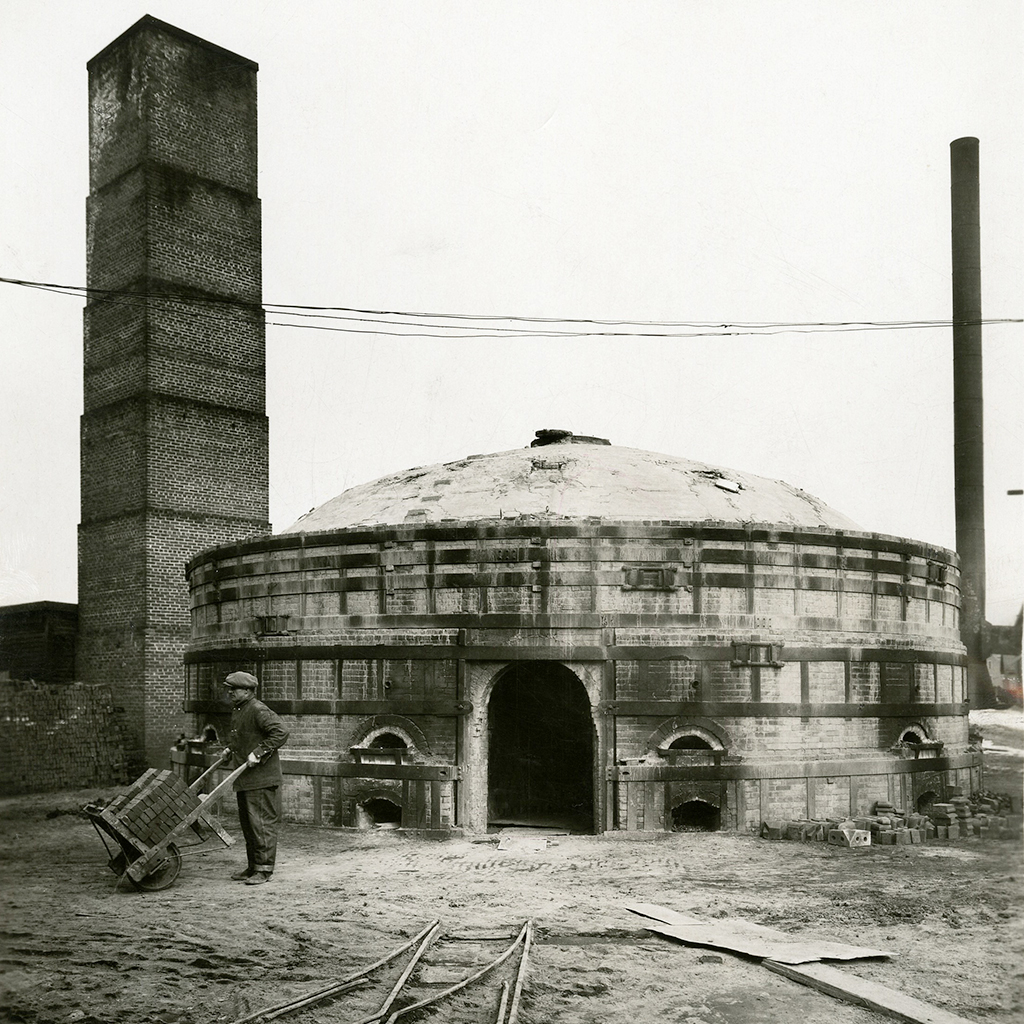
A Rindge Avenue kiln run by New England Brick Co. shows the industrial uses common to Cambridge around what would become Danehy Park.
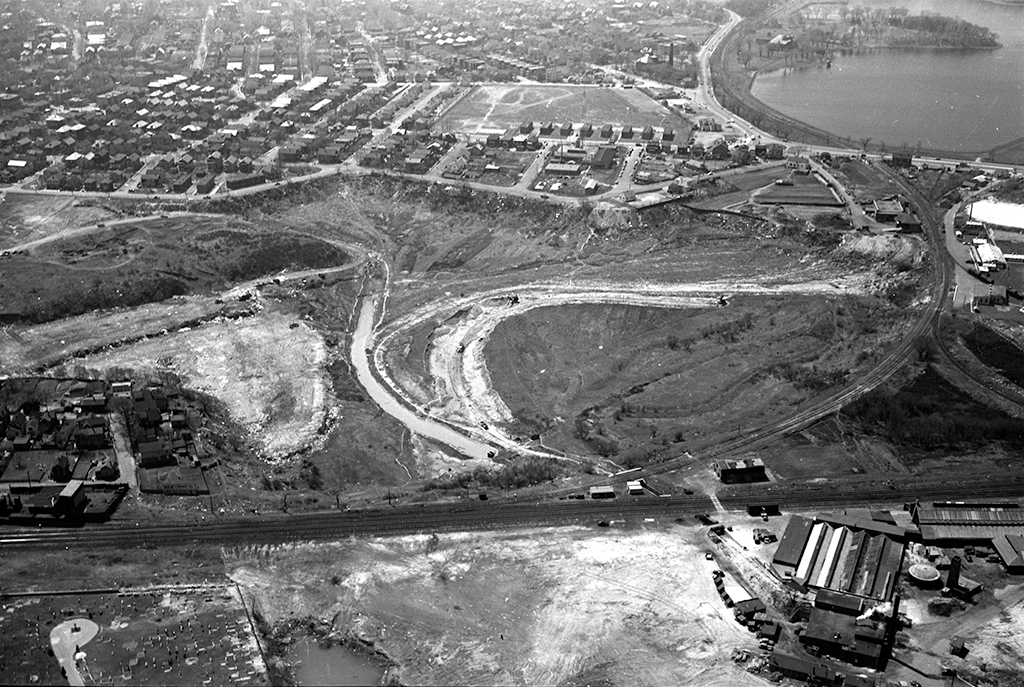
A Nebco clay pit in 1937 on land that would become Danehy Park.
During the 1800s this was home to a smattering of brickyards that sprung up to take advantage of clay pits in North Cambridge and Medford deposited by glaciers during the Ice Age. Just after World War II, as the pits depleted, the city bought up the parcel and, in the 1950s, converted the area to a dump – the “New Street Landfill” – used well into the 1970s, when land conservation and environmental protection acts tightened restrictions. The lot, as recalled by Charles Sullivan, executive director of Cambridge Historical Commission, got a more specific use: as dumpsite for the ongoing excavations to extend the MBTA red line from Harvard Square to nearby Alewife in the late ’70s and early ’80s. The use folded in conveniently with the city’s desire to cap the old dump, which, though was not in active use, smoldered and emitted methane vapors.
The park’s namesake is former mayor Thomas Danehy, a blustery conservative from North Cambridge who opposed the red line extension for traffic and crime concerns – though arguably, no extension, no park named after him – and publicly likened the cyclical nature of town-gown relations in Cambridge to a woman’s menstrual cycle, as The Harvard Crimson reported in 1979. Danehy, a pharmacist and avid jogger, served on the City Council from 1965-1989 and was mayor for one term in 1978. In 1979 he came under scrutiny for back taxes and in 1985 voted against Cambridge becoming a sanctuary city. In 1989, one year before the park would be dedicated in his name, he was voted out of office. He died in 2000.
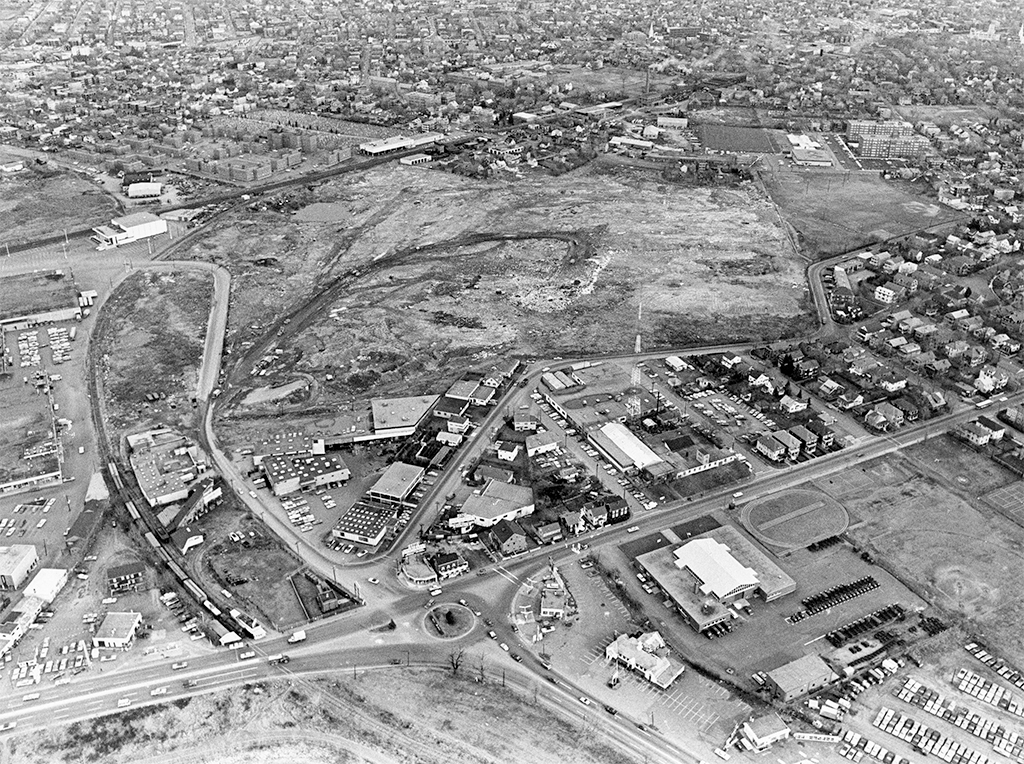
The Cambridge city dump seen from an airplane circa 1965 to 1971.
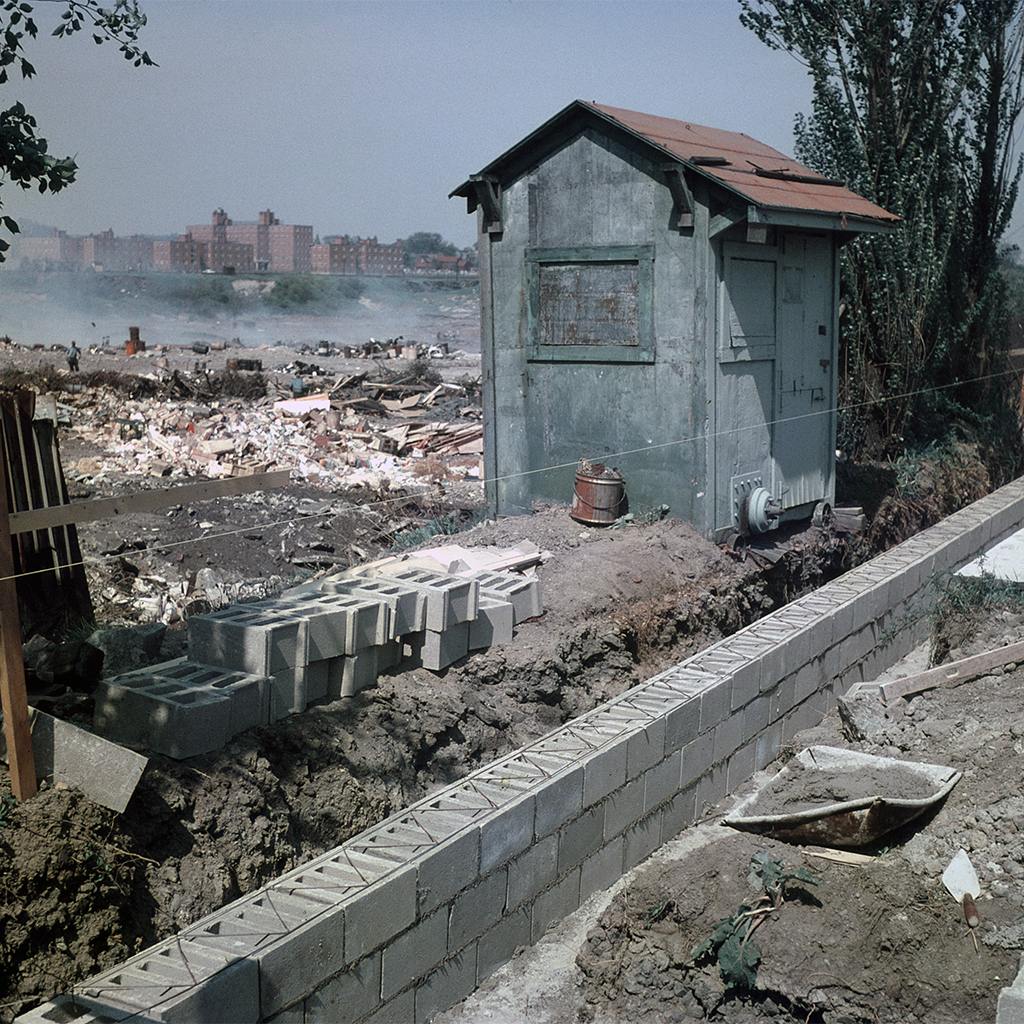
The city dump seen from from Bay State Road in 1956.
The conversion to city park came through a confluence of factors. Cambridge wanted to expand its open space footprint; the dumpsite was essentially dead and toxic; and there was a bigger international movement to transform former such spaces into public greens – and Danehy would be the first of its kind in New England. As a municipal asset, the 50-plus acres at Danehy Park increased the city’s open space inventory by 20 percent. The park boasts three baseball diamonds, nearly 2.5 miles of walking and jogging paths, four soccer fields, two age-appropriate playgrounds (for toddlers and elementary school kids), a water splash facility, shaded picnic tables and a football and soccer field with a new track around it. The city books about 10,000 hours of contests (soccer, ultimate and baseball games) each year, and lighting lets matches go into the night if you book in advance and pay a permit fee. Cambridge Rindge and Latin uses Danehy for its baseball games, women’s soccer matches and cross country meets.
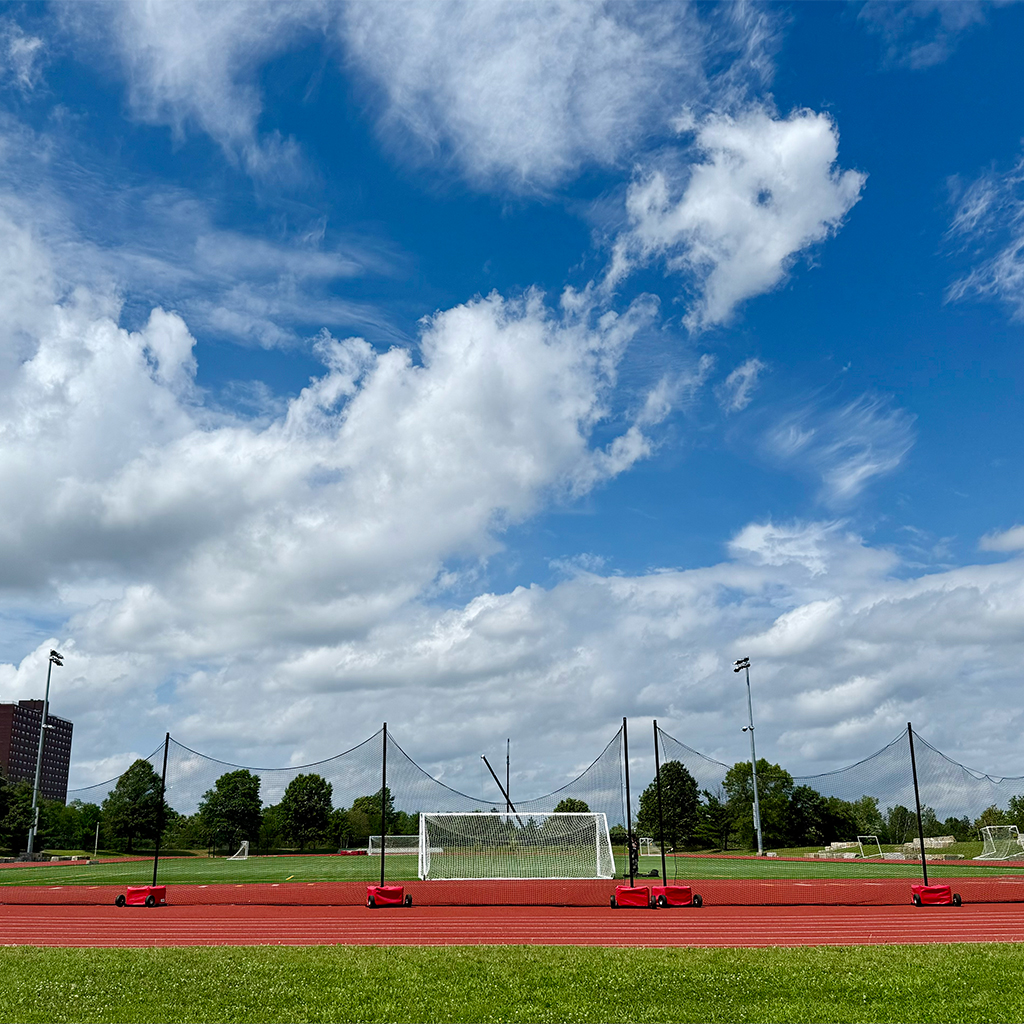
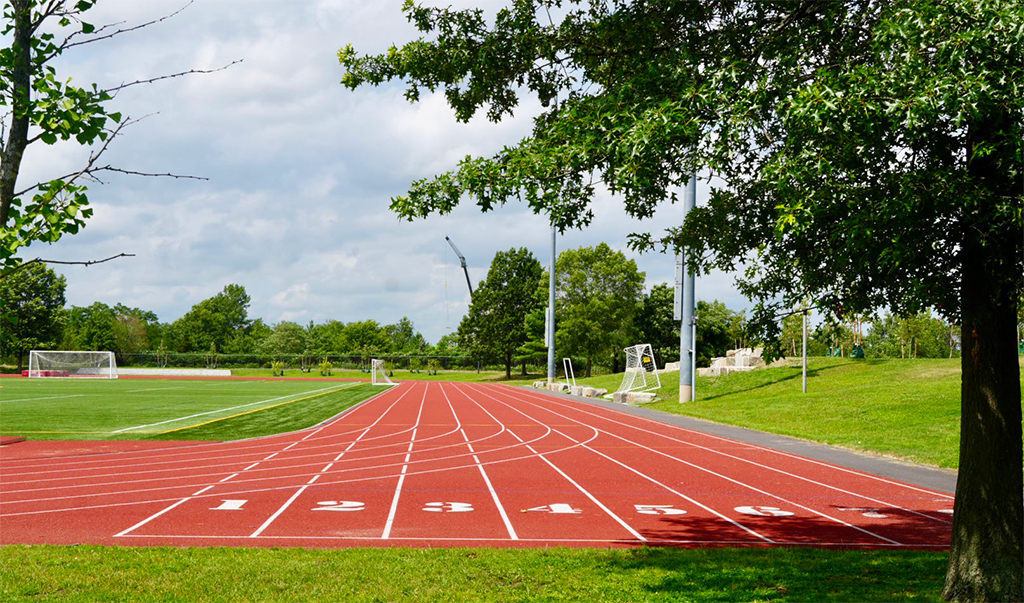
Danehy Park’s track and fields have seen recent upgrades.
Besides the move to turf, other changes have come to the park over the years. An enclosed dog park was added in the late aughts near the parking lot on New Street by Apple Cinemas, and a universal playground – accessible to all, including those with physiological and neurodiversity challenges – was added in 2021 on the Garden Street side, named after former city manager Louis A. DePasquale. Many of the play structures are homages to the brickyard structures that were there before; some of the artists had physical and neurological disabilities. A lot of thought went into colors and textures to be sensitive to people with neurodiverse challenges, said Adam Corbeil, director of Cambridge Recreation. Designers added quiet nooks as retreats from playground activity.
Another recent change was the cautionary removal of grills from the picnic area after higher-than-expected methane levels were discovered while preparing for improvements. Methane is a byproduct of landfills, and Danehy is well vented: The gravel trench that runs around park, which some may take for drainage, is actually a ventilation mechanism. The city works closely with state Department of Environmental Protection and several certified vendors to do regular safety reviews, Corbeil said. The methane levels pose no human risk, and you can still picnic at Danehy, you just can’t grill.
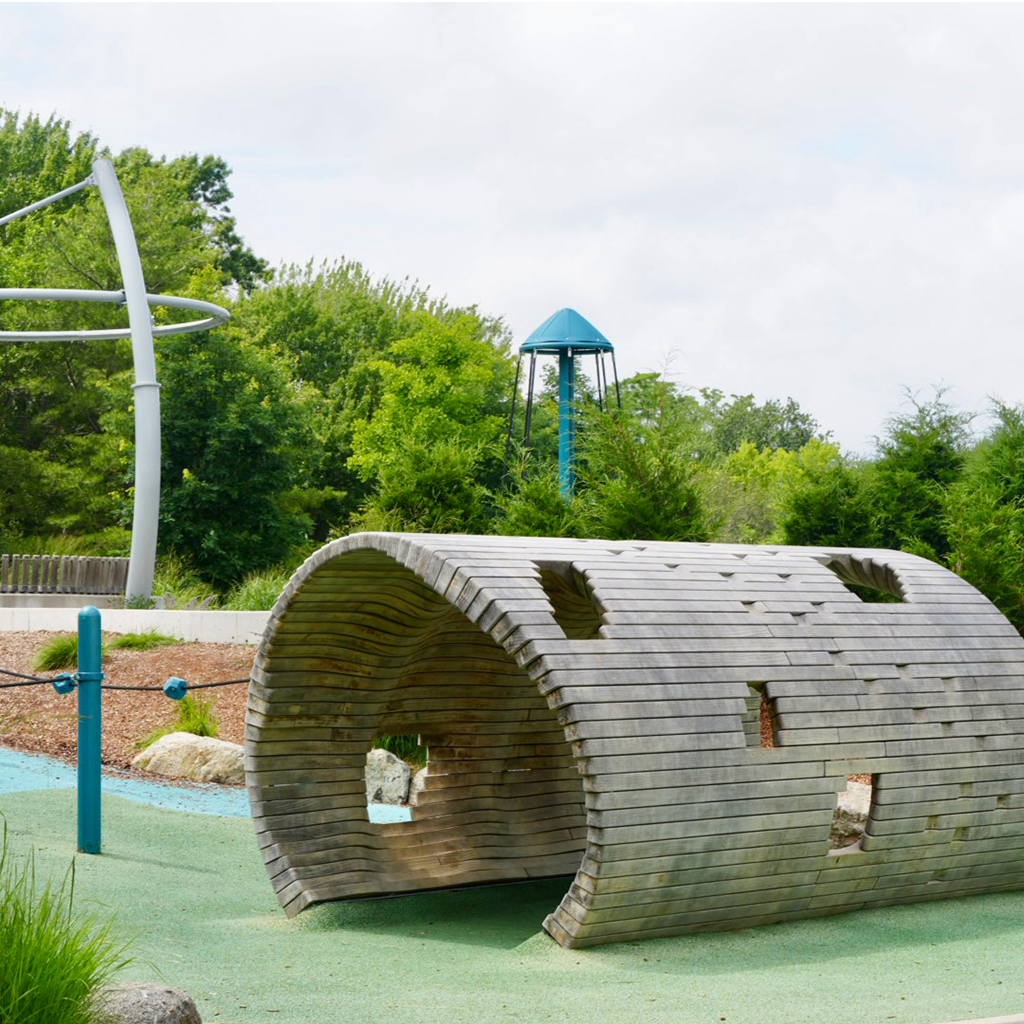
A universal playground was added to Danehy Park in 2021.
Overall, the park is well looked after for safety and wellness. Besides methane monitoring, Corbeil said fields get Gmax tests regularly for their hardness or softness to guard against concussions and ankle twists. The surfaces last about 10 years before a full regrade or capping is needed, Corbeil said.
The park boasts the Northeast’s first Miyawaki forest – native flora packed densely into a small area (Danehy’s is around 20 yards in diameter) to foster biodiversity in urban areas. The concept, promoted by Japanese botanist Akira Miyawaki, was adopted at Danehy in 2021; a pollinator garden of native plants was added last year to invite bees and help nurture, maintain and expand the surrounding biosphere. An early and more challenging project was the rewilding of the wetlands at the bottom of the hill next to Sherman Street, said Beth Folsom of History Cambridge. That required clearing the clay over the landfill dumped into the pits; clay is dense and not very porous, and can act as a moisture retaining liner.
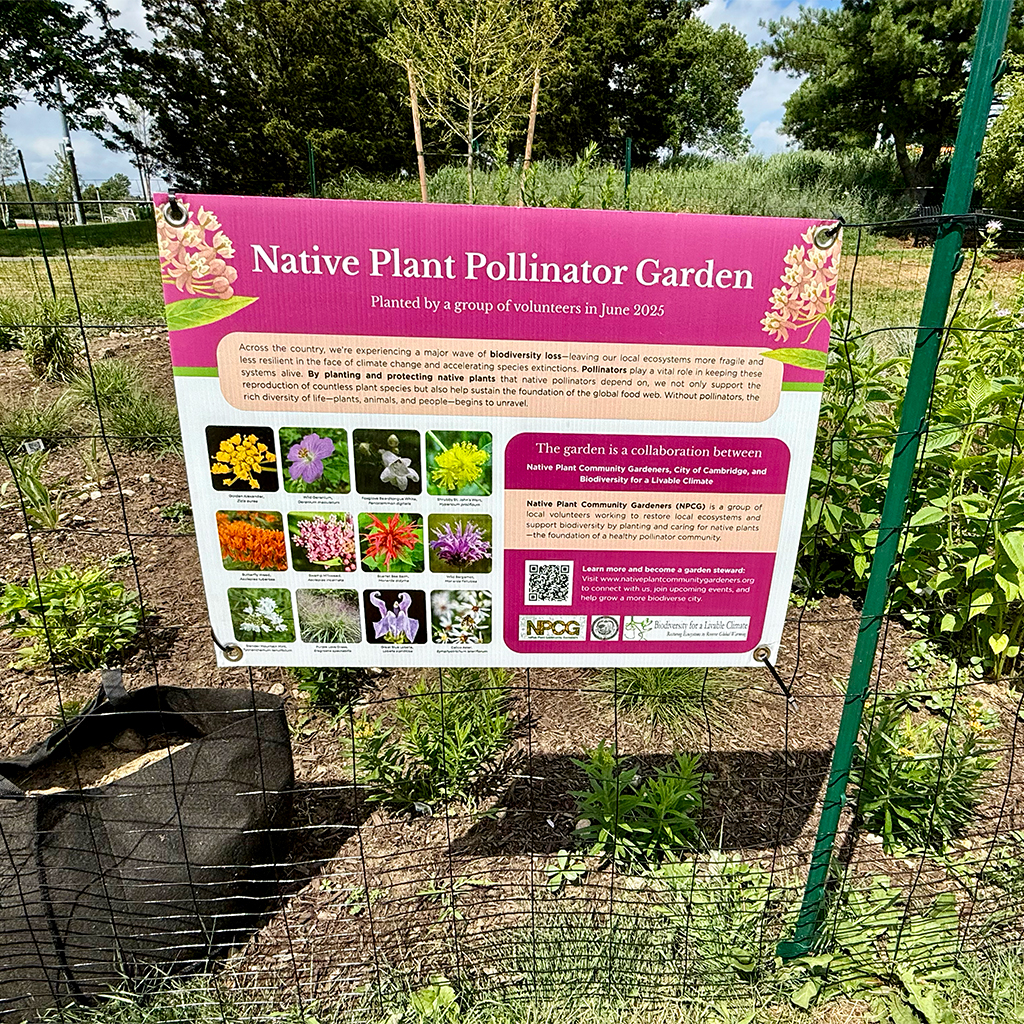
A pollinator garden of native plants was added to Danehy in 2024.
Sparrow Hill on the east side of Danehy is – believe it or not – the highest elevation in Cambridge at 75 feet above sea level. It’s a popular place for rocket launches and sledding, though crashing into the wetland bogs at the base can be an unsavory and soggy anticlimax. Atop Sparrow Hill, also known as “the dance floor,” are arty contoured benches sculpted by artist Mierle Laderman Ukeles and “glassphalt” (pavement that has mirror glass and regular glass in it) that engages the stroller with its twinkling from the sun and lights at night. On Sparrow Hill, “stress melts away and the world opens up,” Corbeil said.
The park is a place where anyone, regardless of background or socioeconomic status, can come, mingle and use the public resources on an equal basis. “The park is where barriers between people come down,” said Federico Muchnik, a filmmaker whose Covid-time documentary “Open Space” examined the sense of community at the park – where he chose to plant two trees in honor of his mother, who died 15 years ago. (Muchnik’s new film, “Massachusetts Avenue; Life Along Cambridge’s Main Artery,” plays Oct. 18 at The Brattle Theatre in Harvard Square.)
“It’s where people are more themselves than most other public spaces,” Muchnik said. “Open Spaces” can be viewed for free at the film’s site, openspacefilmproject.net.
Folsom describes public access to nature and recreational spaces as a “human right,” and Danehy is between cross sections of lives and communities: On the southern side is Avon Hill and Harvard’s Radcliffe Quad; on the north, public housing complexes such as Jefferson Park and the Fresh Pond Towers are arrayed along Rindge Avenue. The park is T accessible and has plenty of parking at lots that dot the perimeter.
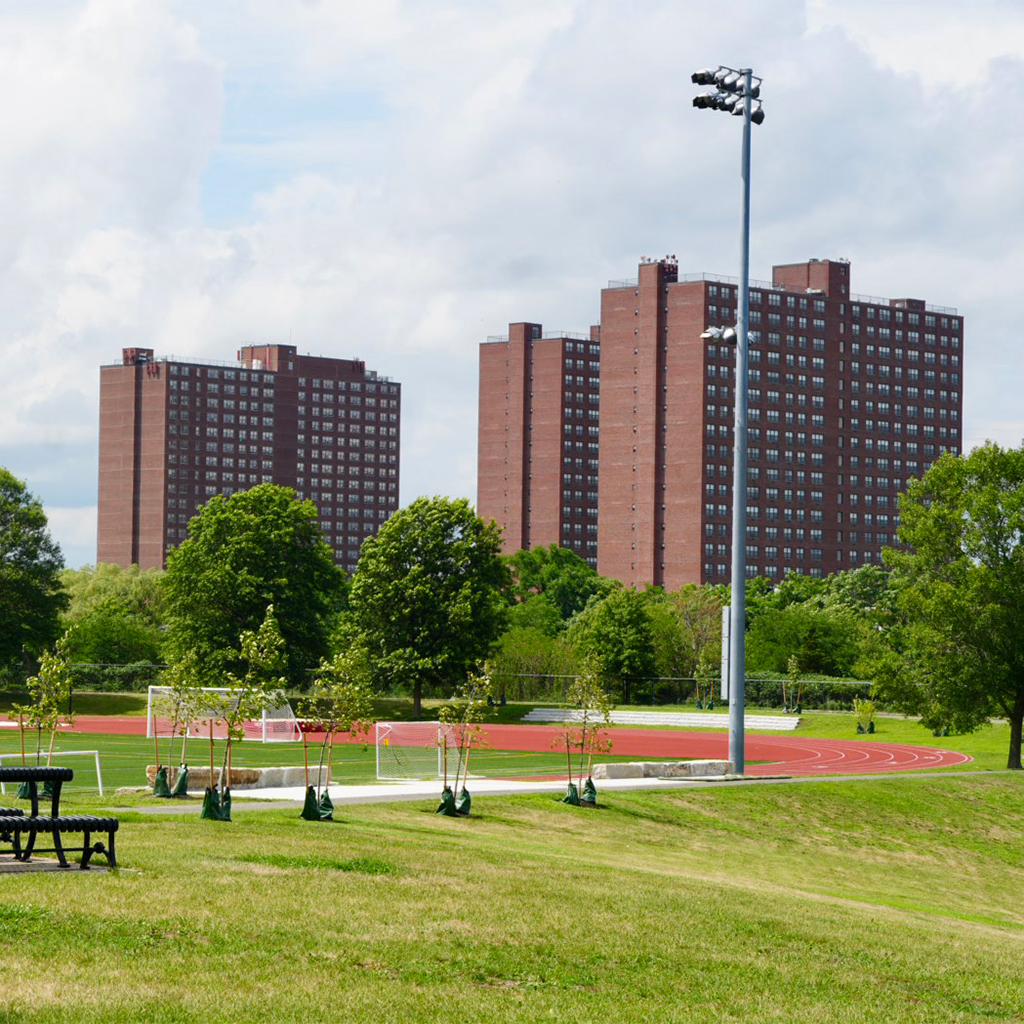
Danehy is between cross sections of lives and communities, including public housing on Rindge Avenue.
It’s hard not to talk about Danehy Park without mentioning the shocking 2019 murder of Paul Wilson in the early evening in the New Street parking lot. The details of the unsolved crime are gruesome and continue to haunt the community. It’s a sad and disturbing footnote to history of an urban jewel that has become so much to so many.
In 1990, it cost just $11 million to construct a public complex of such magnitude and public benefit. Renowned architects Camp Dresser & McKee were one of the many design firms engaged for the project.
In the years since its opening much has changed in and around Danehy Park, and continues to. Nearby Cambridgepark Drive by the Alewife T Station has been developed into apartment complexes; on New Street, directly abutting Danehy, a six-story affordable housing structure – the Affordable Housing Overlay zoning in action – nears the end of construction. To go with Danehy’s new track and field, a 5,800-square-foot pavilion and field house with bathrooms and other public amenities is planned for the New Street entrance of the park.
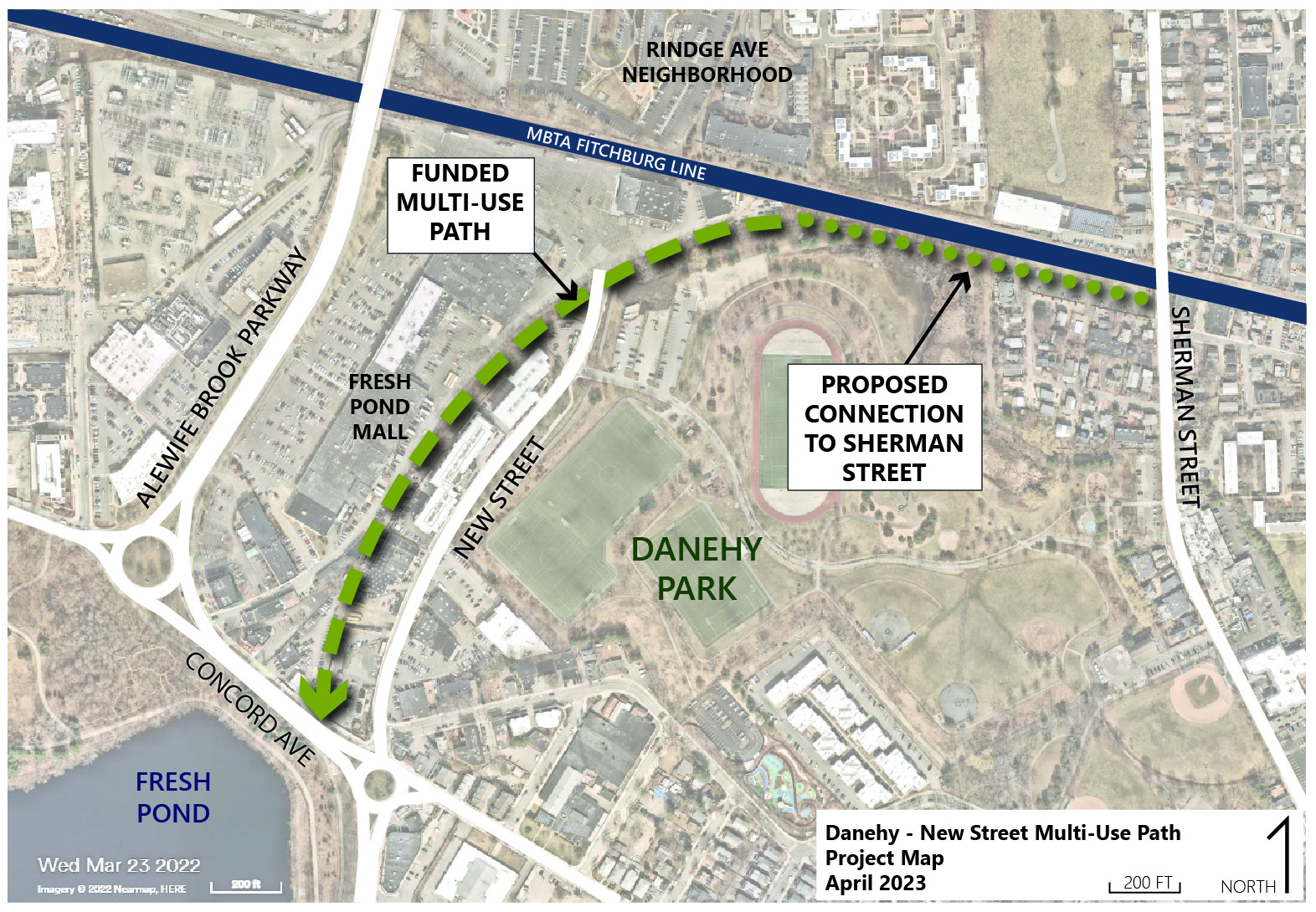
This project, the source of that methane discovery and a brief delay in work, will cost nearly as much as the park did in back 1990. A Danehy Park Connector project will provide a mixed-use path connecting Sherman Street to the Fresh Pond Reservation and the Watertown-Cambridge Greenway. The link will give pedestrians and cyclists safe access between green resources and connections to other green spaces beyond. There are plans for a pedestrian and bike bridge over the commuter rail tracks. The project has funding from a Reconnecting Communities & Neighborhoods grant, which has a mission of joining and rejoining – the unstated, unofficial mission of Danehy Park.
 For What it's Worth
Leave a comment