April 25, 2025 7:20 pm

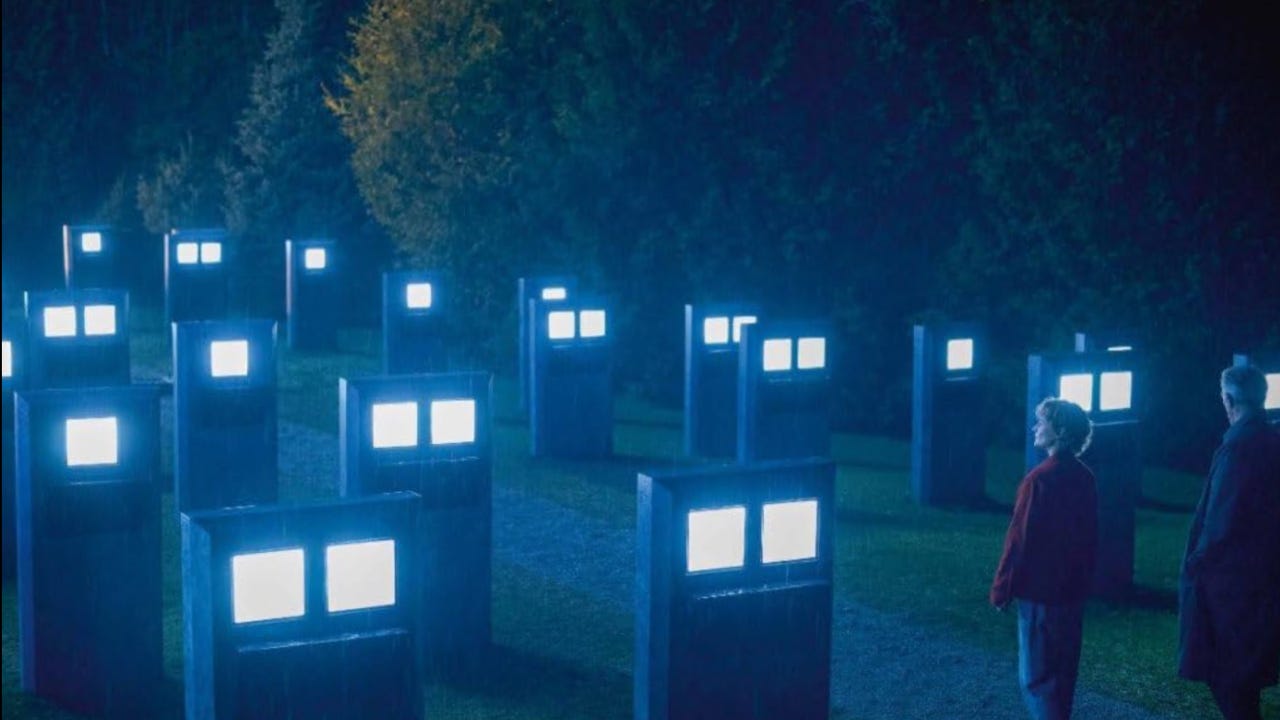
Master of the macabre David Cronenberg has always been one to explore the impacts and unintended consequences of near-future technology on humans – and often, in humans. Take “Videodrome” (1983), in which the advent of cable TV and pop-up public access stations served as a crucible for snuff videos, or “Existenz” (1999), in which a game designer trying to evade assassins melds physically with her game and the Internet. In “The Shrouds,” Cronenberg, still wrestling with the grief of losing his wife to cancer in 2017, deals with connecting the living to the departed through a Chinese-manufactured sheet with high-tech capabilities that allows the bereaved to log in through an app and look in on their loved ones as they decay away into eternity. It’s creepy and cool stuff that has some far-reaching implications, such as China perhaps leveraging the shrouds as a surveillance network. As an arguable stand-in for Cronenberg, the handsomely gaunt Vincent Cassel plays Karsh, who has also lost his wife Becca (Diane Kruger) to cancer and subsequently founded GraveTech, an Internet-connected series of cyber sarcophagus plots around the globe. Instead of headstones, there are tech towers that, with the right passcode or eye scan, allow one to pop up images of the dead or dial up memories. Karsh’s life is complicated: He dates, but prefers more illicit sexual liaisons involving Becca’s sister Terry (also played by Kruger) and Soo-Min (Sandrine Holt), the blind wife of a prospective client (Vieslav Krystyan). Then there’s Terry’s ex-husband Maury (Guy Pearce), who does much of the coding for GraveTech. Karsh’s nighttime imaginings of Becca missing an arm or a breast are far more lurid and grim than anything gazed upon electronically in the crypt. There’s also the mystery of small nodes that have grown on some of the deceased: Are they bone tissue residue, spy-network plants or something else related to the medical treatments they received at end of life? Unfortunately, many plot threads are left dangling, but they are a minor annoyance offset by the riveting psychosexual dance between the principal cast. Cassel holds the film together, but it’s Kruger and Holt who drive it – especially Kruger as Terry, who regards Karsh with contempt until an unexpected encounter, when his offhand conspiracy theorizing turns out to be her sexual trigger.
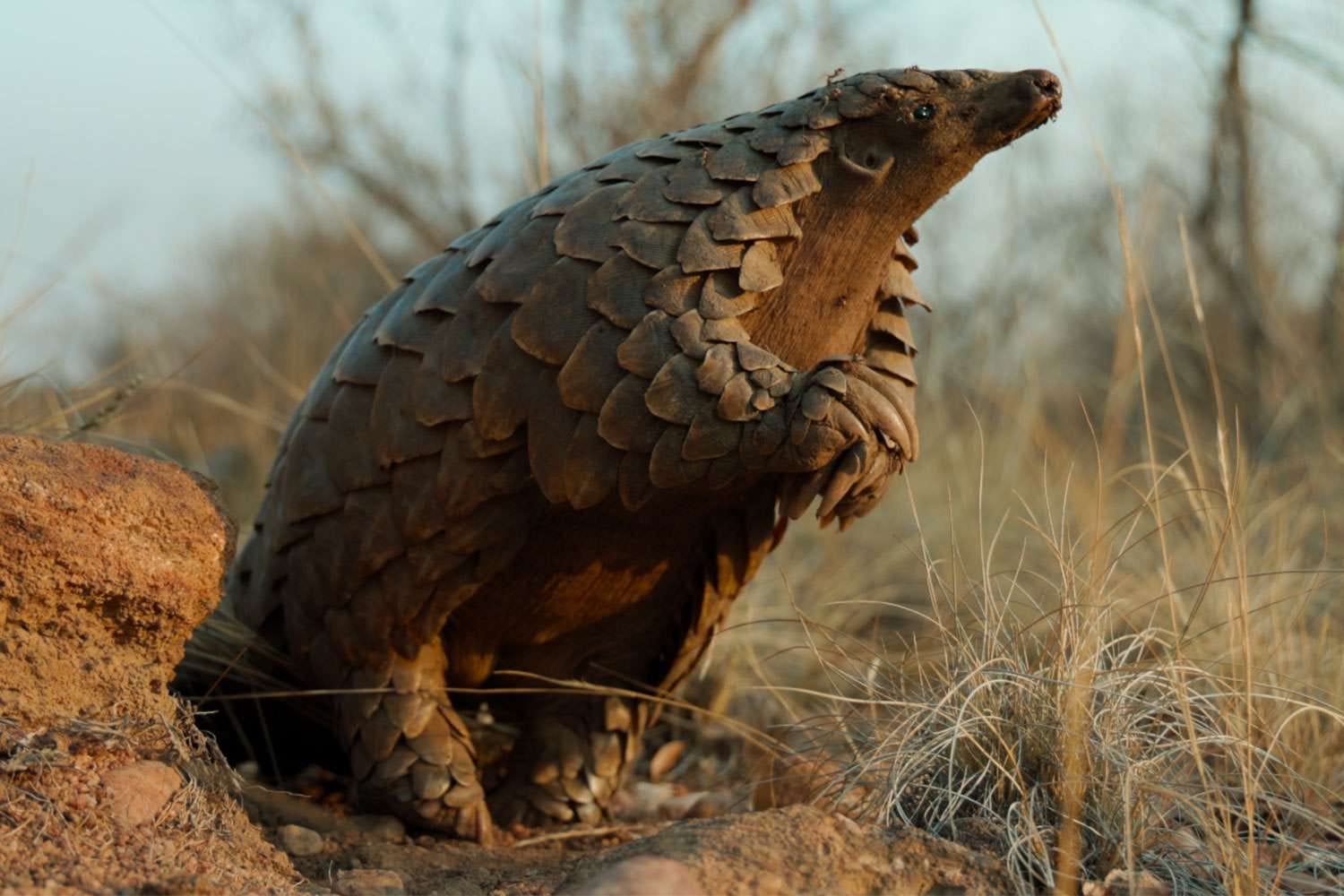
The evils of trafficking are not limited to humans, as we learn from the ordeal of Kulu the pangolin in this heartfelt documentary about the bond between rescuer and endangered species. The fact that we “learn” something – make that many things – comes as no surprise, as the film is made by Academy Award winner Pippa Ehrlich, whose “My Octopus Teacher” (2020) also took us to places previously unknown. This is another astonishing creature: Pangolins, who have been on this planet for tens of millions of years, are the only mammal with full armor; known as the plated aardvark, they have no real mouth or vocal capability, just a long tongue for sucking out termite and ant eggs; and, wildly, pangolins are mostly bipedal and move about in a T-Rex kind of way, hunched over and ever lurching forward. Kulu is boxed up illegally and sent to China, where its scales are the main ingredient in more than 60 elixirs of black market traditional medicine. When Kulu is pulled off a truck en route to China, he’s underweight and malnourished. Kulu’s rescuer, Gareth Thomas, is a former gambler turned volunteer pangolin shepherd who takes him in with the task of nourishing him, getting him up to size and releasing him in South Africa’s Lapalala wildlife preserve. Much of the film is told from Thomas’ perspective, but you can never get enough of Kulu, who behaves like an unsettled teen wanting to run from his overly protective parent. Ehrlich again captures that inexplicable, rare and soulful union between human and beast in which there are equal stakes, souls and emotional wisdom. The best part is when Kulu gets so excited at the discovery of a termite mound that he gets his nearly 2-foot tongue (easily most of his body) tangled into a knot, and has to use those front paws to delicately untangle it. If Kulu can’t win you, nothing will.


Andrew Ahn’s remake of Ang Lee’s 1993 classic is a spirited one. Much has changed in the 30 years in between – or maybe not, as the current administration doesn’t have the LGBTQ+ community’s back as prior admins did. The original setting of New York City flips to Seattle where Min (Han Gi-chan), a gay Korean aspiring artist facing immigration and family pressures, opts for a green-card marriage with friend Angela (Kelly Marie Tran, “Raya and the Dragon” and “Star Wars: Episode IX – The Rise of Skywalker”), who seeks financial support for IVF treatments with her partner Lee (Lily Gladstone, “Killers of the Flower Moon”). Min, his beau Chris (Bowen Yang of “SNL”), Angela and Lee make for a happy foursome and all live in the same quaint bungalow. The trouble comes when Min’s halmoni (Youn Yuh-jung), Korean for grandmother, shows up stateside to inform him that he has to take over one of the family businesses or be cut off. For loosely explained reasons, staging an opulent Korean wedding banquet solves the problem (and helps satisfy Min’s homophobic family back home). For other knee-jerk reasons, Angela wants to put off having a kid to travel the world, which puts her at odds with baby-minded Lee. Min’s halmoni is onto the whole charade from the get-go, and Angela’s mom May (Joan Chen) gets overinvolved. But it’s a sperm donation from an unlikely source that upends the happy rainbow dynamics in the bungalow. Not much of it makes a whole lot of sense, but the cast, particularly Yang, Chen and Yuh-jung, are all in and on point – Gladstone, sadly, is underused. As far as screwball comedies go, Ahn’s “Wedding Banquet” comes off a bit too sitcomlike for its own good, but there are some well-earned moments of heartfelt poignance as bridges are broached and characters bare their souls. I wouldn’t call Anh’s version a remake so much as it’s a reenvisioning that does well to take on matters of cultural and sexual identity in the way that Lulu Wang’s “The Farewell” (2019) and far more raucous “Crazy Rich Asians” (2018) did – all you need is a dose of Awkwafina for the win, though Yang’s not a bad pinch hitter.
Posted by tbmeek3
Categories: Review
Tags: andrew-ahn, bowen-yang, Film, movie-reviews, movies
Mobile Site | Full Site
Get a free blog at WordPress.com Theme: WordPress Mobile Edition by Alex King.