Reviewed: ‘Bridget Jones: Mad About the Boy,’ ‘Sly Lives!’ and ‘Captain America: Brave New World’
‘Bridget Jones: Mad About the Boy’ (2025)


Not sure this fourth flick was necessary, but I’m happy it exists. Renée Zellweger’s goofball heroine has always been a lovable hot mess of miscues and tribulations, and is again here. Of course the series being so British – dry and droll, with cheeky nods and winks – only deepens the buttoned-up hijinks. In the last chapter (“Bridget Jones’s Baby”), Hugh Grant’s Daniel Cleaver, one of the two gents who vied for Bridget’s love in the 2001 original, is presumed dead; in this nearly 10-year follow-up, Mark Darcy (Colin Firth), the guy who won her heart and had two children with her, really is dead. (Something about a humanitarian aide mission gone awry in the Sudan.) As a single mom, Bridget can’t boil a pot of water and has zero romantic prospects, though her friends push her to Tinder and other romantic meetup venues. “Labia adhesion is a thing,” one friend tells her when Bridget admits to not having sex in more than four years. Relief comes in the form of a handsome 29-year-old bloke named Roxster McDuff (Leo Woodall, “The White Lotus”), who rescues Bridget (she was 43 when she had her son in the last installment) and her children (a younger daughter in the mix now) from being treed in a park. Bridget does slowly get her groove back and returns to her old gig as a TV producer. How the happily ever after or never not pans out, I won’t say. Returning players include Emma Thompson as Bridget’s old ob-gyn who extols the virtues of a rife sex life and Jim Broadbent and Gemma Jones in a requisite cameo as Bridget’s parents. Strangely enough, Firth and Grant show up too, though I won’t spoil how. Also in the mix is the always excellent Chiwetel Ejiofor (“12 Years a Slave”) as Bridget’s son’s music teacher. Just who “the boy” is, is a bit unclear; is it Bridget’s son, William (Casper Knopf), the hunky Roxster or maybe even Hugh Grant, who starred in a movie called “About a Boy” in 2002? The answer doesn’t much matter, as it’s Bridget’s world and we‘re just happy to spend a few madcap moments in it.
‘Sly Lives! (aka the Burden of Black Genius’ (2025)
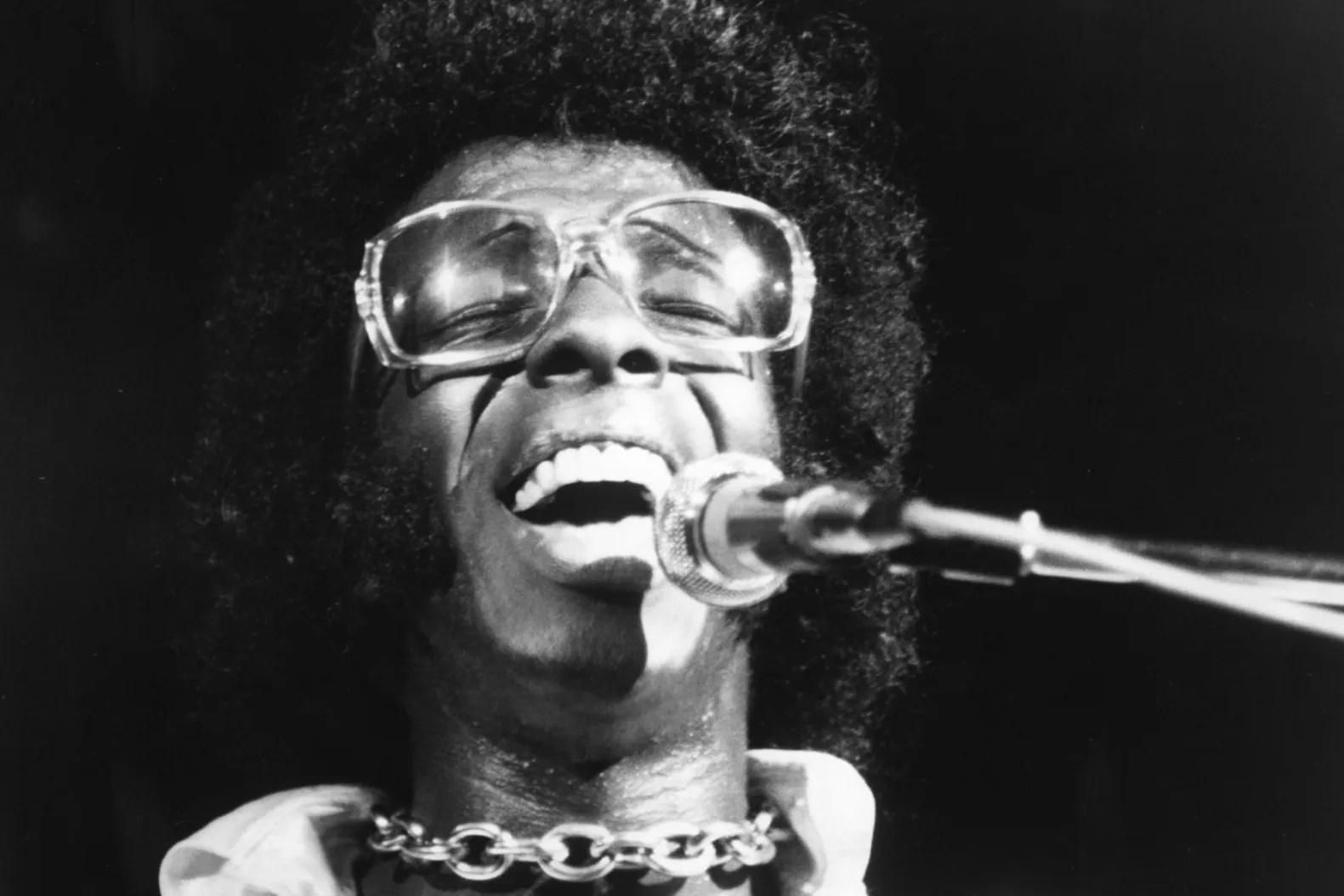
Musician turned filmmaker Questlove delves into the rise, fall and redemption of funk pioneer Sly Stone (born Sylvester Stewart). Most likely don’t know (or recall) that the artist behind one of the most (if not the most) influential funk groups of all time, Sly & the Family Stone, played not just Woodstock (and the Harlem Cultural Festival that happened the same year – the subject of Questlove’s “Summer of Soul” that won the Oscar for Best Documentary in 2022) but cranked out such chart-topping hits as “Stand,” “Everyday People” and “Dance to the Music”; he also produced the first incarnation of “Someone to Love” sung by Grace Slick, then frontperson of The Great Society, who would take the song with her to the Jefferson Airplane. Without Sly there would not be P-Funk, Parliament or Prince and the Revolution as we know them. Iconic talking heads sitting for Questlove include Chaka Khan, Andre 3000, P-Funk’s George Clinton and even Slick herself from back in the day, enabling the director to fill out a portrait not only of a man who was defying musical definition with a seamless crossing over of rock, soul and R&B but also one challenging social and political norms with a band that was interracial and had gender-mixed players. Pushed and pulled by the record companies, the Black Panthers and the media, Sly and the band felt constant pressure to either be more mainstream (read: white) or political (read: Black) especially during the tumultuous ’60s. Still, as much as the band demurely shunned the fray and adhered to its musical mission, the songs were infused slyly with profound social messages. The film charts Sly’s later struggle with relevance and drugs, which is where other band members and Sly’s children from various marriages chime in to testify to the pressure, poor business dealings and continual slides back into drug use; we never see Sly in the now (he’s 81 and sober, as reports have it). Sly speaks mostly in interview footage from the ’70s with the likes of Mike Douglas and Dick Cavett (who has no idea what to make of Sly) in which he’s wide-eyed, boyish and devastatingly witty. His charisma here and in Questlove’s Oscar winner is abundantly evident, as is his influence on zeitgeist-defining music over ensuing decades. The film metes out beat breakdowns of Janet Jackson’s “Rhythm Nation” and LL Cool J’s “I’m Gonna Knock You Out” and comparisons with the diversity of the Revolution and to Prince’s similarly blessed compositions skills and ability to play multiple instruments seamlessly. It’s a billet-doux to a musical genius whose brief flame ignited so much in so many others.
‘Captain America: Brave New World’ (2025)
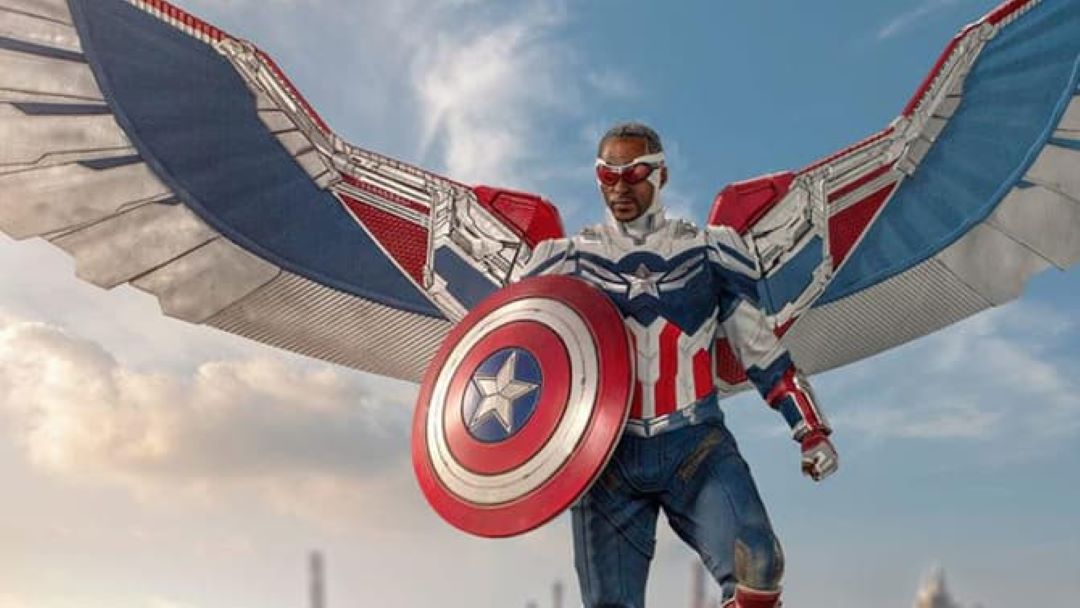
 Another relatively pointless add-on to the Marvel Universe (e.g., “The Eternals”) that portends a reboot of the Avengers franchise that has been brewing since the original Captain America, Steve Rogers (Chris Evans), and Thor (Chris Hemsworth) rode off into the sunset at the end of “Avengers: Endgame” (2019). The new characters, minor fill-ins when Stan Lee was penning them, are razor-thin, and the script by a team of five writers feels like an AI-generated ’bot burp. We catch up with new Captain America, Sam Wilson (the ever-bristling Anthony Mackie, who deserves better than this), formerly the old Captain’s aerial sidekick known as The Falcon. He’s still got his wings, now tricked out with vibranium and able to create a minor sonic boom when he sticks a superhero landing, and now has that kick-ass, red, white and blue shield (also made of vibranium) bequeathed to him by his predecessor. Sam’s Captain is tasked by newly elected president Thaddeus Ross (Harrison Ford, taking over the role from the late William Hurt, who in prior films was only a senator) to intercept an illicit sample quantity of adamantium extracted from a celestial entity (a meteor/statue with a deep backstory that’s tossed in with frivolous hand-waving) that crashed in the Pacific off the coast of Japan. In short, as we are told, adamantium is more of a worldwide game-changer than vibranium, and Ross, hot to that, wants to strike an accord with Japan and share the all-powerful MacGuffin tech with all – a reasonable and magnanimous sentiment that’s short-lived. At one point, Ross proclaims adamantium as a strategic resource because it’s not controlled by “one isolationist nation.” Assuming that’s a reference to vibranium and Black Panther’s African homeland of Wakanda, ripples of Trump’s infamous “shithole countries” are hard to shake. Even more curious and relevant to the now, Ross has a reputation for experimentation on serum-enhanced individuals and throwing super-soldiers in jail when they question orders or are no longer deemed field-worthy. It’s one such soldier (Carl Lumbly), a mentor to Sam who accompanies him and the new Falcon (a wisecracking Danny Ramirez) to the White House to be honored for retrieving the adamantium. Lumbly’s Isaiah Bradley brazenly joins in on a coordinated assassination attempt on the prez, though, with a scad of turncoat Secret Service agent accomplices that eerily all look like J.D. Vance. It’s a Captain Obvious conclusion that something more is at play, but a mind-control subplot doesn’t surface until the United States and Japan sit on the precipice of war because of alleged, dubious backdoor shenanigans by Ross. A denier-in-chief, Ross proclaims he’s changed and is on the up and up, but then there are his little bouts of rage, triggered mostly by the absence of a daughter who’s stepped away because of his past miscues and those odd gummies he keeps popping. Where’s this all headed? Essentially into a hugely volatile situation that Sam and the Falcon have to zip around the world at mach speeds to keep from blowing up. Behind it all is a mostly faceless entity named Samuel Sterns (Tim Blake Nelson, one of the film’s few standouts), aka The Leader, who made an appearance back in the 2008 version of “The Incredible Hulk.” Ross experimented on Sterns, whose green gray matter bulges from his head, and turned him into his personal (enslaved) AI engine in the flesh. Now jailbroken, Sterns wants a little payback and to expose Ross for who he really is: a big, red raging Hulk that Sam must suit up and try to put down. Given the timing and the desire for a broad audience, this is unlikely, but if the Red Hulk was two hues lighter, one has to wonder if there wasn’t some political analogy going on. If you think I’m reaching, it’s hard to watch the red menace rip through the South Lawn and the iconic columns of the White House and not think of the current blitz of executive orders that have eviscerated our sense of democracy and government-provided services. Along for this bumpy ride with gravitas and gusto is Giancarlo Esposito (“Do the Right Thing”) as the rogue operative Sidewinder, but besides his brief few glimmers and Nelson and Mackie in flashes, there’s little brave or new here, just another reheated rehash of MCU mash.
 For What it's Worth
Leave a comment