Tag Archives: thriller

Trap

10 Aug

Hard to enjoy this concert when the FBI is closing in

The latest from M. Night Shyamalan, whose plot twist sleight-of-hand shenanigans captivated audiences early (“The Sixth Sense” and “The Village”) but faltered over the years (“The Happening” and “Lady in the Water”), is in line with his more recent fare “Old” (2021) and “Knock at the Cabin” (2023) – serviceable suspense despite ridiculous carrying-ons. The set-up’s fairly simple: A serial killer by the name of The Butcher, whose kill spree is at an even dozen, is purportedly at a pop diva’s concert, which the FBI and local police have targeted as the venue to apprehend Philadelphia’s most wanted. The task isn’t a simple grab-and-nab, as the authorities don’t know what The Butcher looks like, just that he has a tattoo of a bunny on his wrist and likely drives a dark-colored sedan. The latter is a deduction made by the veteran profiler on the case, Josephine Grant, played by ’60s icon Hayley Mills in a cheeky bit of casting – as she starred in “The Parent Trap” (1961). Grant believes the OCD nature of the crime scenes suggests The Butcher wouldn’t drive an ostentatious vehicle of light color, because dust and dirt would show too much. Given his moniker, though, it’s hard to imagine such exact order at the killing sites.

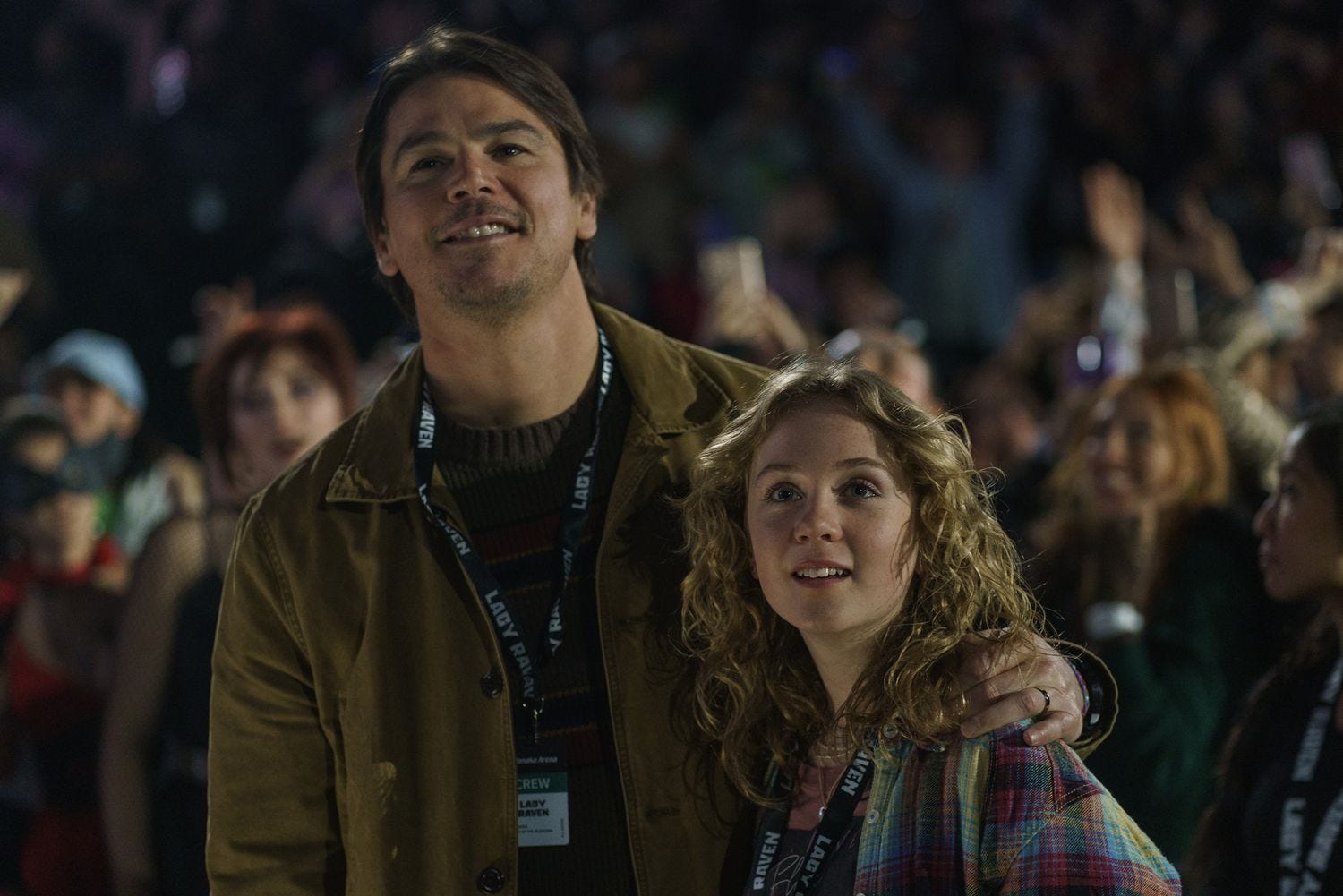
Attending the concert is Philly firefighter Cooper Adams (Josh Hartnett) and his teen daughter Riley (Ariel Donoghue), a ravenous fan of Lady Raven (played by Shyamalan’s daughter Saleka) who’s of the same pop queen royalty as Lady Gaga, Katy Perry and Taylor Swift. Dad’s not too hip and has to get explanations of the happening lingo of the moment – “crispy” and “jelly,” to name two – which wasn’t too far off from me getting a recent lecture on “rizz” from my teenage daughter, whom I similarly took to a Katy Perry show. It’s not too far into the show when dad, sussing out all the extra security precautions, starts to get antsy, and it’s not because he’s the only dorky dude towering above a sea of shrieking teens, but the killer himself. Early on, in one trip to the restroom, Cooper pulls up video footage of a panicked young man imprisoned in a basement. The film could have easily been titled “Serial Dad.”

The cat-and-mouse ferreting works pretty well for a while, and the concert orchestration is pretty dope. Saleka, who’s had small parts in her dad’s films before, wrote and performs all the songs with convincingly Swiftian appeal and nearly steals the film. Hartnett’s fine as the dad-joke pop with a sinister side, and hauntingly reminiscent of Robert Urich playing a firefighter in the film “Turk 182” (1985); Donoghue’s career, as evidenced here, should continue to rise. That said, there’s a dramatic shift in the film and locale about two-thirds in where the wheels of plausibility start to come off the bus. That’s frustrating, because until then “Trap” manages to hold your attention while you grit your teeth. Like the recently released “The Instigators,” the film could have used a better title and a less ludicrous wrap-up, though the last sequence almost does enough to redeem.
Without Remorse

30 Apr

‘Tom Clancy’s Without Remorse’: Action thriller with vengeance straight from the assembly line

By Tom Meek Wednesday, April 28, 2021

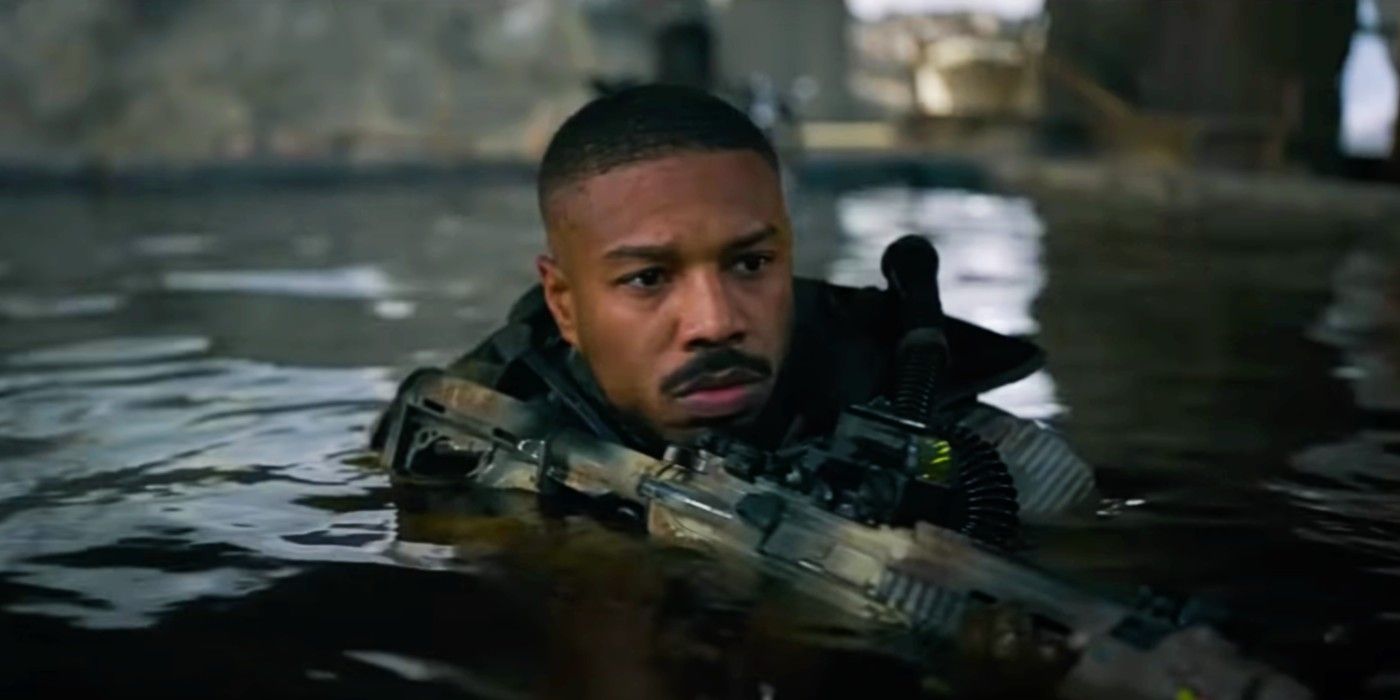
Tom Clancy wrote “Without Remorse” back in 1993, when the Iron Curtain still felt like a threat. For a contemporary makeover, accounting for world-changing events might help. We get some of that with cellphones and the like, but mostly the script from Taylor Sheridan (the sharp hand behind “Hell or High Water” and “Wind River”) and Will Staples (who’s mostly written video games like “Call of Duty”) is a lackluster transposition steered inertly by Stefano Sollima (“Sicario: Day of the Soldado”). This “Tom Clancy’s Without Remorse” is an assembly-line production with little thrill or intrigue – the ingredients that made Clancy’s Jack Ryan series (“The Hunt for Red October,” “Patriot Games”) a must read/see for any spy or jarhead enthusiasts. Even the magnetic Michael B. Jordan, so good as a young black man targeted by police in “Fruitvale Station” (2013), comes off flat as Navy Seal-cum-antihero Jack Kelly (a spinoff character from the Ryan series once played by Willem DaFoe in “Clear and Present Danger”) out for revenge after Russian operatives kill his pregnant wife. Kelly and other SEALS are targeted for assassination after an Aleppo raid to free a CIA operative.

Sounds like a man with a major payback mission, but Kelly’s want for blood feels strangely unearned, as we never really feel his emotional attachment or grief. No, the dead are little more than a plot-moving checkpoint for Kelly to use his special-ops skills – and his resolve is impressive, especially when in prison, where he takes on a phalanx of guards “Old Boy” style. The world-hopping mission that comes when CIA brass let him out and off the leash takes Kelly to Russia and back to D.C., but never does the shell game of who’s pulling the strings ever really raise a brow. The well choreographed shootouts and beatdowns puncture the drudgery enough to keep your lids open, but in between it’s all pink filler.

Also wasted is Jodie-Turner Smith, the promising fresh face from “Queen & Slim” (2019), as Lt. Commander Karen Greer, Kelly’s mission head, as well as the normally infallible Guy Pearce as a CIA honcho who seems to be chewing on Xanax like Tic Tacs. 

I Care a Lot

27 Feb

‘I Care a Lot’: Trying to scam the wrong senior? You realize, of course, that this means war

By Tom MeekFriday, February 26, 2021

“Playing fair is a joke invented by rich people to keep the rest of us poor” – a quote that might ring true if it was about racial inequality, leveling the playing field or creating opportunity for those normally denied. But in “I Care a Lot” it’s from the lips of a corporate Karen who dupes the elderly on the cusp of dementia out of their amassed wealth for her own gain. Yeah, that’s right: Taking advantage of memory challenged seniors so as to fleece your own pockets. The badass “lioness” here, Marla Grayson, is played by Rosamund Pike, who makes the unpalatable role of shameless predator semi-digestible as the caregiver with a swank office of minions who slides into any court hearing about a rich elderly person who may become a ward of the state and sweeps their care under her wing. Then she gets them locked up and drugged up she can liquidate their assets.

Happy days for the elderly and those boxed out who may care for them this is not, but writer/director J Blakeson, channeling David Fincher (who did “Gone Girl” with Pike) musically and in agile editing style, keeps the unlikeable audacity clicking and infectious. It’s something of a cinematic bag of Doritos: The universe says it’s bad for you, you know it’s bad for you and yet you’re all in. How many times has the POV of a serial killer ever worked? (“Dexter,” “Hannibal”?) 

Grayson catches a snag when she targets Jennifer Peterson (Dianne Wiest) whose son (Peter Dinklage) is Russian mob connected. You’d think that would be a big cup of no-thank-you-tea, but Grayson doubles down and, as the film wants you to have it, becomes the victim. It’s a ruse that never sticks, considering the countless seniors duped, bilked and bled, left on the shores of nowhere and certain oblivion. We never see that, and Pike’s edgy, engaging performance obscures this into a slick, twisting thriller – and it is slick – but at the heart is a victimization that goes beyond unconscionable. Sharon Stone’s Catherine Tramell in “Basic Instinct” (1992) feels like a blueprint for Pike’s Grayson, but Tramell was a lioness hunting bull rhinoceroses in their prime; Grayson is an opportunistic hyena sourcing wounded old birds. 

The Little Things

31 Jan

‘The Little Things’: Tracking a killer before GPS, with detectives who also wander the moral map

By Tom MeekFriday, January 29, 2021

In this throwback neo-noir baked in the David Fincher oven of dark serial-killer thrillers (“Seven,” “The Girl with the Dragon Tattoo” and “Zodiac”) director John Lee Hancock (“The Blind Side,” “The Rookie”) scores something of a casting coup, landing a trio of Academy Award-winners for his leads. Hancock has been wanting to make “The Little Things” since the early ’90s, when he penned it and (around the same time) “A Perfect World,” the Clint Eastwood-helmed crime drama starring Kevin Costner. At one point Steven Spielberg’s name was attached to the project (too dark), but now things have come full circle with the writer-turned-director taking charge of his scene-by-scene, murder mystery blueprint.

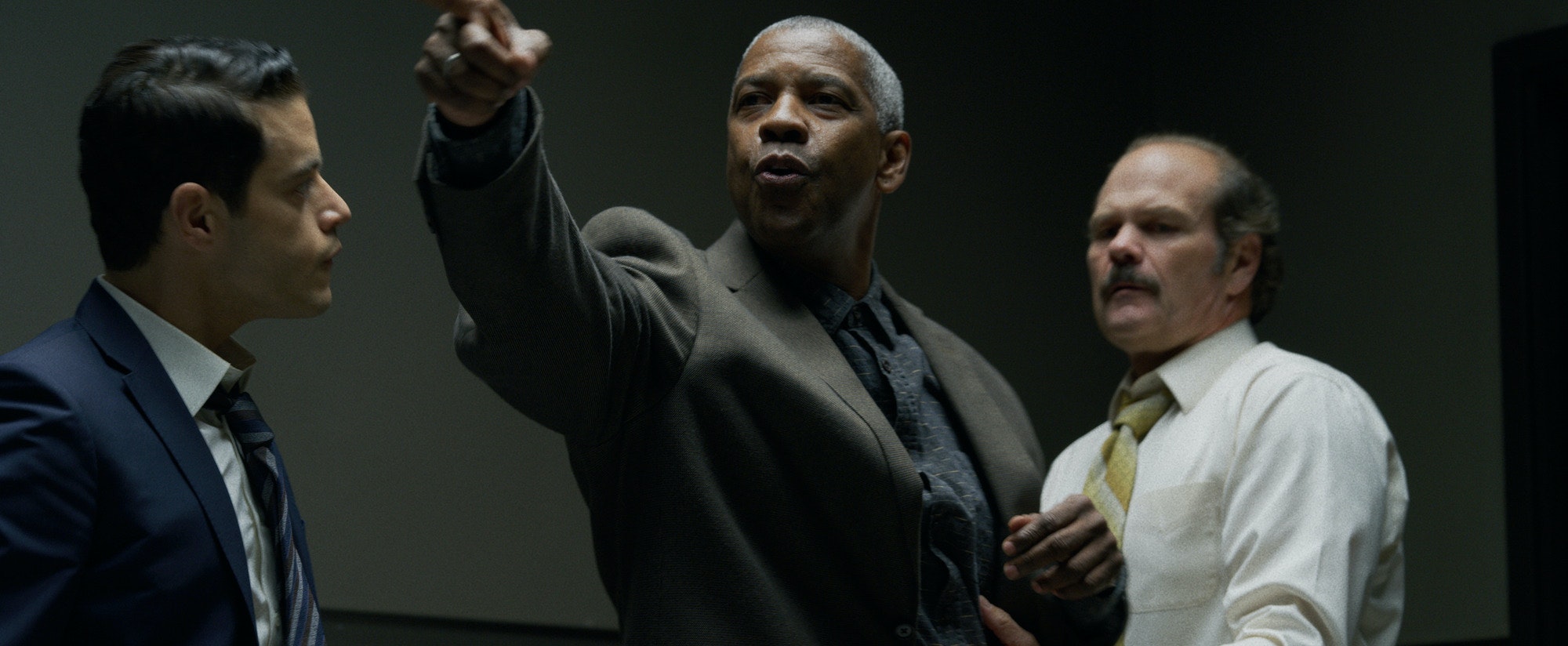
The drama takes place in L.A. around the time Hancock wrote it, well before cellphones, social media and reliable and readily available DNA testing. A gray-dusted Denzel Washington takes center as Joe “Deke” Deacon, a deputy from a dusty town north of L.A. who must reluctantly head back to the city of his former employ to pick up evidence. While there he drops in on a burgeoning investigation led by Jimmy Baxter (Rami Malek), a tightly coiled homicide dick newly onto the trail of what looks to be a serial killer. Deke tags along to one crime scene, and the Frick-and-Frack tandem click. Deke decides to stick around and help QB from the backseat. Like “LA Confidential” (1997), the “The Little Things” is less about the who-did-it than the people pursuing the criminal acts, though suspect numero uno Albert Sparma (Jared Leto, sporting bad chompers, a prosthetic schnoz, low-riding paunch and a bow-legged gait) is something of a scene stealer, two parts Charlie Manson (sans flock), one part the maniacal god complex that Leto dredged up for “Blade Runner 2049” (2017) and a dash of Hannibal Lecter thrown in for good fun. Granted, he’s not as lethal as any of those lads, but he does drive a bitchin’ ’70s Chevy Nova SS and really knows how to get under everybody’s skin. When Sparma (sounds like a hot Italian sub with oozing mozzarella, right?) isn’t ripping it up with philosophical psychobabble that feels written for the lips of Jim Morrison, we get the dark why of Deke’s being run out of L.A. and start to see that Baxter’s overreaching confidence might be more chest puffing than can-do.

“The Little Things” moves in mysterious, murky tics embossed by John Schwartzman’s shadowy but sharp cinematography and Thomas Newman’s moody score. Ir all feels so visceral, deep and compelling, but when the reveals come back around, many of the threads register all for naught, a goose chase without the fowl. Washington (“Training Day,” “Glory”) and Malek (an electric Freddy Mercury in “Bohemian Rhapsody”) often feel like they’re occupying sketches of complex men, their renowned talent square pegs shoved in round holes. Malek, boyish and slick, feels too fresh and wide-eyed for a part that demands a more world-weary soul. Leto (“Dallas Buyer’s Club”), on the other hand, is a merry pixie of perversion, dancing his way around Hancock’s noirish landscape pulling strings and pushing buttons, consequences be damned – much like the film itself.

Let Him Go

12 Nov

‘Let Him Go’: The grandparents have concerns, and the weaponry needed to see them through

By Tom Meek
Friday, November 6, 2020

Writer-director Thomas Bezucha rekindles the essence of a B-noir potboiler with the fast, efficient and lean in execution “Let Him Go,” based on Larry Watson’s novel, which gets a big boost from some knockout performances – in the end, the main reason to see the film.

Those smart castings include Diane Lane and Kevin Costner as Margaret and George Blackledge, salt of the earth souls running a horse farm in 1960s Montana. The actors were paired before as Clark Kent’s earthbound parents in “Man of Steel” (2013), and were about the best thing in Zach Snyder’s Superman reboot. Here they’re just as good, and in good company. Costner’s George is a former lawman, and the golden-age couple live an idyllic existence until their son (Ryan Bruce) dies in an accident, leaving behind his wife Lorna (Kayli Carter) and their infant grandson, Jimmy. Lorna shortly thereafter remarries a handsome outsider named Donnie Weboy (Will Brittain); one day passing through the center of town, Margaret spies the young man slapping Lorna and the boy around. The next day the young couple and child have vanished, leading Margaret to implore George to use his connections to locate their vulnerable grandchild.

All roads lead to North Dakota, where Donnie, Lorna and Jimmy have settled in with the Weboy clan (laugh all you want about the name, this group is no laughing matter) under the iron rule of Blanche (Leslie Manville), a fierce momma grizzly lording over Donnie and his three brothers. “The Big Valley” this is not. Manville, so good and Oscar nominated for her turn in Paul Thomas Anderson’s “Phantom Thread” (2017), is even more malevolent and imposing here. The sideways invite to the Weboy ranch for pork chops and the creepy car ride out there puts Margaret on edge, and eating those chops with Donnie’s hyena-faced brothers (including one played by Jeffrey Donovan, another standout in a small part) is an uncomfortable affair. The Blackledges get to see little Jimmy for only five minutes. Not to give too much away, but tensions escalate, wicked Blanche fosters a call to arms and things get bloody. The local law – clearly Weboy-owned – won’t help, and so Margaret and George, beaten down and outgunned, dig deep to extricate their boy’s boy from an abusive environment. Think of the siege in “Straw Dogs” (1974), with two strong matriarchs going at it. There’s nothing surprising; just same damn fine acting and the fear of god Manville’s Blanche leaves ingrained in the viewer’s mind.

Tenet

14 Sep

‘Tenet’: Time travel caper by Christopher Nolan chooses its moment, masked against apocalypse

By Tom Meek

Well, I did it: I went to a theater and saw “Tenet.” Would I recommend you to? That’s a personal call. For me it didn’t feel too risky, but read on. I attended a 4 p.m. show at Landmark’s Kendall Square Cinema. I bought my ticket online, but still had to wait in line to show the usher behind a plexiglass shield my emailed barcode and get a printed ticket. I saw only three other people at the theater, all folks asking for senior discounts – in short, those in high-risk categories but clearly desperate for an in-theater experience, as was I. Landmark offered no snacks, and masks had to be worn 100 percent of the time. Every two seats in the theaters are blocked off, and management asks you to sit in alternating rows – something, I did not need to worry about. I was the only person at my screening. (Apple Cinemas near Fresh Pond and Alewife is showing it too, since reopening Friday.)

This being a Christopher Nolan film, seeing it on a big screen is kind of a must – in the very least for the imposing, driving score (by Ludwig Göransson, though it feels and sounds a lot like Hans Zimmer’s work on Nolan’s 2010 “Inception”) and the impressive camera work by Hoyte Van Hoytema, Oscar-nominated for Nolan’s WWII time scramble, “Dunkirk” (2017). Playing with time and space is Nolan’s thing; he did it with “Memento” (2000) to tell a murder mystery in reverse, and “Interstellar” (2012) as space travelers who go through a black hole where decades of Earth time pass in minute. Here time is imbued into objects sent back from the future. Sounds zany, right? It’s one of the things you just let wash over you, because no matter how hard Nolan and his characters try to explain, you feel like you’re just not getting it. The best I can do is that you can rewind history and insert yourself into the action – in essence, altering the future – but the catch is everyone else is moving in reverse while you’re going forward. People walk backward, cars go in reverse, and bullets get sucked back into their gun. 

Continue reading

Blow the Man Down

22 Mar

‘Blow the Man Down’: Sisters in a small town share secrets, but small town outdoes them

By Tom Meek

Blow the Man Down' Review: Women, They Get the Job Done - The New York Times

“Blow the Man Down” is something of a noirish whodunnit set in a sleepy little fishing village in Maine by the name of Easter Cove. In look and feel Easter Cove has the small-town intimacy that buoyed “Manchester by the Sea” (2016), but the plot that unfurls upon its docks, dark country roads and placid bays is something else, far darker and more akin to a Coen brothers offering – say “Blood Simple” (1984) or “Fargo” (1996).

The movie begins with the funeral of Mary Margaret Connolly, whom we quickly learn has left her two daughters with a meager fish market, the house they grew up in and a mountain of debt. Mary Beth (Morgan Saylor of “Homeland”), the sassier, redheaded younger of the two, had to drop out of college to help care for her mother, while Pris (Sophie Lowe), the dutiful one, pretty much lives up to her overtly wholesome name. Later that night, to drown her miseries, Mary Beth takes up a stool at the local watering hole and ends up throwing back a few pints with a dubious yet good-looking ruffian named Gorski (Ebon Moss-Bachrach). The two share a few snorts of coke, a car crash into a cherished town landmark – and then there’s the discovery of human hair and blood in the trunk of an old beater as the evening takes some very fateful turns. After it all, there are two bodies floating in the harbor, with Mary Beth and Pris both victims as well as in power to provide the police with details, though the police in this case are totally out in left field and no one is interested in them solving the crimes, let alone the fact that the police chief (Skipp Sudduth) is corrupt and on the take. A critical bag of cash and scrimshaw knife bob around as well.

The film, directed by the first-time tandem of Bridget Savage Cole and Danielle Krudy, is driven by the kind of female outside-the-law energy that propelled “Thelma and Louise” (1991) and is further embossed by the women dominating the ensemble beyond the Connollys (Saylor and Lowe form a palpable sisterhood invaluable to the film’s success). That includes the intimidating Enid Nora Devlin (Margo Martindale, so perfectly unassuming at first), who runs the Oceanview Inn, your classic New England quaint spot that’s a veneer for bordello operations, and a moralistic trio of harpies (June Squibb of “Nebraska,” Marceline Hugot and Annette O’Toole) at odds with Enid and all having something to do with the Connolly matriarch back in the day. Not to mention, the most at stake in the ever-shifting tides of Easter Cove is Alexis (Gayle Rankin), one of Enid’s girls who’s always looking over her shoulder – and with just cause. The score by Jordan Dykstra and Brian McOmber is sets the mood well, and there’s a reoccurring chorus of fisherman singing sea shanties that comment on the action. It’s a worthy little thriller that hits some swells of credibility here and there, but overall the ebb and flow holds us captive.

1917

10 Jan

‘1917’: They’ve only a short time to save lives, and we go with them through the hell of war

tmp-19117


When it comes to war movies, there’s plenty about World War II but far, far less when it comes to chronicling its bloody predecessor. What exists is pretty rich and powerful, including classics such as “All Quiet on the Western Front” (1930), “Gallipoli” (1981, and a classic!) and “Paths of Glory” (1957), which all captured the barbaric horror of trench warfare – inhumane hellholes of mass slaughter where heroics were measured by the last man standing. A couple of years ago, Peter Jackson fittingly embraced those lost heroes with the cinematic ode “They Shall Not Grow Old,” the “Lord of the Rings” director’s first documentary; and looking to add to that list, director Sam Mendes (“American Beauty” and “Skyfall”) drops a taut, face-paced shot of adrenaline on us in “1917,” which might not be long on plot, but pins you to the edge effectively as the clock ticks and ordinance explodes overhead.

Much will be made about the long-shot cinematography by Roger Deakins (“Fargo” and an Oscar winner for “Blade Runner 2049”). It’s absolutely brilliant, and any of those pooh-poohing it as a gimmick likely don’t understand the technical complexity involved. Deakins’ artistry gets put on display from frame one as we meet up with young lance corporals Schofield (George MacKay) and Blake (Dean-Charles Chapman) lazing wearily in a field. Brought bleary-eyed before their C.O., they’re ordered to deliver a message to another allied outpost several clicks away: The grim circumstance of the situation is that communications are down, and if they fail to make the drop before the next sunrise, some 1,600 British soldiers will march into a trap and be slaughtered. Blake’s brother, as we’re informed, is among the unaware – the sense of urgency’s not just paramount, its personal.

From that brief, officious interlude, we’re off, following the lads down into the trenches, through the bomb burst, across the wire and into German-controlled French countryside. Along the way, mangled corpses hang from barbed wire entanglements and bob in the mud pits and streams they must cross. Then there’s the close encounters with the enemy, including the pilot of a downed biplane, when a brief moment of humanity turns deadly. The whole harrowing ordeal unfurls in real time, with the two constantly flushed, harried and under fire. In its pressure-cooked pace, “1917” invokes the same fraught “what could possibly go wrong next?” anxiousness that “Uncut Gems” rattled us with just weeks ago.

What’s most impressive about Mendes’ salute to valor is the seamless synergy of choreography, action and sound (both ambient and Thomas Newman’s soul-shaking score). It’s an immersive effect that embeds you with the soldiers as if you were there, following as they charge through the trenches and duck enemy fire. That POV, while wholly visceral and unique, also makes “1917” feel a bit like a video game, in which depth of character becomes secondary to the next eye-popping visual. Chapman and MacKay are plenty fine, mind you; they’re just not given the theatrical real estate to expand. It’s all action, all the time. Pauses along the frenetic path do give us a chance to breathe when the pair check in with higher-ups (played by Colin Firth, Benedict Cumberbatch and Mark Strong), but then it’s onto the next bullet-blazing gauntlet.

Ad Astra

19 Sep

Ad Astra Is the Year's Most Gorgeous Movie | GQ

The film begins with a bravura sequence (worthy of “First Man” comparisons) where, in the not too distant future, Roy is working on an antenna projecting up and out of earth’s atmosphere that gets struck by a rogue energy wave. The massive spire implodes, collapsing back to earth in a long, slow chain of events that call eerily to mind the 9/11 attacks. Roy, with some cool thinking, survives, but more than 40,000 people are killed by the surge from somewhere out in the galaxy.

The purpose of the tower, we’re told, is to communicate with other intelligent life, because humans cannot survive much longer on their own – the implications being that we’ve messed up the planet and are looking for someone to bail us out, though that’s never really articulated. If you’re thinking the Tower of Babel or “Contact” (1997) you’d be correct, but with the death toll from the wave and more on the way, phoning ET gets dropped as the surge and its source become job numero uno. Naturally the brass at Space Command (a branch of the military) pick Roy (can anyone ever pass over Brad Pitt?) for the need-to-know mission, and also, what’s that? Those in the know think the shockwaves are coming from Neptune, where some years earlier Roy’s father (Tommy Lee Jones) led a mission and may still be alive.

Yup, daddy issues run deep, but not with much emotional effect. The journey to Neptune is a damn fine amusement ride, beginning with the running of a gantlet of pirates on the dark side of the moon to the abandoned spaceship where a lab experiment has gone wildly amok and the penultimate stop, Mars, run by an effete with a mini-man bun and myriad agendas. But it’s there on Heinlein’s precious planet and beyond that the film begins to drift. The mission and the stunts lose their importance, the sense of urgency and peril get nipped, and all we’re left with is something of a stripped-down existential quest, a diet lite posturing of “Apocalypse Now” (1979) or “Interstellar” (2014) without a credible force (or fully baked cause) to reckon with (i.e., Brando’s Kurtz or Matt Damon’s rogue astronaut). All of a sudden, the slog to the outer limits feels all for naught. Also challenging to logic and scientific principal, these guys hop planets like catching the noon Greyhound to Penn Station. There’s no warp speed, wormhole or stasis sleep – in short, the sense of time and space feels distorted, if not ignored.

Gray, who cut his teeth with gritty crime thrillers such as “Little Odessa” (1994) and “We Own the Night” (2007), last turned in “The Lost City of Z” (2017), an account of British explorer Percy Fawcett’s quest to find signs of early civilization in the Amazon. That film, another journey into the vast unknown, feels like boilerplate for “Ad Astra.” It’d be fair to call it a Z-peat, but in the real-life account, Fawcett always seemed one fateful decision away from ruin. Here, Pitt’s Roy, while steeped in palpable, reflective soulfulness, is so can-do capable that Kryptonite has no shot of buckling a knee. Pitt, for better or for worse, has become something of an icon and a brand, like Tom Cruise (impossible to separate the celebrity from the performer) – and while that worked to everyone’s advantage (shirtless scene and all) in Tarantino’s Tinseltown fable, Gray never imbues his hero with enough vulnerability, or even a hint of it. “Ad Astra” is like a 5 Hour Energy drink: a sharp, pure blast of wow, until you come down and it leaves you empty and wanting.

Midsommar

5 Jul

‘Midsommar’: Hands-on anthropology studies reveal how dark it can get under midnight sun

Image result for midsommar


As a kid I went to this Danish town north of Los Angeles called Solvang where it was Christmas year-round and the waffles were extra large and strangely exotic, and everyone dressed like they were from “The Sound of Music.” I tell you this because Solvang reminds me so much of the Swedish commune where four Americans wind up for a nine-day fertility festival “Midsommar,” the thrilling new chiller from Ari Aster. Everything’s so old school Lapland you half expect to see the Ricola folk or Max Von Sydow among the elders welcoming the group.

Two of the four Americans dropping in – Josh (William Jackson Harper, TV’s “The Good Place”) and Christian (Jack Reynor, the poor person’s Chris Platt) – are anthropology grad students, and the midnight sun rites are fodder for their theses. It helps that stateside buddy Pelle (Vilhelm Blongren) is from the remote village that feels like pieces borrowed from the sets of M. Night Shyamalan’s “The Village” and Robert Egger’s “The Witch” with a bit of Ikea retrofitting tossed in. Rounding out the U.S. crew is loudmouth Mark (Will Poulter, the dirty cop in Kathryn Bigelow’s “Detroit”) and Dani (Florence Pugh, “Lady Macbeth”), Christian’s girlfriend and a tag-along whom the other lads in the posse aren’t so keen about.

The film begins and ends with Dani. There’s a prolonged opening about her clinginess to Christian, her bipolar sister and a family tragedy that would send anyone to therapy in double time– a hauntingly fraught meander worthy of Paul Thomas Anderson. Once up in the Swedish enclave, Dani freaks out on organic hallucinogens, Pelle clearly has eyes for her and the age-old cult ordains her as the dark horse in the May Queen dance-off.

Early on in the anthropological exploration—which doesn’t feel so scientific or methodical—we get a glimmer into just how dark this eternal summer day can get. Once you’re 72 in the commune, you’re ready for renewal, which has something to do with a swan dive onto a stone pallet or a wedding reception line of celebrants wielding a medieval mallet. It’s not easy to drink in, but it’s when Aster – who played on audiences’ sense of comfort and composure with the equally grim “Hereditary” – lets us know shit just got real. The American scholars, as smart as the allegedly are, don’t take note of such omens, even as their ranks thin. But when things begin to feel a bit “Wicker Man” predictable, Aster focuses on the fractured dynamic between Christian and Dani, and the choices the characters make are telling.

The final scene, just as with the reveal of the fate of Dani’s family, is gorgeously framed and flawlessly choreographed. It’s not everyone’s cup of tea, to be sure, but Aster has again put a new, gory bow on a genre we know too well. If you can make it to the end, you’ll walk out on edge and agape.