Tag Archives: Robert Eggers

Short Takes

26 Dec

‘Nosferatu’ (2024)

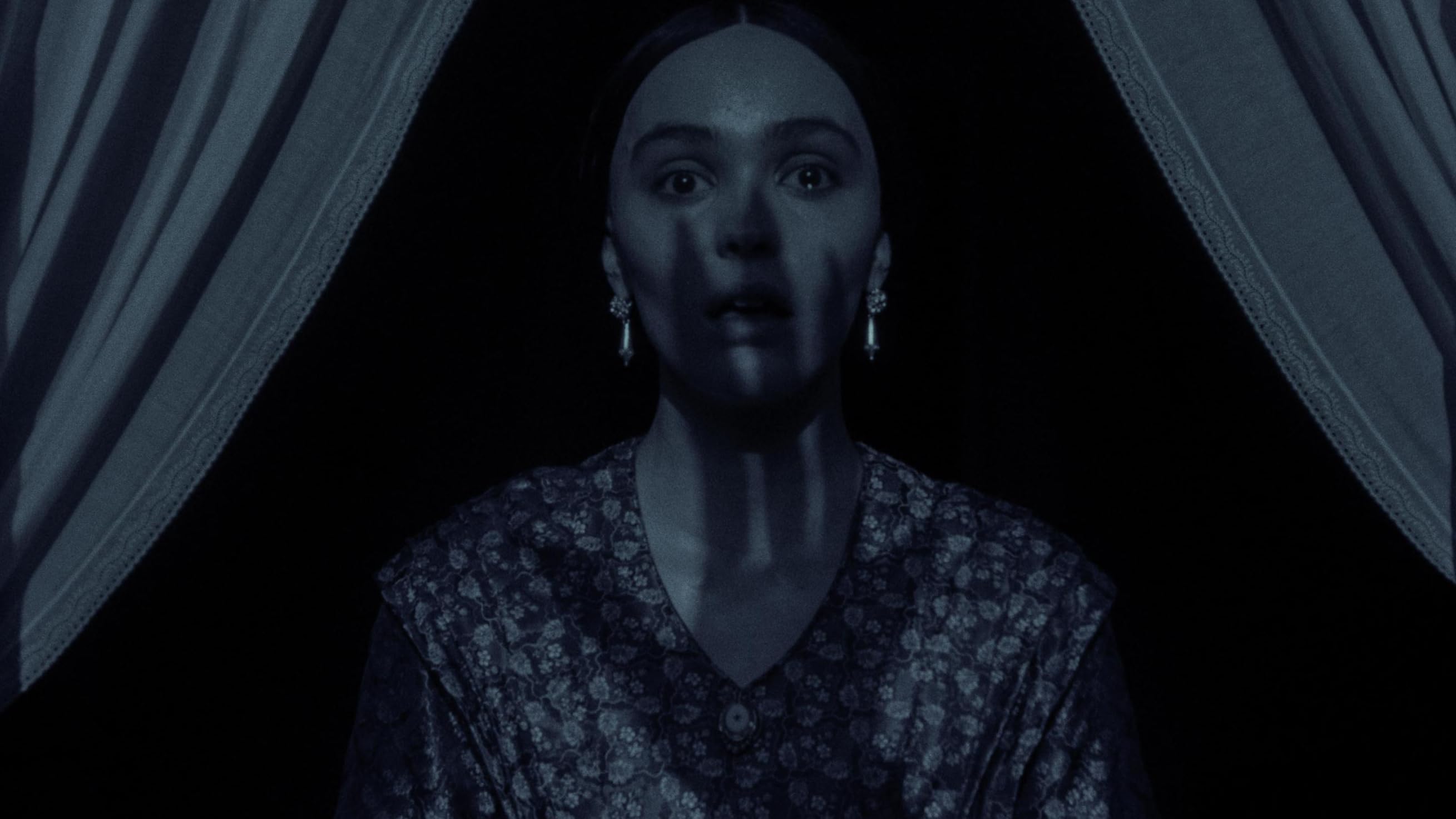
Robert Eggers’ remake of F.W. Murnau’s indelible 1922 classic is more akin in plot and scope to Francis Ford Coppola’s 1992 film “Bram Stoker’s Dracula” than Murnau’s inaugural cinematic adaptation, which was inspired by Stoker’s classic 1897 vampire tale. What’s the difference between Dracula and Nosferatu? Drac’s more dashing and suave, whereas the nosferatu named Count Orlok is a bald, withered being, grotesque by most human norms of comeliness and hygiene. Murnau, a master of practical effects, cranked up the mystical mind control aspects and educed a once-in-a-century performance from Orlok portrayer Max Schreck. Here, as played by Bill Skarsgård, whose brother Alexander worked with Eggers on “The Northman” (2022), Orlok is a shadowy incarnation that never comes into the light the way Schreck or even Klaus Kinski did in Werner Herzog’s 1979 take. Despite the title “Nosferatu the Vampyre” on the Herzog version, Kinski’s count is listed as “Dracula” and was something of a blend of the Bela Lugosi and Schreck incarnations. Eggers, who has made his name with eerie ambient immersions into the outré – “The Witch” (2015) and “The Lighthouse” (2019) – does more of the same here with strong black-and-white visuals delivered by director of photography Jarin Blaschke, who’s worked with Eggers on all his films, and the sonorous bolstering of Orlok’s gravelly intonations. The object of the carnivorous count’s desire is Ellen Hutter (Lily-Rose Depp), a young German woman with whom he forges a psychic connection despite residing far away in Transylvania (a picture can do that). To meet IRL, Orlok summons Ellen’s real-estate lackey husband, Thomas (Nicholas Hoult, now on-screen in “Juror #2”), to his castle to receive a deed to the flat across the way from their apartment in Wisborg. The count drains half the hemoglobin in Thomas’ body – nothing like weakening your rival in love before moving in. Once ashore in Wisborg (the scenes of Orlok dining on the crew while at sea are the most grim and gruesome), Orlok unleashes a plague and takes over the souls of a few townsfolk to employ as minions in pursuit of Ellen. In his adaptation, Eggers pays sincere homage to Murnau and Herzog’s versions. The result feels new in look and posture, but it doesn’t innovate much in the vampiric pantheon. Depp turns in the film’s most palpable performance, and for a Christmas treat, Eggers regular Willem Dafoe drops in as a batty academic and occult expert intent on sending Orlok back to the beyond for good. 


‘Babygirl’ (2024)

Keeping with the psychosexual power games, Nicole Kidman notches her second Christmas film that features her bare derrière. That other movie, Stanley Kubrick’s 1999 swan song, “Eyes Wide Shut,” has grown on me over the years, especially the theme of small indulgences having larger, unintended ripples. Here Kidman plays Romy, the very in-charge chief executive of an e-commerce company named Tensile Automation – basically Amazon on crack. Romy lives in a palatial Manhattan condo with her husband Jacob (Antonio Banderas), a noted New York theater director, and two precocious teen daughters (Esther McGregor and Vaughan Reilly), but something’s clearly amiss. After sex, Romy runs off to another room to watch incest porn; then there’s the new intern Samuel (Harris Dickinson) who seems to know how to push every one of Romy’s buttons and regularly challenges her authority and proclamations in public forums – something few if any in the C-suite of Tensile Automation would dare to consider. Samuel chooses Romy as his mentor, and in their one-on-ones, keeps on pushing. Outside the office, the relationship turns physical with Samuel subjecting Romy to the kind of erotic B&D shenanigans that made “9½ Weeks” (1986) a kinky cultural staple for decades. Like Todd Field did with “Tár” (2022), writer-director Halina Reijn (“Bodies Bodies Bodies”) does a deft job of flipping the gender power paradigm. Kidman is superb as she riffles through the masks her character wears – nurturing mother, caring wife, nonapologetic CEO, lonely, unfulfilled soul and object of sexual subservience – often on a dime. Dickinson’s Samuel, by contrast, feels underwritten and hollow, which is a letdown given the strong performances he delivered in “Beach Rats” (2017) and “Triangle of Sadness” (2022). We never get the why of Samuel doing what he does, and when he starts threatening to upend Romy at the office or her coddled home life (he shows up uninvited for one of the girls’ birthday parties), he takes on the role of cruel manipulator as well as wormy opportunist, one we find ourselves rooting for a billionaire exec to take down. Also notable in the web of desire and deceit is Sophie Wilde (“Talk to Me”) as Romy’s protégée, who ends up dating Samuel as the affair becomes combative.


‘The Fire Inside’ (2024)

Cambridge-born filmmaker Rachel Morrison, the first woman cinematographer to receive an Oscar nod (“Mudbound”) in the category, makes her directorial debut with this biopic about Claressa “T-Rex” Shields, the first U.S. woman to win gold in Olympic boxing. The focus of Morrison’s film (working from a script by “Moonlight” director Barry Jenkins), is not her current pinnacle of pow, however, as she is still stalking opponents in the ring and undefeated as a pro, but Shields’ challenging early years in Flint, Michigan, where she was raised by a distracted single mother (the father was in jail) and lacking resources to get by. As Shields, Ryan Destiny brings a fierce pugnaciousness to the part. It’s an impressive, all-in performance not without nuance and a vein of vulnerability. The heat – and heart – of the film lies in Shields’ relationship with trainer Jason Crutchfield (Brian Tyree Henry), who backfills as a father figure. Bigger matters around Shields’ rise to prominence are a persisting gross gender disparity when it comes to compensation, respect and beyond, with a U.S. Olympic Committee publicist on Shields constantly to be more “ladylike.” Well-crafted and shot (by music video pro Rina Yang, not Morrison), with deep, palpable performances from Destiny and Henry, “The Fire Inside” strangely plays out somewhat flat-footed. Part of that’s the overuse of genre clichés (something you would not expect from the normally reliable Jenkins, but then again, consider his new “Mufasa”) and the knowledge that Shields would go on to become the Tom Brady of her sport. I’m not sure what’s next on Morrison’s plate, but “The Fire Inside” displays enough poise and promise to to get me off my stool for another round.


‘Homestead’ (2024)

Angel Studios, the family-themed, faith-based production company behind last year’s box office wonder “Sound of Freedom” (made for a cool 14 mill, it grossed near 200) saddles up with this post-terrorist-attack survival drama in which food, water and other life-sustaining needs become scarce as infrastructure and the law crumbles. The what and the why is a dirty bomb delivered by sailboat, detonated just off the L.A. coastline. Communications go silent, and the folks living on a sprawling, vineyard-esque estate of the title go into lockdown mode. The patriarch of the gorgeous grounds, billionaire Ian Ross (played by the steely eyed Neal McDonough) hires his own security detail headed by ex-Green Beret Jeff Eriksson (Bailey Chase) to keep out the riffraff (people seeking food and shelter). Based on the “Black Autumn” series by Jeff Kirkham and Jason Ross and directed patly by Ben Smallbone, “Homestead” wafts wisps of provocations – the haves versus the have-nots, what to eat when the corner market is bare and commitment to community, i.e., helping your fellow human in the wake of a societal collapse, but none really excite. Part of that is because Ross and his crew are so inherently entitled that you half want to see the hordes at the gate come for them Marie Antoinette style, and Chase’s operative is cold, aloof and always sizes up a situation with a finger on the trigger; neither character is particularly empathetic. The film does work its way around in the end, but feels rote. Alex Garland’s “Civil War,” released this year, covered similar territory with more bite. You do have to marvel at the spread that Ross and his family are holed up in, and much of the film feels like a grand mansion tour (despite the California setting, it’s in Bountiful, Utah, not too far from Angel Studios HQ).

The Northman

24 Apr

‘The Northman’: Viking precursor to Hamlet barely hesitates to hack away at his problems

By Tom Meek Friday, April 22, 2022

It’s hard to believe Robert Eggers’ $90 million Viking saga is just two films out from his rousing debut “The Witch,” which he made for a humble $4 million back in 2015. That moody, Colonial-era chiller went on to amass more than $25 million worldwide, reinvigorating the folk horror genre and pronouncing Eggers as the talent of tomorrow. Tomorrow is today as “The Northman” thunders into theaters, an ambitious, big-scale take on the A.D. 895 tale of Amleth, a classic (or the classic?) revenge drama that would later become the roots for the Shakespearean tragedy “Hamlet.”

From the opening shots of an Icelandic volcano belching rivulets of lava and the churning north sea (the North Atlantic, as we now call it), Eggers casts a foreboding scape that brims with brutal beauty and primal allure. We often get Viking warriors crouched on all fours, grunting and howling as they channel their inner wolf during pre-battle rites conducted within the ring of a bonfire; no words, English or language of yore, fall from their lips.

In chaptered segments, we begin with King Aurvandil (Ethan Hawke) returning from a conquest to his people, his wife Queen Gudrún (Nicole Kidman) and his young son, Prince Amleth (Oscar Novak). Hawke slips surprisingly well into the gruff, growly role, but Aurvandil’s not with us long; his brother, Fjölnir (Claes Bang, “The Square”) ambushes him and looks to kill the prince as well, but as lore and legend have it, Amleth is something of an Aquaman and can swim far and wide. In the next chapter we catch up with Amleth, now mature and ripped and played by Alexander Skarsgård (who played opposite Kidman as her husband in the series “Big Little Lies”) embarking upon a war party raid that is one long, gorgeously shot carnival of carnage. It’s not until the last drop of blood soaks into the mud (the film has that “Gladiator” sword-and-sandal texture to it, but mud-and-blood is a more apt tag) that you fully realize that Amleth is out for one thing: to even the score with Fjölnir. To do so, he poses as a slave working Fjölnir’s fields. You’d imagine with such strong genetic ties, his uncle might recognize his now burly and physically capable nephew, but he does not, and neither does his mother, who has taken up with Fjölnir and borne him a son.

Much of the copious and well-staged violence unleashed onscreen is the manifestation of the molten rage that roils inside Amleth, who proves an efficient and unrestrained killing machine. Skarsgård carries the part strikingly, but it’s Kidman who shines in a multifaceted role in which everything is not as it appears. Eggers regular Anya Taylor-Joy (“The Witch”) throws in as Olga, a slave alongside Amleth who becomes his lover and co-conspirator, as does fellow Eggers ally Willem Dafoe (who co-starred with Robert Pattinson in “The Lighthouse”) as Aurvandil’s fool. Icelander Björk, in her first feature performance since “Dancer in the Dark” in 2000, takes up the part of the oracle who torments Amleth.

Those who might be concerned that such a budget and scope might change or addle the filmmaker’s work can relax. “The Northman” feels strangely akin to Eggers’ earlier efforts; at the core, they’re all period pieces set in harsh, unforgiving surroundings haunted by the spirits of past inhabitants. Where those big dollars go are the sets, the stockaded villages, Viking ships and earth-roofed fiefdoms nestled into the rolling hills of Iceland. Eggers carries forward his animal obsession too. It was a menacing goat in “The Witch” and a baneful seagull in “The Lighthouse”; here we get a murder of crows that have Amleth’s back, not to mention his ability to commune with a friendly fox on his covert night stalks or Fjölnir’s pet bull mastiff. Not all of “The Northman” works – some of it’s muddled visually and linguistically, and at turns it gets a bit too feral for its own good – but the immersion and mood makes for a mesmerizing and haunting odyssey, much in the same way Terrence Malick’s dreamy “The New World” (2005) took us to back to our early colonial origins.

The Other Lamb

4 Apr

‘The Other Lamb’: Lesson from cult life in woods is largely that guys are manipulative jerks, Part I

tmp-otherlamb

With the Covid-19 state of emergency and shutdown of movie theaters, we’re highlighting new streaming options for people stuck in their homes by social distancing.

“The Other Lamb” is a twisted tale about a cult in the deep woods, dwelling in yurtlike structures adorned with pagan markings and living off the land, all female but led by a man known simply as the Shepherd (Michiel Huisman). The Shepherd lives well: His “Handmaiden” flock wash him and feed him, and the young women he selects get the can’t-say-no opportunity to “receive his grace.” The Shepherd, bearded and benevolent in countenance, evokes Jesus, but when things don’t go his way he acts like Machiavelli, relying on his divine righteousness and religiously obedient groupthink to ensure he gets what he wants. And then there’s that flock of sheep always nearby, peppered with a few anxious bull rams huffing and snorting with pent-up sexual energy, as if they want in on the fertility rites too.

In texture, the postured “Other Lamb” feels a lot like Robert Eggers’ 2015 Calvinist tale of the occult, “The Witch,” but at one point early on we get an incursion from the outside world and learn that we’re not toiling in a primitive, pre-electricity era. The main focus of the film is a young woman by the name of Selah (Raffey Cassidy, so good as Natalie Portman’s daughter in “Vox Lux” and a simmering realization here as well) whose mother had been a member of the cult and perished recently amid curious circumstance. Budding on the cusp of sexual availability, she’s eyed continually by the Shepherd, but Selah’s interested in learning what happened and stepping outside the confines of the cult. It’s such coming-of-age anxiety that gives the film a simmering tension beyond the raw sexual energy that’s heaped out there from frame one with “Wicker Man”-esque dankness.

Things meander as the group is forced to find a new Eden. The odyssey builds the character of Selah, and reveals other things at play beyond the Shepherd’s mercurial nature and the ever-present, heavy-breathing rams. Take the cult’s social order, which has the older women (Selah’s mom was one) referred to as “broken things” or “cursed wives,” both mentors and outcasts. And even though there’s the pronounced tang of Puritanism, the scene of the Shepherd baptizing young women in scanty albs would likely set the testosterone tinder of spring break bros afire once the anointed in their little-left-to-the-imagination garb are raised from the watery depths for air. It’s a weird, haunting modulation between austere religious regimentation, the Shepherd’s enigmatic id and the women’s individual freedoms offset and undercut by the power of group coercion. 

The film’s big win, besides Cassidy, is the gorgeous cinematography by Michal Englert (“The Congress”) rendering the vast Irish highlands as both foreboding and liberating. Overall, Polish director Malgorzata Szumowska delivers a confident and poised composition, crafting a spectacle of a man justifying entitlement by claims of divine right, even if feels done before.


Emma.

27 Feb

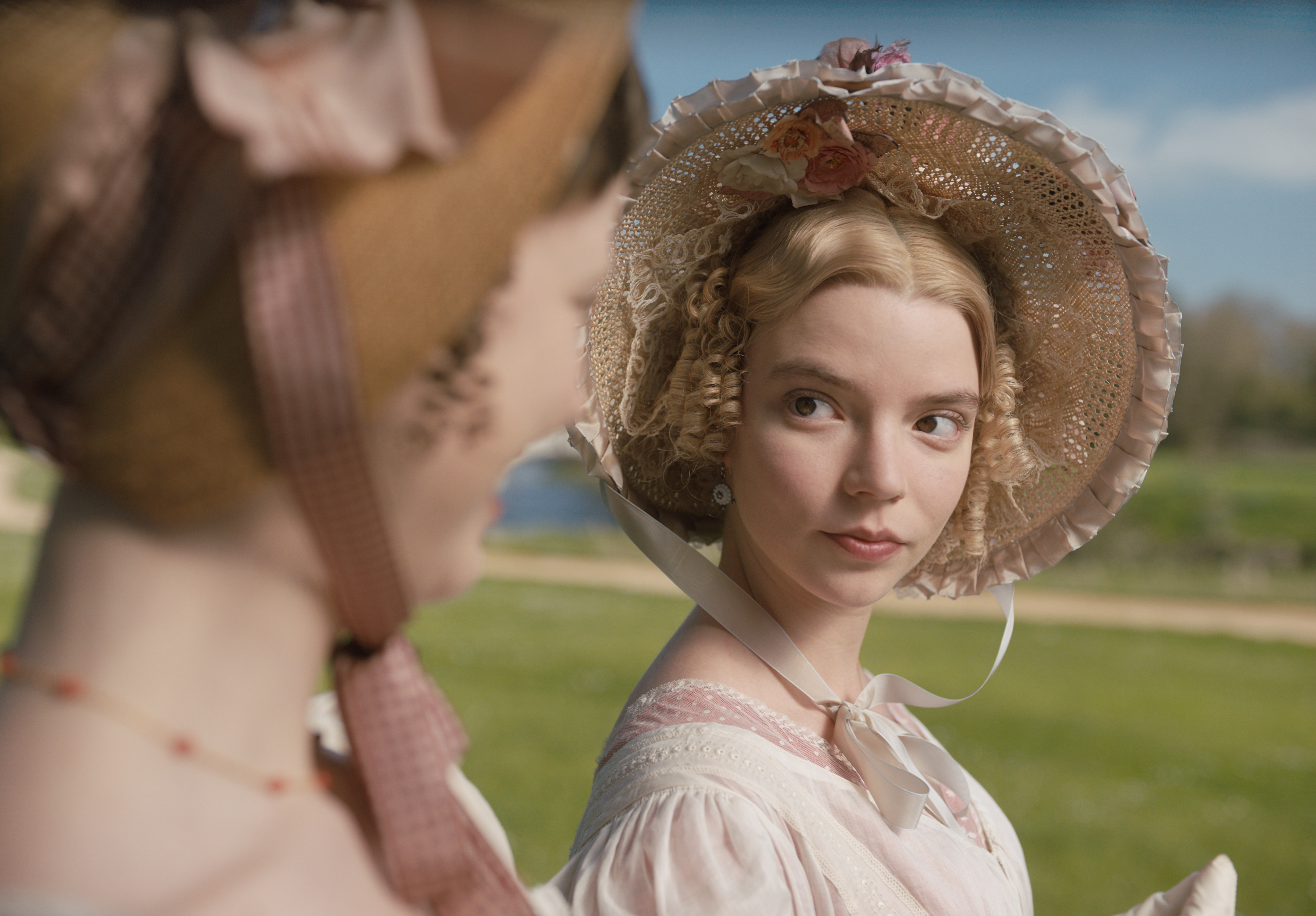
I always find it curious that “Emma” was the last novel Jane Austen wrote before her passing. “Pride and Prejudice” and “Sense and Sensibility” always felt more mature, wise and insightful. They’re also less gleeful and spry. It’s important to note that the title of the film by Autumn de Wilde, tackling Austen in her feature debut, is “Emma.” with a period at the end of the title. One might think it’s to not to be confused with the 1996 version staring Gwyneth Paltrow, or maybe to simply inform cinema-goers that this is the definitive celluloid (well, digital) version – period! However you take it, de Wilde’s vision of 19th century English countryside is a rich one, rooted in details, period dress and the title character’s ever alluring array of earrings. One astute detail is the use of folding panel draft screens, each a piece of period art in their own right, positioned by the help to keep their wealthy estate owners warm as they relax in the living room gabbing and imbibing a cordial or, more mundanely, reading. In one scene, Emma (Anya Taylor-Joy) instructs the helping hands to move two such panels to exact locations to keep her father (the indomitable Bill Nighy) warm. The hyper (draft) sensitive effete is certainly snug and happy, but what Emma has more intentionally done is create space for her and her next-door neighbor (fields and sculpted gardens away), the overly solemn Mr. Knightley (Johnny Flynn), to whisper privately about affairs of the heart.

Emma, it turns out, is a master manipulator, ever so prim on the outside but inside scripting the love lives of the young and unsuspecting roaming the quaint confines of the bucolic burg just a day’s jaunt from London. Those caught up in her matchmaking, besides Knightley, are her tag-along of lower social station, Harriet (a wonderful Mia Goth),  Robert Martin (Connor Swindells), a sensitive, hardworking farmer with a square jaw , the prideful world traveler Frank Churchill (Callum Turner) and Emma’s de facto social rival, Jane Fairfax (Amber Anderson). Most of Emma’s semi-well-intentioned plots (most with a modicum of personal gain attached) backfire with a dour muffled cough. Nothing in Austen’s very staid land ever erupts outwardly, though Flynn’s brooding Knightley feels like a bull in a narrow stall looking to explode. It’s a Heath Ledger-esque performance, understated yet thoroughly compelling. (Interestingly, Flynn in is slated to play rockers David Bowie and Ray Davies in upcoming projects.)

It’s hard to pick a shining star in de Wilde’s opulent period piece. Goth, Nighy and Miranda Hart as Miss Bates, a nonstop chatterbox as sweet as she is annoying, all add perfect bits of garnish to the Knightley-Emma Woodhouse tug-of-war of emotion and desire. Mark one thing: “Emma.” lifts Taylor-Joy over the top as a serious young performer in the ranks of Thomasin McKenzie (“Leave No Trace,” “Jojo Rabbit”) and Saoirse Ronan (“Lady Bird,”“Little Women”). Coincidentally, the name of her occult young woman in her breakthrough, Robert Egger’s “The Witch” (2015), was Thomasin, and she’ll star this year with McKenzie in the Edgar Wright (“Baby Driver,” Shaun of the Dead”) project “Last Night in Soho.” And as much as Joy-Taylor lifts the film with her ebullient, wide eyes that mask mixed feelings, credit for a work that feels like both a fairytale and a master painting goes to de Wilde – amazingly, at nearly 50, notching her first-time shot. The script by “The Luminaries” novelist Eleanor Catton, like Greta Gerwig’s “Little Women,” metes in just the right amount of modern female gaze without unsettling a single apple in Austen’s cart. Flynn and Taylor-Joy have their trajectories mapped, but it’s de Wilde (who got her detailed eye making videos for Beck and Jenny Lewis) that’s the eye-opener here, and the new hot one to watch.

Interview with Robert Eggers

26 Oct

Remote location, relentless weather had effect on ‘Lighthouse’ filming, not just on characters

Robert Eggers reveals at least one secret behind his stormy new movie

Robert Pattinson and Willem DaFoe in Robert Eggers’ “The Lighthouse,” playing now at Davis Square’s Somerville Theatre.

Don’t spend too much time looking for answers about the meaning of “The Lighthouse,” Robert Eggers’ sophomore film, from Eggers himself.

Eggers, interviewed on a swing through town before “The Lighthouse” began screening Thursday at Davis Square’s Somerville Theatre, said he didn’t set out with a specific theme or statement, but “wanted to raise more questions than provide answers.”

The character study of two clashing personalities (Willem DaFoe and Robert Pattinson) tending to a New England beacon far offshore during the late 1800s is in throwback black and white, hard to define – it’s not really arthouse horror or a psychodrama, but a dabble of both and then some – and hits some pretty dark depths. It might not have been made had Eggers not caught Hollywood’s eye with his 2015 Calvinist colonial beguiler “The Witch,” which made a splash at Sundance and won him the Directing Award.

Robert Eggers. (Photo: Tom Meek)

“I had to choose very carefully,” Eggers said of his follow-up, invoking the notoriously fickle nature of the industry. Eggers, intentionally vague, mentioned a flirtation with a bigger project that got made by another filmmaker while “The Lighthouse” came to fruition from a script he and his brother Max had worked on years earlier, inspired by an old Welsh poem and the works of maritime penners of the era such as Melville. 

The film, with the provocation, tricks of the light and a dash of the outré now identified as part of Eggers’ signature style, landed two very big fish as its stars with surprising ease. “I didn’t think ‘The Witch’ would find much of an audience, [but] one of its fans was Willem Dafoe, who contacted me and asked me out for lunch – which was like ‘Wow,’ because he was a huge hero of mine. And Robert Pattinson had similarly been in contact with me,” Eggers said. “When they greenlit ‘The Lighthouse,’ I thought, who else?”

Of his journey into film, New Hampshire native Eggers has it down pat: “My dad was a Shakespeare professor at UNH, my mom had a kids’ theater company and I got bad grades – so the only college I got into was an acting school in New York.” Afterward, Eggers joined a theater troupe, where set design became his forte and a skill that ultimately elevated him in the theater and filmmaking industries. Those roots are on display impressively in the “The Lighthouse”; the structure of the title looks like an authentic relic but was built from the ground up for the film. “Anyone who could hold a hammer in Nova Scotia helped out, because we didn’t have a lot of time,” he said.

Because much of the film takes place during a relentless nor’easter that drives the action, that set was erected on Cape Forchu, a rocky peninsula on the southern tip of Nova Scotia that Eggers calls a “the most punishing location we could find that had good road access.” 

“It really delivered, but I had never been so cold in my life. I mean, I had experienced colder weather, but the gale force winds on that rock in the North Atlantic were just so relentless, and there’s no respite with all the saltwater spray coming at you,” Eggers said. Many of the scenes are in driving rain – mostly natural, though sometimes driven by a fan and only occasionally helped by a firehose. The short time on location, weather and physical demands of filming meant there was little time for relaxation.

Aside from Dafoe and Pattinson, who give performances worthy of award consideration, the other big star of the film is a clamorous seagull who menaces Pattinson’s newbie with all the brio of the bullish goat Black Phillip in “The Witch.”

“Actually it was three trained seagulls,” Eggers said. “They’re rescue birds, and they’re so smart and clever.” For the scene where the seagull files up to a window and pecks it three times, Eggers thought he was going to have to cut the elements together and maybe use CGI, but the bird did what was in the director’s head on the first take. 

Next up for Eggers is “The Northman,” a 10th century viking revenge story staring Nicole Kidman, her “Big Little Lies” costar Alexander Skarsgård, Dafoe and Anna Taylor-Joy (the star of “The Witch”). I had to ask Eggers how he became so obsessed with off-the-grid period pieces. “It’s what rings my bell,” he said. “I prefer to understand where we are and where we are going by exploring where we came from.”