‘Touch’ (2024)


Not entirely a “missed connection” or even “the one that got away,” but more “the one that ran away.” Based on Ólafur Jóhann Ólafsson’s novel of the same name, Baltasar Kormákur’s pine-across-time-and-continents is bookended in two globally defining fates: the bombing of Hiroshima and the onset of Covid. Told in two timelines, “Touch” revolves around a 70-something Finnish gentleman by the name of Kristofer (Egill Ólafsson), a widower with a daughter who passes the time singing in a choir. He’s also recently diagnosed with early stage Alzheimer’s, and from his long, reflective face it’s clear he’s unsettled, memories a-flutter, unfulfilled; before the disease or virus can take hold, to London he goes, just as hotels and airlines are starting to mask up and shut down. The “why” we get in the other timeline – the 1960s – as a young Kristofer (played by the director’s son, Pálmi) drops out of school and takes up a job as a dishwasher in a Japanese restaurant. Kristofer bonds with the owner, Takahashi (Masahiro Motoki), who came to London to escape the pain and scars of the bombing, and with Takahashi’s daughter, Miko (Kôki). How events pan out in both timeframes take some painful and surprising turns. The ambient tenor orchestrated by Ólafsson is subtle and quietly moving, coming more from the soul and setting than from the flying of romantic sparks. It’s a reflective, internal story that plumbs tragedy and pain as much as it wells with hope and promise. The action takes place primarily in London with scenes in Finland and Japan; in this journey of the yearning heart, location is largely ancillary. The performers hit their marks well, though it’s hard to reconcile the lanky Pálmi with the stout Egill as the younger and older Kristofer. Given that much of “Touch” takes place in the kitchen of a Japanese restaurant, Ólafsson, the director, does a nice job of bringing the sensuality of the food to the fore, if not quite putting it in the company of “The Taste of Things” (2023) or “Babette’s Feast” (1987).
‘Longlegs’ (2024)
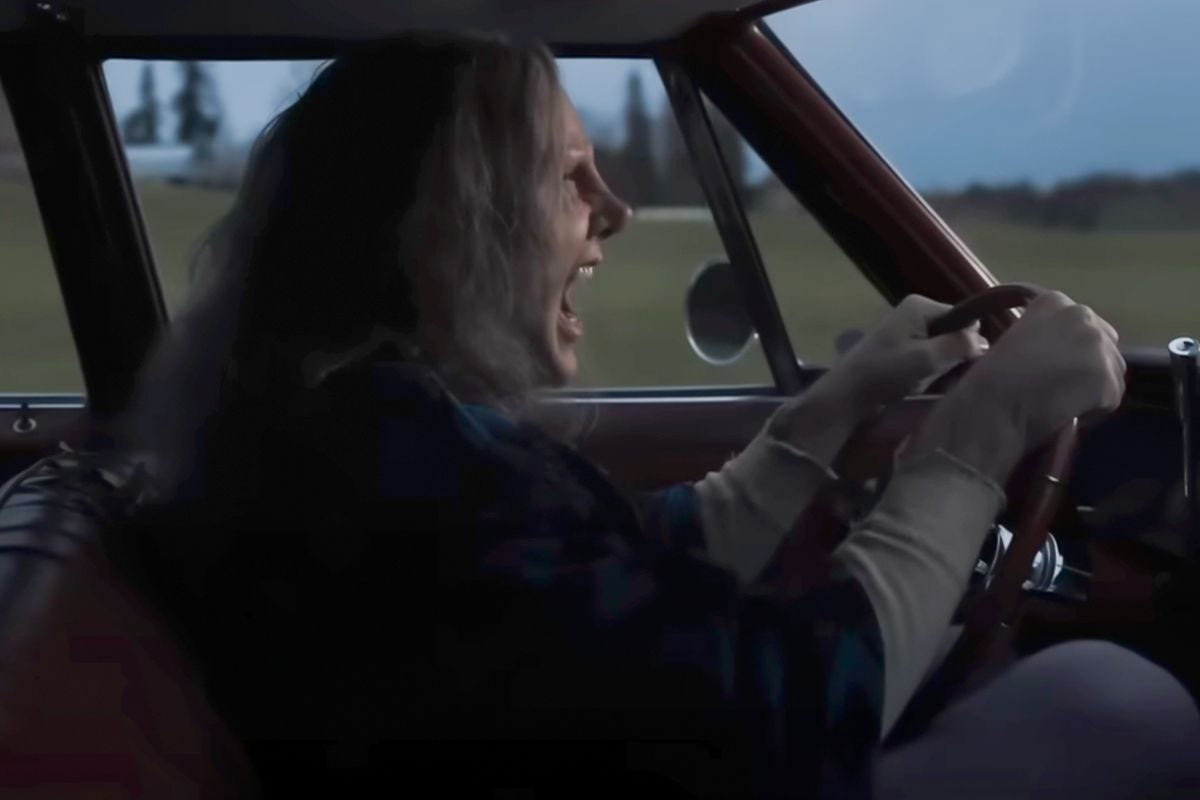

All the hype about this serial killer chiller from Oz Perkins being the next “Silence of the Lambs” (1991) has been well chummed by releasing company Neon, almost to the point of the marketing becoming the reality. Nicolas Cage, also a producer on the film, makes for an unforgettable Hannibal Lecter-Buffalo Bill hybrid as the sadistic psycho of the title, and green FBI agent Lee Harker (Maika Monroe) pops out of the microwave like something of a reheated Clarice Starling as she lurches into dark, forbidding places looking to bag Longlegs. It’s a moody piece propelled by deftly heightened atmospheric dread and some great performances, but it blows its credibility in the final act, and much of what’s thrown onscreen from a crime investigation standpoint makes little sense despite all its ardor and articulation – the hand waving is impressive. Set in Oregon in the 1990s (Bill Clinton is the prez), there’s been a series of families killed over a 20-year period. The crimes look usually like murder-suicide by the dad, except for a series of cryptic notes left at the scenes. Early on we learn that Harker has innate instincts that go beyond profiling and may be tied to a childhood trauma. They get her put on the Longlegs case with senior agent Carter (a dutiful and on-point Blair Underwood). To say more about the plot would be to ruin the tense ride. Monroe was good as a stalked soul who fights back in “Watcher” (2022) and “It Follows” (2014) but is less effective here, if mostly because of the arduous bait-and-switch twists the plot opts for. Cage is unquestionably the reason to see the film: His well-meted appearances as the pasty, androgynous and indelibly ghoulish Longlegs make the film, though the upping of the ante gets to be a little much near the end. Also impressive is Alicia Witt as Lee’s mother, who has a few bad habits and more than a few skeletons in the closet. Perkins’ other films, including “The Blackcoat’s Daughter” (2017), have been equally dark and moody and on point in genre, but yet never quite transcended. “Longlegs,” with the killer turns from Cage and Witt, ups the game, but cliches and a soulless finale hobble it from reaching its full stride.
 For What it's Worth