
 The IFC Midnight collection often rides that fine line between arthouse chiller and mainstream horror hash, such as the “Grudge” and “Annabelle” series. “The Wretched” isn’t any different, layered with grim, ghoulish visuals (bloody, feasting mouths and disjointed body parts) gurgling under small-town idylls.
The film begins with a sharp hook as a babysitter, arriving at a home for her shift, can’t find her charge but hears strange noises in the basement – the kind of flesh- and bone-crunching noise that says “Don’t come down here.” But she does. (Not that she sees it, but the basement door bears an occult symbol.) From that happy opener we rewind five days as we settle in with Ben (John-Paul Howard), whose life as a young teen (his parents are recently divorced, and he’s making youthful forays into romance, or not) is more interesting than the freaky shenanigans of Abbie (Zarah Mahler, who does demonic effectively enough), his next-door neighbor who skulks about at night in silk gowns with an evil glower in her eye. Ben doesn’t pay her wacky wanders too much attention at first. Then her son, Dillion (Blane Crockarell), terrified of his mother, comes running to Ben one night.
The film, written and directed by Brett and Drew T. Pierce (billed as the Pierce Brothers, who collaborated on “Deadheads,” a zombie flick that has nothing to do with the trippy 1960s rock band) slide into “Stranger Things” territory as Ben does some googling about witches of the woods and finds a strange, gnarled tree with an underground lair. As things hit their gory, blood-splattered crescendo, the Pierce lads pull in as much as they can from the classic goo-steeped transmutation scenes in “Alien” (1979) or “The Thing” (1982) – which those films did better. The big miss here is Ben’s angst-filled existence in a township of privileged jerks, bullying jocks and elusive coeds out of his league. In one such scene, a comely partygoer entices Ben into the pool and coerces him to get naked, only to have the intimate moment quickly exposed for what is: a planned group prank. Then there’s Ben’s relationship with Mallory (Piper Curda), a coworker at the local marina; their late-night phone calls as Ben spies on Abbie are more compelling in what they say about each other and the character of the town than the weirdness Ben is drinking in. “The Wretched” feels like a melding of two films: one I’ve seen ad infinitum, and another that begs empathy and intrigue.




 We catch up with the Kims first, living in a shabby basement apartment where they fold pizza boxes for a buck and scam Wi-Fi from those above. They live hand to mouth until the enterprising daughter of the clan, Ki-jung (So-dam Park, sassy and excellent) lands a job as an art therapy tutor to the Parks’ young, eccentric (and demanding) son, who was traumatized in first grade by something emerging from the lowest level of the Parks’ sleekly palatial, very Scandinavian home. A host of opportunities emerge. Ki-taek’s older brother is ensconced tutoring the Park’s daughter. The mother supplants the Parks’ longtime housekeeper. And what if the patriarch of the Kims could get a job as the Parks’ driver? Neat idea, but they already have a chauffeur. The resolution is a pair of soiled panties left in the back of the Benz for Madame Park, quite OCD and repressed, to get her gloved mitts on.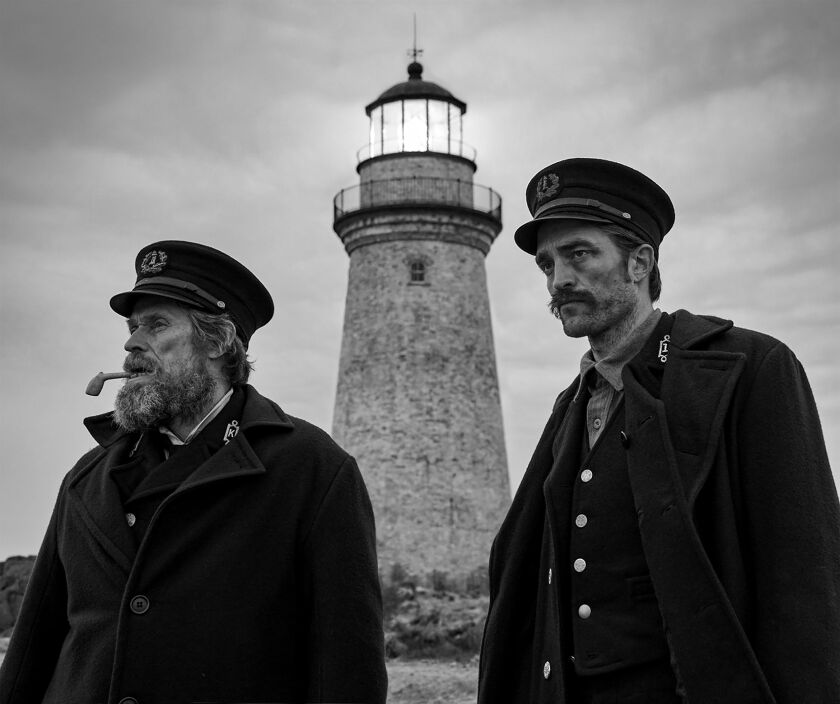
 The narrative the ambience hangs from isn’t quite as sure, but what’s to worry when you have Willem DaFoe and Robert Pattinson? The setup, based on writings by Melville and sea-obsessed others of the era, has two men keeping the flame on a remote isle somewhere far off the New England coast. It’s circa 1890, so there are no cell towers; there’s also no Morse code from the island should something go wrong. The pair are dropped off on the rock for a four-week shift. Dafoe’s Thomas is a salty old tar, Pattinson’s wide-eyed Ephraim the newbie in his charge. The order of things gets laid out early on: Thomas does the all the attending to light, which is kept under tight lock and key, as well as the cooking, while Ephraim pretty much does the backbreaking rest – scrubbing the floors, hauling heavy loads of coal across jagged rock outcroppings, emptying the piss pots and painting the structure from a rickety harness that would make any OSHA official cringe.


/cdn.vox-cdn.com/uploads/chorus_image/image/63283733/2511_tfp_00139a.0.jpg)

 For What it's Worth