COMMENTARY
On Tuesday, the Academy of Motion Picture Arts and Sciences will announce their slate of Oscar nominees, a lineup that will certainly be eyed with much scrutiny for its diversity. Last year, the #OscarsSoWhite controversy exploded after people of color were noticeably left off the Academy’s ballot for the second year in a row — a move backward considering 2014’s Best Picture winner, “12 Years A Slave.” Given the films that found success in 2016, both critically and commercially, the list of nominees should successfully change the tide.
The origins of the hash-tagged tumult, which had notables like Spike Lee and Jada Pinkett Smith boycotting the ceremony last year, are two-fold. For starters, the Academy’s makeup is not diverse by any measure — a Los Angeles Times analysis in 2016 found it was 91 percent white and 76 percent male. Secondly, the industry was not producing many quality films made by, or featuring, people of color.

When the nominations came out last year, Academy President Cheryl Boone Isaacs, who is black, promised immediate action. Following a unanimous vote by the board eight days later, rule changes stipulated that members who had been dormant in the industry for over a decade would be be moved to emeritus status (effectively losing their voting rights) and the recruitment of new members would begin immediately. Though, past winners and nominees retain full membership status and voting rights. The list of 683 invitees contained a notable presence of women and people of color (Rita Wilson, American Repertory Theater stalwart Cherry Jones, Nia Long, Mahershala Ali now in “Moonlight” and “Hidden Figures,” and John Boyega).
The industry too, almost as if on cue, made an initial, responsive roar when Nate Parker’s slave uprising saga, “Birth of a Nation,” garnered a record-setting $17 million distribution deal at the Sundance Film Festival in late January of last year. Expectations for the film were high, but when it finally poured into theaters, the edgy concept of a bloody revolt against injustice, while admirable, didn’t measure up at the box office. “12 Years a Slave” it was not and Parker’s past allegations of rape (he was acquitted) didn’t help either.

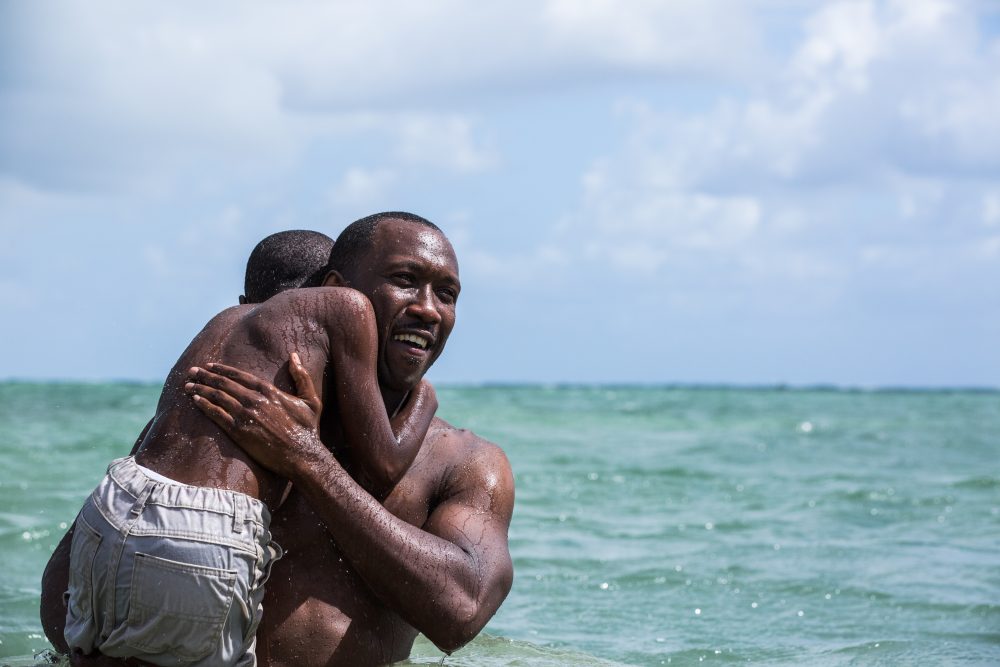
In light of “Oscars So White,” “Birth of a Nation” registered something of a disappointment, but the industry, in its own organic way, was quietly on the mend. The later crop of films featuring diverse filmmakers, casts and subjects shone — from “Moonlight,” the saga of a gay black youth, bullied and growing up under the negligent eye of a crack-addicted mother, to “Loving,” the haunting recount of the interracial couple who boldly broke the anti-miscegenation law in segregated Virginia and, more recently “Hidden Figures,” another based on true events, pre-civil rights movement drama about African-American female mathematicians working at NASA during the space race. Overall, 2016 was a year the blockbuster faltered and small films about people with varying backgrounds and experiences, navigating adversity, took center stage.

 It’s not a widely known bit of history, but Katherine Johnson (Taraji P. Henson), Mary Jackson (singer Janelle Monáe, successfully doubling up as an actor) and Dorothy Vaughan (Oscar winner Octavia Spencer, killer good) toiled for NASA during the Mercury space program as engineers and computers – mathematicians doing the technical legwork before Big Blue dropped its first mainframe – and proved critical in getting John Glenn up and into orbit. One of the film’s most telling – and touching – moments comes when Glenn (Glen Powell) meets Johnson during a technical assembly of scientists and mucky-mucks where she’s not only the only woman or person of color in the room, but the only one able to solve complicated flight variables mathematically. Later, when there’s a snag in the mission and the reentry point needs recalculating, he asks for her aid, referring to her simply as the “the smart one.”


 The term “fingersmith” refers to either a midwife or a pickpocket. Given the film’s title you might assume the former, and we start off by meeting Sook-Hee (Kim Tae-ri), a young Korean who tends to infants whose fates are more likely dictated by matters of profit than the kindness of charity. But the reality is it’s both – and fingers in general play a large part throughout. Sook-Hee’s plucked from among the nannies by the dashing Count Fujiwara (Jung-woo Ha) to become handmaiden to Lady Hideko (Min-hee Kim), who lives in a stately manse that would be a perfect fit for a Merchant-Ivory project. As quaint as this all is, we learn quickly that all is not that tidy and proper; Fujiwara isn’t Japanese, or even a nobleman – just a shrewd opportunist trying to get ahead during tumultuous times, and Sook-Hee, for all her nurturing, wholesome innocence, has a past of using her dexterously light fingers for illicit gains.
  For all their power and pop, these tales of the übermensch are pretty pat affairs; backstory and arch-villain, that’s how they go, a two-step do-si-do. “Doctor Strange,” sadly, is no exception, despite the more cerebral and human orientation of its protagonist and the inspired casting of Sherlock Holmes himself, Benedict Cumberbatch, as the doctor. It’s not for Cumberbatch’s lack of effort, but anytime you have a team of writers – three, in this case – tying to communally distill the tortured essence of an uber-being grappling with a newly acquired superpower, loss of former self and world annihilation by some unhinged megalomaniac with his hand on the button and a battalion of minions on call, you’re in a dark place. And we’re not talking about inner conflict.
 For What it's Worth