Destroyer

12 Jan

‘Destroyer’: Limping through the grit of L.A., Kidman’s cop intends to see an ugly job done


Image result for destroyer kidman

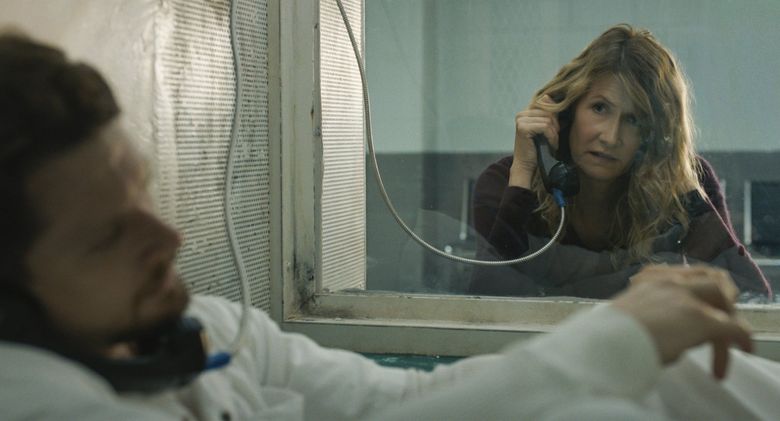
“Destroyer” may be the bleakest cop drama to come around since Don Johnson puked up his guts as a booze-addled cop chasing after white supremacists in John Frankenheimer’s “Dead Bang” (1989). The boilerplate’s fairly similar, as we catch up with Nicole Kidman’s Erin Bell, a detective passed out in a dust-streaked car under an L.A. freeway. Gaunt and chalky, with hair matted and frayed, she looks like she’s been left in the desert to die. The radio squawks and Kidman’s trademark translucent blue eyes – encircled by bloodshot rims – open slowly. Erin can barely extricate herself from the vehicle, let alone stagger down a desolate throughway to a murder scene where she’s poorly received by the cops already on site.

Erin’s jarring wobble is so disjointed and pronounced you wonder if she’s wickedly hungover or maybe had the shit kicked out of her. The truth is a good bit of both, and it’s a regular way of life for Erin, who’s hard to like and hard to avert your eyes from. How did we get here, how can such a shambling wreck remain on the force? The answers come in carefully meted strokes, mostly in flashbacks. Seventeen years earlier, as a rookie, Erin partnered with an FBI agent (Sebastian Stan, the Winter Soldier in the “Captain America” films) to go undercover to take down a criminal cult leader named Silas (Toby Kebbell, who’s weak tea compared with Charles Manson). She also has a teenage daughter (Jade Pettyjohn), and the two don’t get along whatsoever. Needless to say, back in the present Silas has resurfaced and Erin will do whatever it takes to bring him down, including giving a happy ending to an informant and hitting every dive watering hole the way other cops frequent doughnut shops. 

Director Karyn Kusama (“Girlfight” and “Aeon Flux”) seems to be aiming for “gritty” in every frame. It feels heavy-handed from the get-go, but Kidman’s complex and nuanced performance and Theodore Shapiro’s edgy, haunting score score help sell it beyond its derivative trappings. It’s  amazing to drink in the tall, glamorous Kidman with such a dour, beaten-down countenance. Massive gobs of makeup must have been in play, because nowhere before has such natural comeliness been so sabotaged, aside from Charlize Theron playing serial killer Aileen Wuornos in “Monster” (2003). That turn earned Theron an Oscar, and Kidman’s nearly as on target here as jumps into the middle of a shootout with semiautomatics cocked, akin to Patty Hearst in her now infamous SLA pose, or pistol whips a Beverly Hills ne’er-do-well with ties to Silas. The film’s not so much a drama about a rogue cop as a showcase for Kidman’s range. It barely fires on that first chamber, but hits the mark on the latter.

Remembering a solid citizen

12 Jan

Paul Wilson: Big guy with an even bigger heart whose memory will outlast headlines’ violence

The life of Paul Wilson, 60, will be celebrated Jan. 26 in Danvers. (Photos courtesy of Cindy Amor)

Last week a brutal crime took from our city one of its kindest, gentlest souls. Paul Wilson, 60, was a stand-up human: generous, respectful, friendly and imbued with a deep sense of humor.

I knew Paul on and off for two decades but didn’t know of his death until the day after the Jan. 2 assault on him in Danehy Park, which has yet to be solved. I was in New York on a business trip when my wife texted and told me to check the news back home. The thing that struck me in all the reports was the prominent underscoring of Paul’s appearance – 6-foot-6, and wearing shorts and a red winter jacket in the dreary cold of the New England winter.

Anyone who ever met Paul knew that wearing shorts in the dead of winter was his thing. I never asked Paul why he did it, because as a guy who wore shorts well into November and slapped them on after the first thaw, I got it. And it was shorts and not our mutual employment at Lotus/IBM that brought us together. I was playing Ultimate Frisbee at Danehy Park, where Paul was on his usual evening walk, and he paused to take in our game. He approached to ask about the rules and I said, “Hey, you’re the only guy in the office who wears shorts more than me.” We learned that we lived close by and, when IBM shipped us both 30 miles west to Littleton, sometimes commuted together. I’m a talker, and so was Paul – we talked some politics, and at the time of our commutes we were both going through the loss of our parents. He also loved good food and off-the-beaten path establishments that stood the test of time. The Out of the Blue restaurant in Davis Square was a favorite of his, and we often had a post-commute snack at the under-the-radar Italian eatery Gran Gusto, across from his apartment, or a beer at Paddy’s Lunch just up the street. 

Paul Wilson in a Danvers High School yearbook.

In reaching out to other people for this piece, including Carla Bekeritis and Cindy Amor, who went to Danvers High with Paul, the unanimous sentiment was that he was a deeply loved and valued member of the community. Paul attended the University of Massachusetts at Lowell and studied music, but like many from that era with creative leanings and sharp minds, he found his way into software and worked for IBM for nearly 30 years.

I last saw Paul three days before the new year on Massachusetts Avenue outside Changsho restaurant – it was 20-something degrees out, but he was wearing shorts and telling me proudly that he was now a card-carrying member of the Blue Bikes share; IBM had landed him back in Cambridge for work, and that was his new means of commuting. We made a pledge to get together soon. Soon would obviously not be soon enough.

Paul was a big guy, with an even bigger heart. Justice and closure on the mystery of his death can’t come soon enough. Still, though the nature of the crime may be what seizes headlines, in time that will fade and his memory will carry on in the hearts of those he touched. 

A celebration of Paul’s life will be held at 11 a.m. Jan. 26 at the Northshore Unitarian Universalist Church, 323 Locust St., Danvers. Expressions of sympathy may be made in Paul’s memory to Doctors Without Borders.

A community meeting about the homicide investigation and safety concerns is scheduled for 6:30 p.m. Thursday in the Peabody School, 70 Rindge Ave., North Cambridge. Representatives of the City Manager’s Office, Cambridge Police Department, and the Middlesex District Attorney’s Office will be on hand for questions.

Suspiria

12 Jan

‘Suspiria’: The 1970s are raised from the grave by a sophisticated crew who’ll make you wince


Image result for suspiria

“Suspiria,” the remake of Dario Argento’s cultish 1977 European gothic of the occult operating within secret passages of a German school of ballet gets handled with care and extra visceral crunch by fellow Italian Luca Guadagnino. Guadagnino, regarded for his nuanced takes on such critically well-received works as “Call Me by Your Name” and “A Bigger Splash,” delves into the moodiness of the horror genre with bloody aplomb. Here he and writer David Kajganich take it deeper than Argento did by adding human layers and deeper suspenseful intrigue – and by allowing Tilda Swinton to play multiple roles, including as an elder gentleman who has scenes of full-frontal nudity (no penile prosthetics were hurt in the making of this film).

The performances are spot on. Swinton, as usual, is all in. The setting is inspired as well: 1977, the same year Argento’s signature work made it onto screens, and in West Berlin against the backdrop of the Iron Curtain and Cold War, with the Red Army and Baader-Meinhof gang in full swing. Anyone can go missing at any time, and there’s myriad possible culprits, the least obvious being a coven of witches. We catch up with a harried young American named Patricia (Chloë Grace Moretz) who tells elderly physician Dr. Josef Klemperer (Swinton) that she’s pretty sure the ballet school she’s attending is run by witches. Shortly afterward, Patricia goes missing and Dr. Klemperer, wrestling with personal demons that root back to the Holocaust, begins to poke around and alert the police to strange doings. 

Meanwhile (and there is a lot here; the film is more than two and a half hours) the school receives a new American recruit who can dance like Salome, pleasing troupe grand dame Madame Blanc (a chain-smoking Swinton in her most recognizable countenance). New girl Susie (Dakota Johnson, fresh off “Bad Times at the El Royale”) is all alone in the world after “cutting ties” with her controlling Mennonite kin back in Ohio. Besides being a promising dancer, Susie may be the one to bear the great darkness of the coven’s ancestry. The mumbo-jumbo here doesn’t matter so much; Guadagnino’s “Suspiria” is more about ominous intrusions, eerie and immersive, and slow painful deaths that will make even the strongest wince while the ladies dishing out the meting from floors below cackle with glee. It’s an intoxicating brew right up to the gonzo Grand Guignol, when the use of red, gauzy filters help ameliorate the unrelenting gush of arterial spray. 

Guadagnino has said that he’s been wanting to make this “cover version” since he was 12. It’s unlikely that such a project ($20 million), even with such a cast and Radiohead’s Thom Yorke lending his talents, would ever gain a green light without such an accomplished auteur behind it. It doesn’t have the campy cult edge of Argento’s, but is a potent time capsule of an era that seems farther than it actually is. It’s also something of a feminist anthem. Those that run the Helena Markos School have absolute control of all within their cloistered realm. It’s a very safe place for a woman if you’re one of the indoctrinated, a chamber of horrors if you’re not. Men, for the most. are bothers, only worthy to serve as witness. It’s the mother here that’s all powerful – as with Argento, who capped “Suspiria” with “Inferno” in 1980 and 2007’s “Mother of Tears” (starring his now infamous daughter, Asia) and tagged the century-spanning witch-mythos “The Three Mothers” trilogy.

“Suspiria” is definitely not for all. Fans of Swinton, arthouse horror (think “The Witch” and “Heredity”) and the original will swoon. Those coming to see the film because of Guadagnino‘s earlier works will be in for a bloody shock.

News and Cantabrigian Views

30 Dec

News or views? Newsletter on loss of trees sparks confusion, questions – and answers


The Cambridge News was delivered by mail to residents shortly after Christmas. (Photo: Marc Levy)

Shortly after Christmas much of Cambridge received what looked like a newspaper in the mailbox: the “Cambridge News.” Its eight pages held plenty about trees – including a cover article headlined “Tree Canopy Collapsing” advocating for maintaining and expanding green space – with some familiar and friendly bylines, including city councillor Quinton Zondervan.

Still, the who, what and why remained a mystery to many who missed a box on Page 6 describing the Cambridge News as a project of the Association of Cambridge Neighborhoods, a citywide citizens’ nonprofit launched in 1994.

“I would just like to know the individuals behind an expressed view, not it parading as ‘news,’” said Ruth Ryals, of the Porter Square Neighborhood Association, a self-described supporter of the environmental message of the publication. Mayor Marc McGovern was more pointed in his reaction: “Talking about our tree canopy and other environmental matters is extremely important. What concerns me about this mailing is that it’s not upfront as to who is producing it.” A commenter in the Cambridge Trees! group on Facebook said “part of the problem is this brand-new newspaper came with no introduction – just a big scary headline. No one bothered to write a simple paragraph that said ‘We’re a group of Cambridge residents worried about tree loss. We think you might be too once you know more.’”

Inspired by another publication 

That is exactly what the ACN was trying to say, according to responses provided by the group late Friday.

“This is called ‘Cambridge News’ because this is important news for the people of Cambridge. Our goal was to bring information together from a variety of sources – including the city’s own experts – and present it in a comprehensive format so the reader can understand the magnitude and speed that climate change is happening to them while they are sleeping and assuming the city is taking care of them,” said ACN clerk Charlie Teague, a green activist and North Cambridge resident whose work previously resulted in the formation of an Outdoor Lighting Ordinance Task Force.

Continue reading

Vice

27 Dec

‘Vice’: Bale submerges self into role of Cheney for an overall shallow look into the Bush years


Image result for vice

For all the gonzo intelligent narrative devices laid down in “The Big Short” (2015) – a film rightfully regarded for its unconventional tact and devilish skewering of Wall Street greed – “Vice,” the latest from “Short” director Adam McKay, takes a stumble into the pool of smug self-indulgence.

First it must be said that Christian Bale, under tons of makeup and with a harsh, whispery intone – almost like his Batman voice – brings the incarnation of former “Vice” President Dick Cheney to life with astonishing credibility. What doesn’t work in this “W”-esque biopic is the singular throttle of Cheney as the Darth Vader of backroom politics. The film is a series of vignettes: The young Dick, an underachiever working on oil rigs, drunken and failing out of Yale, but then the rise in business, the union with wife Lynne (Amy Adams, underused in the thankless role of garnish) and Halliburton raking it in after Desert Storm. The Cheneys are rich and, at 45 minutes in, the credits roll. That’s one of the many McKay-infused shenanigans (like Margot Robbie in a hot tub with a glass of champagne to explain complex investment vehicles in “Short”) that don’t quite aid the satire, but more stoke the flame as things begin to wane.

After the “fake” credits roll, the call from W comes. During a man-to-man backyard barbecue Cheney casts a dark spell over Bush (Sam Rockwell, restrained and spot-on in the small part) growling about special power if he signs on as VP.  From there it’s a mad shell game, pulling strings from behind the curtain, undermining foes with glee and raking it in. That weapons-of-mass-destruction declaration goes ka-ching to Cheney’s ears.

The Scooter Libby scandal and that infamous shotgun blast all make it in via campy digs that feel more vindictive and skewed than they are of validating some truth. The whole film’s narrated too by some kind of Nick Carraway voice, and when you finally find out who it is, you might have a heart attack over the revelation. Kitsch is where the heart is.

The Cheneys’ biggest humanization comes in the defense of their gay daughter at multiple turns, but even there, McKay paints Cheney as an arduous manipulator worming and working for the win-win – giving the conservatives ins on the gay marriage issue while taking his daughter off the table.

If you’re looking for the real Dick Cheney, there’s probably plenty of nuggets here, but the portrait is so lopsided and skewed you’d almost think it was Michael Moore behind the lens. Bale, while totally convincing and immersed, is afforded only the opportunity to do SNL skit impersonations. Besides the bro barbecue with Bush, Cheney’s not much more than a hiss or a head cock from his Vader throne, using his force to manipulate the universe for evil gains.

If Beale Street Could Talk

26 Dec

‘If Beale Street Could Talk’: Young and in love, but shackled by brutally cruel racial injustice

Can we Trust the Beauty of Barry Jenkins's “If Beale Street Could Talk”? |  The New Yorker

The film begins with a series of lushly jazzy romantic framings of lovers Tish (newcomer KiKi Layne) and Fonny (Stephan James) – something that hasn’t really been seen on screen with such poetic resonance since Spike Lee’s great run in the late ’80s and early ’90s (“Do the Right Thing,” “Jungle Fever” and “Mo’ Better Blues”). The soulful score, imbued with melancholy by Nicholas Britell, wells up inside you as the pair’s tightly framed countenances convey deep love, but also the brimming prospect of trouble. Jenkins leverages it for his orchestration of Baldwin’s material: hope and idealism undercut by harsh reality and social injustice. 

Trouble in “Beale Street” (the reference to a throwaway in Memphis from 1916 W.C. Handy blues song, though the action takes place in 1970s Harlem) comes from all angles. Tish, 19, and Fonny, a few years older, have known each other since childhood. When they finally consummate their affection, Tish gets pregnant. The sell to Tish’s parents (Regina King and Colman Domingo, both excellent) is a bit of a challenge, but nothing compared with the fracas that ensues when Fonny’s devoutly religious – and over the top – mother (Aunjanue Ellis) swings by with sisters to learn of the news. With fire and brimstone ire, she professes Tish a temptress and not good enough for Fonny. But then again, Fonny’s not there to speak for himself; he’s in jail for a rape he did not commit.

Yes, this is where Baldwin and Jenkins take us. The palpable helplessness of a person of color snared in a rigged justice system, where getting a rap – whether you did it or not – is simply part of the process. Tish and her mother fight back hard. They get an attorney convinced of Fonny’s innocence and later there’s a harrowing sojourn to Puerto Rico to track down and confront the accuser, who has her own set of unhappy circumstances to contend with.

Throughout it all Jenkins tempers the present with delicate, carefully curated flashbacks, be it the lovestruck Fonny and Tish shopping for an apartment, often turned away because of their pigment, or Fonny catching up with old mate Daniel (Brian Tyree Henry, smoldering quietly) just out of jail himself and with volumes of wisdom to share. The film is at once intimate and universal. Fonny is the face of everyman of color, and yet he isn’t. Jennings finds the perfect balance between social critique and personal tale, and palpably so. 

In the end, however, “Beale Street” is not about vindication – if that’s the movie you’re hoping for, you’re going to be disappointed – but about the sad state of racial affairs that as penned by Baldwin remain too true today. At the heartbreaking epicenter loom star-crossed lovers kept apart by forces with cold, aloof agendas. “Beale Street” is “Romeo and Juliet” for the racially divided now.

Jenkins has done it again: “Beale Street” didn’t just make the Day’s top 10 of 2018, but won Best Picture, Best Score and Best Supporting Actress from the Boston Society of Film Critics this month. Expect more to follow.

Bird Box

22 Dec

‘Bird Box’: Talent stumbles down blind path with thriller that leaves bit too much unseen


Image result for bird box movie

Much will be made about the similarities between “Bird Box” and a “A Quiet Place,” which at once is understandable and also a complete crime. Sure, both take place in the wake of a near-future apocalyptic event – in “A Quiet Place,” sightless aliens who look like “Venom” extras are snapping up the last of humankind; in “Bird Box” it’s … well, you never really know what it is, and that’s the bulk of why the film never really takes hold, feeling ultimately like a cheap parlor trick. How can you have something wiping out humanity and not know what it is? An airborne virus, radioactive fallout or the sudden lack of oxygen – things we’re aware of, operating outside the purview of the eye, sure, but something that rattles forest shrubbery like a Bengal tiger, causing leaves to whip up, but is never seen? That’s not going to fly.

It’s actually floating that proves to be the final desperate measure as a mother and two children drift haplessly down a river, hoping for a new beginning yet never able to see around the bend. The other big surprise to “Bird Box” is the impressive throng of talent involved – and their inability to lift the project. The unexceptional script written by Eric Heisserer, a scribe who not too long ago adapted another slack sci-fi story (“Arrival”) into a sharp, thinking person’s flick, adheres hard to the flat source material by rocker-turned-novelist Josh Malerman. There’s plenty of gold in the mix too: Lead actress Sandra Bullock has an Academy Award to her credit, and director Susanne Bier also has Oscar pedigree from her 2010 Danish film “In a Better World.” What gives? For one, the producers probably held Heisserer to the best-selling book for fear they might disenfranchise their ready-made target audience. It doesn’t help that Bier shoots this in a way that feels more like a TV miniseries than a big-budget, two-hour, end-of-the-world burn. Continue reading

The Best in Film 2018

21 Dec

Besides “Black Panther” and “Avengers: Infinity War” it was pretty much a down year domestically for films, critically and at the box office. But there was a surge of compelling foreign-language films (“Zama,” “Cold War,” “Capernaum” and “Border” to name a few not listed below)  – a segment largely underrepresented in the recent past – and a remarkable (if not stunning) return to the black-and-white format (“Roma” and “Cold War”). Mostly it was a strong year for women behind the lens, with notable entries from Marielle Heller (“Can You Ever Forgive Me?’’), Debra Granik (“Leave No Trace’’), Chloé Zhao (“The Rider’’), Josephine Baker (“Madeline’s Madeline”). Tamara Jenkins (“Private Life’’) and Lynne Ramsay (“You Were Never Really Here”), among others. The year saw an uptick in socially minded films (“If Beale Street Could Talk,” “Sorry to Bother You” and “Blackkklansman”) and the rising presence of streaming platforms Amazon and Netflix as major studio players who look poised to alter how the game is played. Below are my Top 20 of 2018.

Image result for blackkklansman


1 Blackkklansman
2 Isle of Dogs
3 Roma
4 Shoplifters
5 Burning
6 Can You Ever Forgive Me
7 The Other Side of the Wind
9 Cold War
9 If Beale Street Could Talk
10 Sorry to Bother You
11 The Favourite
12 The Rider
13 Won’t You Be My Neighbor
14 You Were Never Really Here
15 Brisbee 17
16 A Star is Born
17 The Sisters Brothers
18 The Old Man & the Gun
19 Annihilation
20 Eighth Grade

Also strong in the running, “First Reformed,” “First Man,” “Capernaum,” “Bohemian Rhapsody,” “Leave No Trace,” “Border,” “Zama,” “Lean on Pete,” “Madeline’s Madeline,” “Museo,” “Caniba”


Theater Updates

21 Dec

Trip to the movies changes for the luxurious, with more upgrades on the way along red line

Theaters by Alewife, Kendall, Davis and Harvard are all being refashioned


Apple Cinemas at Fresh Pond has received a refresh that includes luxurious recliners and reserved seating. (Photo: Apple Cinemas via Facebook)

Christmas and the usual slew of seasonal film openings is right around the corner, so after the tinsel trimming, paper shredding and eggnog overload, a trip to the cinema may be just what’s needed to take the edge off all the holiday cheer. Maybe a family excursion to Apple Cinemas at Fresh Pond, or perhaps a somber arthouse seating at the Landmark Kendall Square Cinema? If you haven’t been to these venues recently, there’s been considerable change – and more is coming.

For one, both theaters replaced their old stadium-style seats recently with recliners (Kendall has a mix of recliners and rockers, which are a bit less like a La-Z-Boy) and Apple Cinemas now features reserved seating like the AMC in Assembly Square, as well as self-serve ticketing and concessions. All of this is part of a trend in cinema-going sparked by lux-experience theaters (see: Showplace Icon at Seaport or the Showcase SuperLux Chestnut Hill). Almost two years ago Landmark added beer and wine, with general manager Howard Sandler pointing to the local brewers among the offerings.

Also this month, the parent company of the Kendall Square Cinema, Landmark Theatres, was sold by Mark Cuban’s group to Cohen Media Group, an independent film distribution company formed in 2008 with such credits as “Frozen River.” The deal ends months of speculation that saw Amazon and Netflix in the running. Just how the deal will affect the chain and Kendall Square location specifically is unclear, but the group’s head, Charles S. Cohen, is a cinephile. The news is likely only good and comes at an opportune time: The site has been affected greatly by a two-year construction buildout out front that has made getting to the theater difficult and confusing.

Across the line in Davis Square, the Somerville Theatre just renovated downstairs theaters 2 and 3 with new seats, a Dolby sound system upgrade and wide screens that pretty much ensure there’s not a bad viewing angle in the house. Director of operations Ian Judge says renovation of the restrooms and lower-level lobby area is next. 

Richard Fraiman – owner of Frame One Theatres and operator of the Somerville Theatre and Capitol Theatre in Arlington – is slated to add the theater space in the old Harvard Square AMC on Church Street whenever a new structure is ultimately built out. According to attorney (and former Cambridge mayor) Anthony Galluccio, who represents property owner Kirche and billionaire developer Gerald Chan, demolition of the old building is scheduled for January with an ongoing review by the Cambridge Historical Commission. Traffic counters have been posted to help gauge traffic impacts from demolition and construction, as well as for business use when the 60,000-square-foot structure is finally built. Given the congestion in Harvard Square and proximity to the T, demolition and construction will need to be done with some care. 

The theaters there have been dark since since AMC sold it to Charles Hotel owner Richard Friedman back in 2012 for $6.5 million. Kirche picked it up for $17.5 million in 2014. Amid allegations of real estate warehousing, the city pressured Chan for development plans. Estimates for the building’s completion are early to mid-2020s. The mixed-use building will have two below-ground theaters that Frame One will program. Judge said it’s hard to say anything else beyond that until there is an actual space to lease.

The Brattle Theatre carries on meanwhile as the square’s cinema stalwart, but the future for cinephiles seeking screenings off the red line looks bright.

Aquaman

21 Dec

‘Aquaman’: Once we’re in the swim of things, there’s too much for newly hip hero to handle

Image result for aquaman


On film, DC Comics heroes seem to have heavier backstories than those from the Marvel Universe. You know: Most comes from another planet or an isolated island or underworld and could crush a human with a super burst of flatulence, yet somehow they love us, and there’s deep lore and rules we must be spoon-fed for at least 45 minutes before they ingratiate themselves into our society and ultimately take on the noble task of saving us from certain annihilation.

“Aquaman” is no different. Even before the buff surfer dude – Jason Momoa, who looks like The Rock draped in long tresses and with an extra battery of tribal tats – dips his toe in the water, we get a lighthouse caretaker named Tom (Temuera Morrison) toiling away in the chilly northern coast of Maine and one stormy day finding a beauty washed up on the rocks, glistening trident still in her clutch. This fantastic vision, something of a blend of Daryl Hannah in “Splash” and Gal Gadot in “Wonder Woman” is, in fact, Nicole Kidman with a touch of CGI to make her look more in her 20s than her current vintage – not that she needs it. Kidman is Atlanna, the escaped sea warrior daughter of one of the kings of Atlantis. After eating much of Tom’s goldfish Daryl Hannah style, the two become lovers and bear a son: Arthur, who on a class trip to the New England Aquarium is able to summon the biggest shark in the tank to scare the bejesus out of the class bullies.

The film, directed by James Wan – who cut his teeth on the “Saw” and “Fast and Furious” franchises – is a busy, busy affair. Think of it as swimming through an endless school of silvery fish. Atlanna is kidnapped from the rocky coast of Maine, a pirate by the name of Manta (Yahya Abdul-Mateen II) is out to kill the now mature Arthur/Aquaman in a poorly justified blood feud and there’s the seven kingdoms of Atlantis that Arthur’s half-brother King Orm (Patrick Wilson) wants to unite to destroy us land dwellers because of all the plastic and shit we dump in the sea. I can’t say I disagree, and in a neat payback trick he sends wave after wave of plastic bags, bottles and beer rings awash onto our beaches. Willem Dafoe has a role as Aquaman’s avuncular counsel and Amber Heard, toting a shock of Christmas-red hair, gets wedged between the bros as love interest. Dolph Lundgren even lends his square-jawed mug for a few nanoseconds as one of the seven kings.

Since this is an “aqua”-tale, much of it takes place below the ocean’s surface, except those early scenes in Maine and and one later in Sicily where the senseless destruction of ancient relics and structures will make archeologists in the audience reach for a vomit bag. The big undersea finale turns into the kind of wham-bam animated affair we’ve become accustomed to with films such as “Ready Player One” and “Avatar.” The wow factor is gone – it’s a bubbly undersea yawn.

Aquaman traditionalists, yearning for the stiff and square-jawed incarnation from Saturday mornings, are unlikely to be roped in. Momoa, who played the beefy barbarian incarnation Drogo in “Game of Thrones” as well as Conan in an ill-advised “Conan the Barbarian” reboot (2011), plays the part with a hip, feral flair. The character’s never given much of an opportunity to speak before his hands are busied. In shards, we know he has a sense of humor, making a “Fight Club” crack to break the ice with Heard’s undersea princess. The film’s funniest moment comes when our wet superhero walks into a New England biker bar. He can drink like a fish and the scene’s wrap-up is a smart departure, but after that it’s all down the drink.