Archive | Review RSS feed for this section

Bliss

8 Feb

‘Bliss’: Wilson and Hayek simulate ‘The Matrix’

By Tom Meek Friday, February 5, 2021

Mike Cahill, the somber indie voice behind “Another Earth” (2011) where alternate realities coincided, overlapped and collided, retools the concept here with a bigger palette and broader ambition. It grips and grabs as his former film did, but the result’s not nearly as compelling. “Bliss” begins something like a Mike Judge offering (“Idiocracy,” “Office Space”) with an IT office cog gloriously named Greg (Owen Wilson) who doodles sketches of a fetching woman on some exotic veranda. The place Greg works at, Technical Difficulties, is a pressure cooker, bleeding business to cheaper, India-based call centers; needless to say, Greg’s artistic malaise doesn’t bode well with his coworkers. In short order he’s called in and terminated; but before the escorted-out-of-the-office walk of shame takes place, Greg accidentally kills his former boss, decides to cover it up (in a great tracking shot) and heads to the bar next door to steel his nerves.

It’s a grandly dark and goofy (mostly because of Wilson’s shaggy dog persona) waltz in. You’re hooked; Greg’s either liberated from the yoke of unappreciative capitalism or en route to a 10-to-life term for manslaughter. But where Cahill goes from there becomes muddled and disconcerting. At Plato’s Dive (said watering hole ) Greg is called out by a woman (Salma Hayek) sitting across the dark divide in a booth. “You’re real,” she exclaims, pointing a finger at him like she has him snared in a tractor beam. Curiosity piqued, Greg takes a seat, tunes in and over the course of a soul-nourishing scotch, the thick-haired maven (Isabel, as the film has it), operating with shamanistic authority, pops a few magic crystals and makes Greg’s office worries disappear. It’s here that we learn Greg is newly divorced, his daughter is graduating college and he’s been living in a motel somewhere around the corner. It also looks like he hasn’t washed his hair in weeks. (Some people might find the pairing of Hayek and Wilson a curious one. I did, but the Mutt and Jeff contrast abates early.)

The film bounces us to Isabel’s digs, something of a hobo encampment within the confines of the concrete channel that is the L.A. River (“I’m not homeless,” she says. “I’m living off the grid”) and pulling back the veil, the two are at a grand Riviera estate with Bill Nye in a tuxedo addressing Isabel as a doctor and professor. The two are also in grand attire, with Greg’s hair washed and blown out, and every now and then passersby are seen as glitchy computer generated images – FGPs, or Fake Generated Persons, as Isabel tells us. What’s going on? Have we jumped down some weird, sci-fi rabbit hole? Are these homeless delusions à la “The Fisher King” (1991), or some type of a psych ward or science experiment gone off the rails like “12 Monkeys” (1995)? Then there’s all the “Matrix”-esque crystals Isabel keeps popping.

The device that rooted the viewer in that stasis-dreaming-man-as-a-battery trilogy helmed by the Wachowskis and those Terry Gilliam films (and “Vanilla Sky” as well) was the reliable point of view from their unreliable protagonists: We saw only what they saw. Here Cahill has us tight in with Greg, and halfway through the film offers side vignettes of his children (interestingly, looking nothing like Greg – something that’s never really explained and doesn’t really need to be) and other POVs that jar and poke holes in the tenuous bubble he’s filled with techno/other-world mumbo-jumbo.

One of the more interesting spins is that Isabel and Greg, when jacked on crystals, can use their fingers to throw the fake people around. “You’re a telekinetic warrior,” Isabel says of Greg after he crushes a van full of harassing hoods like a tin can. But it’s somewhat unsettling to see him take a walker out from under an old woman just because of a scowling glare directed at Isabel. What begins as a social justice payback when Isabel takes out the legs of a creep copping butt grabs of yoga-panted women at a skating rink becomes something of the bar bloodlust scene Hayek was part of in “From Dusk Till Dawn” (1995). In that Quentin Tarantino-Robert Rodriguez vampire creation, it was comical and to the point; here, even given the impunity of consequence, it’s not dark or even cruel like a boy blowing up frogs with firecrackers – it just undermines the characters and the tone of the film.

The Little Things

31 Jan

‘The Little Things’: Tracking a killer before GPS, with detectives who also wander the moral map

By Tom MeekFriday, January 29, 2021

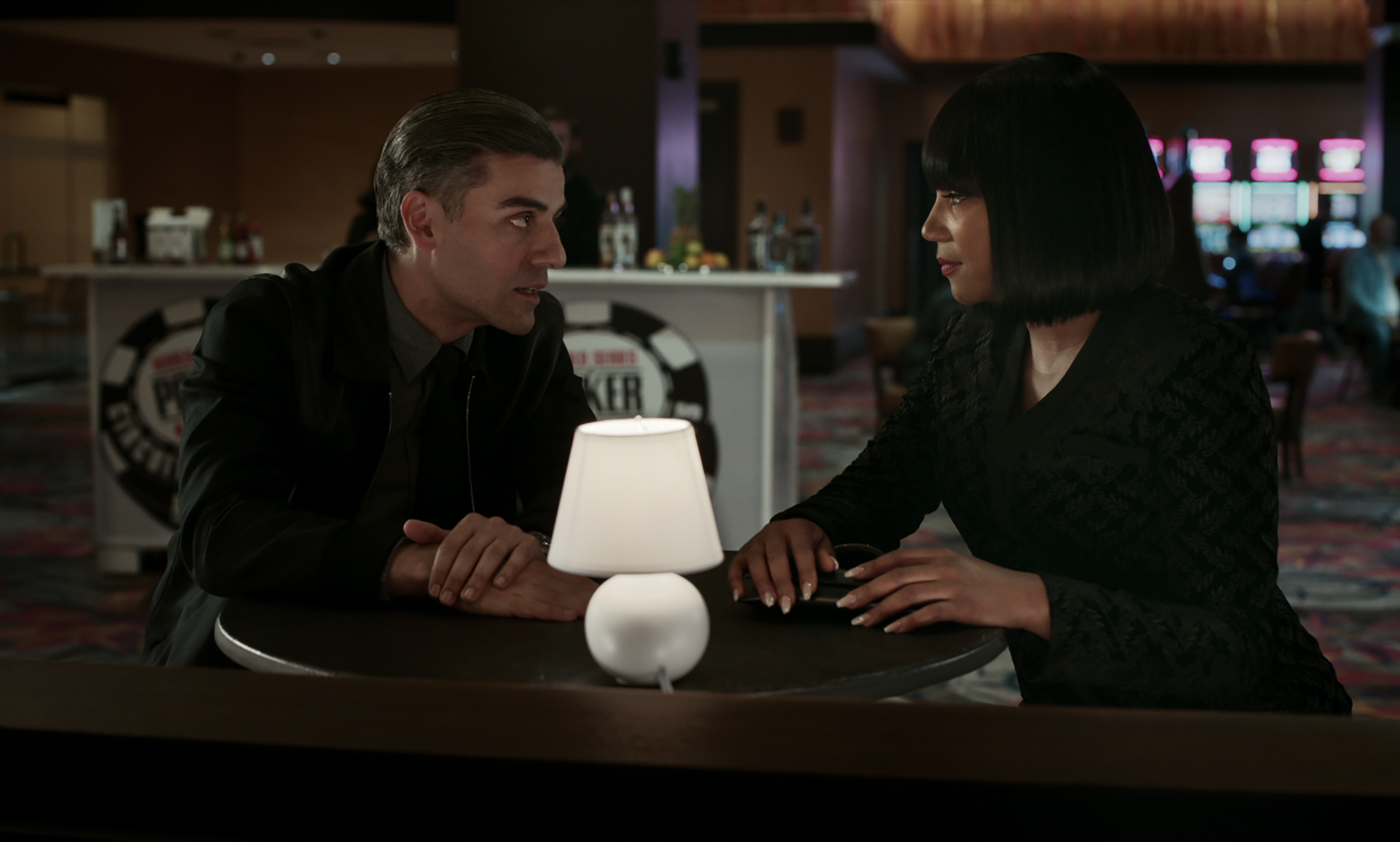
In this throwback neo-noir baked in the David Fincher oven of dark serial-killer thrillers (“Seven,” “The Girl with the Dragon Tattoo” and “Zodiac”) director John Lee Hancock (“The Blind Side,” “The Rookie”) scores something of a casting coup, landing a trio of Academy Award-winners for his leads. Hancock has been wanting to make “The Little Things” since the early ’90s, when he penned it and (around the same time) “A Perfect World,” the Clint Eastwood-helmed crime drama starring Kevin Costner. At one point Steven Spielberg’s name was attached to the project (too dark), but now things have come full circle with the writer-turned-director taking charge of his scene-by-scene, murder mystery blueprint.

The drama takes place in L.A. around the time Hancock wrote it, well before cellphones, social media and reliable and readily available DNA testing. A gray-dusted Denzel Washington takes center as Joe “Deke” Deacon, a deputy from a dusty town north of L.A. who must reluctantly head back to the city of his former employ to pick up evidence. While there he drops in on a burgeoning investigation led by Jimmy Baxter (Rami Malek), a tightly coiled homicide dick newly onto the trail of what looks to be a serial killer. Deke tags along to one crime scene, and the Frick-and-Frack tandem click. Deke decides to stick around and help QB from the backseat. Like “LA Confidential” (1997), the “The Little Things” is less about the who-did-it than the people pursuing the criminal acts, though suspect numero uno Albert Sparma (Jared Leto, sporting bad chompers, a prosthetic schnoz, low-riding paunch and a bow-legged gait) is something of a scene stealer, two parts Charlie Manson (sans flock), one part the maniacal god complex that Leto dredged up for “Blade Runner 2049” (2017) and a dash of Hannibal Lecter thrown in for good fun. Granted, he’s not as lethal as any of those lads, but he does drive a bitchin’ ’70s Chevy Nova SS and really knows how to get under everybody’s skin. When Sparma (sounds like a hot Italian sub with oozing mozzarella, right?) isn’t ripping it up with philosophical psychobabble that feels written for the lips of Jim Morrison, we get the dark why of Deke’s being run out of L.A. and start to see that Baxter’s overreaching confidence might be more chest puffing than can-do.

“The Little Things” moves in mysterious, murky tics embossed by John Schwartzman’s shadowy but sharp cinematography and Thomas Newman’s moody score. Ir all feels so visceral, deep and compelling, but when the reveals come back around, many of the threads register all for naught, a goose chase without the fowl. Washington (“Training Day,” “Glory”) and Malek (an electric Freddy Mercury in “Bohemian Rhapsody”) often feel like they’re occupying sketches of complex men, their renowned talent square pegs shoved in round holes. Malek, boyish and slick, feels too fresh and wide-eyed for a part that demands a more world-weary soul. Leto (“Dallas Buyer’s Club”), on the other hand, is a merry pixie of perversion, dancing his way around Hancock’s noirish landscape pulling strings and pushing buttons, consequences be damned – much like the film itself.

The White Tiger

24 Jan

‘The White Tiger’: Tale of a caste away in India, taking a sudden, dark turn on drive to overcome

By Tom MeekFriday, January 22, 2021

Rahmin Bahrani cut a swath behind the lens with “99 Homes” (2014), a deft take on the subprime mortgage scam and 2008 housing collapse (a year before Adam McKay’s biting, brilliant “The Big Short” made us all feel stupid and complicit while laughing at ourselves), and later failed nobly with his dumbed-down TV version of Ray Bradbury’s dystopian “Fahrenheit 451” (2018) starring Michael B. Jordan (“Fruitvale Station,” “Creed”). He again plumbs the bittersweet underbelly of the class divide with “The White Tiger,” a tale of caste upward mobility, even if there really isn’t such a thing.

The beast of the title is a rare find emblematic of freedom and the fierceness required to attain and maintain it, and also a metaphor for the film’s protagonist, Balram (Adarsh Gourav), who lives in a poor Indian village where most everything (rent and commerce) lines the pocket of a nabob referred to as “The Stork.” Balram’s big plan is to ingratiate himself to The Stork, get a job as a driver and move his way up – easier said than done in a caste society in which Horatio Alger stories are more fiction than not. Balram lucks out: The Stork’s son, Ashok (Rajkummar Rao), has newly returned from college in America accompanied by his wife, Pinky (Priyanka Chopra), born and raised in the Big Apple. The westernized pair are aware of the class structure but not abusive of its impunity as others are; Balram tags along in dutiful compliance. We and Balram initially seem happy to be in the coddled confines of a New Delhi luxury high-rise, yet there is something darker and deeper lurking at the corners of the drama about haves and have nots, like a stalking tiger biding its time in the underbrush.

Eventually events do tilt, and quite grimly. The material, based on Aravind Adiga’s award-winning 2008 book, tumbles from fairy tale to hapless despair in a quick “Bonfire of the Vanities” (1990) hop, and that’s when Balram, backed into a corner, refuses to play the hand he’s dealt. How the rub works its way out becomes a conflict of systemic manipulation from above and of those kicking at the structure’s inequitable supports. It’s something of “Slumdog Millionaire” (2008) if infused by Bong Joon-ho’s “Parasite” (2019), haunting and brutal in its reveal by taking the ideal high life and status quo and turning it inside out with an uncompromising hand. 

Outside the Wire

17 Jan

‘Outside the Wire’: If they survive their mission, do androids dream of military pensions?

By Tom MeekFriday, January 15, 2021

There’s no way drone warfare will ever be as cinematically visceral or thrilling as flesh and blood warriors going at it hand-to-hand in the trenches. Not going to happen. The Aaron Paul vehicle “Eye in the Sky” (2015), in which the “Breaking Bad” actor played a drone pilot on U.S. soil taking out baddies abroad, isn’t going to make anyone forget “Saving Private Ryan” (1998), let alone “Fury” (2014), the WWII chess game with tanks staring Brad Pitt. But what if you sent out the ’bots to settle things? Imagine BB-8 and Robocop teaming up to take out Isis insurgents, that could work, right? “Outside the Wire” pretty much weaves all the above into an antiwar anthem that’s ironically powered by some heavy-duty blam, blam, boom shoot-em-ups.

The film lands us in the near future, with much of the action taking place in the Baltic region. There’s a Cold War tang to the landscape and it feels as if all is calm in the Middle East, as if 9/11 never happened. Much of what drives the plot is heavy-handed hooey, but there are some big ideas touched upon and some great performances. First up we have Harp (Damson Idris), a U.S. drone pilot who, like Paul’s ace, sits in a high-tech shipping container somewhere in the United States as his drone surveys a hot military operation in an Eastern Bloc country. Up against the wire, Harp chooses to hit the site despite there being friendlies in the area, his thought being that it’s better to lose two and save 30. It gets him in some hot water, earning him an assignment over in said hot zone to learn what it’s like to be under fire. The troops in this near-future scape are supported by robotic units called Gumps – think of those cool Boston Dynamics creations and you’d have the right idea – but Harp’s assigned to aid a special ops mission led by Anthony Mackie’s uber intense Capt. Leo, who operates lone wolf style outside the wire.

The classified (and pat) crisis du jour is terrorist and rebel factions vying to get their hands on some nukes. The twist is that Leo’s an android. No, it’s not like finding out late that “Ash is a goddamn robot” in “Alien” (1979); it’s an early giveaway. Under his uniform Leo has the glowing blue internals that Alicia Vikander’s demurring AI had in Alex Garland’s sharp contemplation on creator and creation, “Ex Machina” (2015). Like Vikander’s android, Leo’s got a few computations going on beyond what his human handlers have given him, and on-the-job training for Harp at times calls to mind the good-cop, bad-cop hazing Denzel Washington laid down on Ethan Hawke in “Training Day” (2001).

The fun of “Outside the Wire” isn’t so much the narrative arc but the navigation of chaos – robotic, rebels and otherwise – by Harp and Leo. Leo’s physically gifted beyond human, a “Six Million Dollar Man” lite, but the film doesn’t ride that rail; he’s designed to appear human in all aspects (and feels pain). Some of the more interesting thinking points raised are Leo asking Harp why the Marines made him look as he does and not a blonde, blue-eyed QB (Do you dream of an electronic Tom Brady?), and in the occasionally abusive treatment of Gumps by their human military counterparts. Neither gets explored in any depth, but they are cause for provocative pause. The production values of “Outside the Wire” impress in scope and quality, and the combat scenes are well choreographed and orchestrated by director Mikael Håfström. In the end, the film succeeds on Mackie’s stoic magnetism and Harp’s wide-eyed vulnerability. Like the equally serviceable Netflix thriller “Extraction” (2020) starring Chris Hemsworth, “Wire” would be pure pap without its top-notch cast.

Top 10 Films of 2020

30 Dec
  1. The Painted Bird
  2. Emma.
  3. Gunda
  4. Another Round
  5. First Cow
  6. The Assistant
  7. City Hall
  8. I’m Thinking of Ending Things
  9. Sound of Metal
  10. Never Rarely Sometimes Always

Close Runners: Nomadland, Mank, Desert One, Beanpole, Aviva, News of the World, Kajillioare, Dick Johnson is Dead, Ham on Rye

News of the World

27 Dec

‘News of the World’: Tom Hanks returns, bringing his decency to a frontier mission

By Tom MeekFriday, December 25, 2020

“News of the World” re-teams Tom Hanks (“Greyhound,” “Big”) and director Paul Greengrass (“United 93” and the Jason Bourne films) after their 2013, real-life Somali pirate ordeal, “Captain Phillips.” That was a serviceable enough film. Here, in this Reconstruction-era Western, the production values and sense of place – a lawless frontier peppered with amorality and humanity – go far. Based on Paulette Jiles’s bestselling novel, Hanks plays Captain Kidd, a gentlemanly Confederate veteran who drifts through Texas reading news stories with dramatic flair to townsfolk who gather in a church, barn or paddock and pay 10 cents for his heightened oration. They’re true stories, mind you, right from print; you can think of the wandering tour as something akin to newsreel footage shown in theaters during the two great wars before there was TV.

At one juncture between towns, Kidd comes across a lynched black man with a note affixed, “Texas Says No! This is White Man’s Country” – a stark reminder of where we’ve been and sadly still not too far from. Close by, Kidd finds a young German girl named Johanna (Helena Zengel), whom he quickly learns was taken in by the Kiowa tribe when her parents were killed, raised as one of their own and, as a result, speaks more Kiowa than German or English. A passing law party tasks Kidd with returning the girl to authorities in the next town (the Kiowa, we find out, have been eradicated through land grab policy), but when those accommodations prove unsound, Kidd takes on the responsibility of shepherding Johanna to her aunt and uncle.

Part of Hank’s cinematic appeal has always been the way his “decent fella” navigates a brutal land, and it’s put on full display here where, once outside a town’s main street, the law won’t come even if they hear you calling. Johanna proves to be a lot to handle in her own right, and many along the way want to cut Kidd down so they can abduct the girl and sell her on the flesh market; there’s also the fact she’s considered native, which parks her in the same subhuman caste as a black person in the eyes of many.

To its advantage, “News of the World” isn’t so much about the plumbing of division and hate – it’s right there in nearly every frame – but the slow-budding bond between Kidd and Johanna in light of it. Hanks holds it all together with his soulful eyes, channeling the conflicted righteous goodness of Jimmy Stewart: You get a good idea who the man is behind them and what he’ll do when the chips are down. The film’s big revelation is Zengel, who demonstrates broad emotional range and nuance in a role in which a language barrier and fits of tween angst are part of the package. She handles both with aplomb.Of course, none of this happens without the sets and setting, pulled off with authenticity. To Greengrass’ credit as director and co-writer, the shootouts and trail conflicts are awkward, sudden things that often go down in unexpected and sloppy ways. It’s the kind of raw, revisionist stamp that separated Clint Eastwood’s “Unforgiven” (1992), Kevin Costner’s “Open Range” (2003) and most of Sam Peckinpah’s Western classics from the morally right black-and-white Hollywood studio staples. In that gray area where good doesn’t always prevail and the fastest gun doesn’t always win, there’s truth.

Wonder Woman 1984

27 Dec

‘Wonder Woman 1984’: Great hero, weak villains in this long-awaited sequel that feels all too 2020

By Tom MeekThursday, December 24, 2020

Patty Jenkins’ highly anticipated and massively delayed (thanks, Covid) follow-up to her 2017 “Wonder Woman” origin story is something of a letdown – less lithe, less focused and somewhat gummy. Over in the Marvel Universe, which seems to do these things more adroitly, Wonder Woman’s male counterpart, Captain America, kicked off kinda rangy with “The First Avenger” (2011), too square-jawed, self righteous and neatly pat, but gained footing through trial and grit when pushed in “Winter Soldier” (2014) and “Civil War” (2016, so ironic, it being Trump’s election year). That’s not the case here. The DC Universe as a matter of operating procedure guns for over-the-top when less is more. Just see “Aquaman,” (2018) “Justice League,” (2017) or “Batman v Superman” (2016) for illumination.

This “Wonder Woman 1984” checks in at a wondrous two and a half hours plus, and it doesn’t truly feel that long until it rounds the final bend … for the third and fourth time. We catch up with doe-eyed Amazonian goddess Diana (Gal Gadot) doing time as an archeologist with a nerdy coworker named Barbara Minerva (Kristin Wiig, of SNL and “Bridesmaids”) at the Smithsonian; in gold tiara and red, white and blue attire, she takes down random creeps here and there. Now that it’s 1984 (hello George Orwell) her beloved mortal mate, Steve Trevor (Chris Pine), has passed, but when as Wonder Woman she thwarts a jewelry store heist, the recovered loot includes an antiquity known as the Dreamstone that will grant the possessor their wish. Diana’s brings a cost: Her super powers ebb, and when Barbara gets chance at the stone, she wishes to be like Diana.

Where things go from there is a ramshackle meander including something of a “Raiders of the Lost Ark” takedown of a military caravan, a #MeToo kick in which Diana and an enhanced Barbara give the same lech his due, and then there’s Maxwell Lord (“Game of Thrones” standout Pedro Pascal, who actually played in a 2011 “Wonder Woman” TV film that no one saw) as a TV personality and something of a Washington manipulator who gets his hands on the stone and becomes the arch villain. He’s something like Lex Luther fused with Donald Trump, with a small, caring Grinch heart awaiting the right stimulus. The more thrilling offset is Barbara, who morphs into the Cheetah and has more power than Diana. While this makes for a great super clash with cool FX and explosions, when Wiig shows up as the lowliest of all the apex predators on the Serengeti, she looks like something that escaped from the 2019 “Cats” debacle – and it’s hard to get over it. Also, Jenkins chose to shoot these scenes tight on faces, as if each actor was in their own separate green screen set. It lacks choreography and cohesion, which saps the action of energy.

Gadot, worthy of the role, stays in character and above the foibles, projecting compassion and magnanimity while still a goddess warrior. The disappointment here is Wiig. You’ve read about the two actresses bonding and making fun, entertaining YouTube comedy bits promoting the film, and we all know of SNL cast members’ comedic skill. But after an hour in, that’s all dried up, and Wiig is relegated to a two-dimensional shell of the geek who could be a god for a day. Chris Pine, like Gadot, holds tight. The two have solid chemistry, though I wished they let him wear something other than a stretched-out T-shirt that looks like the target of a fabric conditioner ad (you know that clueless, stretched-out, sagging neck guy on a date –  who wears a T-shirt to a sit-down meal out, anyhow?). They’re the reason to see “Wonder Woman 1984.” (Maybe that “Cats” spectacle, too.) Given all the release delays, it’s fitting that the film landed in 2020: We all know 2021 has to be better. There’s a lot to shut the door on, and this can be added to the list. There film does pack one final treat. I won’t say more, but do stay past the credits.

Greenland

21 Dec

‘Greenland’: A comet is about to destroy Earth, though calling this a disaster film is too easy

By Tom MeekThursday, December 17, 2020

Meteors crashing into our blue planet and triggering cataclysmic extinctions is nothing new. I mean, look what happened to T-Rex & Co.; some may remember the Comet Hale-Bopp and Larry Niven’s “Lucifer’s Hammer” and 1998’s certain-doom disaster flicks “Deep Impact” directed by Mimi Leder and the jacked-up “Armageddon” from Michael Bay. Now to a streaming platform near you comes “Greenland,” starring Gerard Butler, who for all his manly promise in “300” (2006) never saw his star take off; he got just a few middling rom-coms and the “Fallen” (London, Olympus, Angel) series. Here Butler, shaggier and paunchier than his King Leonidas, plays John Garrity, a structural engineer going about his life – a family man hosting a barbecue with friends at his trés suburban home in Atlanta when news of a comet named Clarke (hello, Arthur C.) streaking toward earth casts a pall upon the party.

What does one do when you learn that annihilation is certain in the next 48 hours? Put more shrimp on the barbie, open that vintage bottle of wine you’ve been storing for a special occasion in the cellar, call your loved ones or panic like lemmings? The answer in this B-tier production by Ric Roman Waugh, who worked with Butler on “Angel has Fallen” (2019), is (d), but then John and his family get a golden Willy Wonka invite to a sanctuary offering life after the collision. Just what that is, initially, is unclear, but the offer from the president himself is splashed across his TV screen like an Amber Alert and his guests, already in a glum state, turn jealous and desperate:  “Take me, take my kid,” and so on. “Greenland” isn’t so much about the next phase of humanity beyond the crash, but about trying to get to the safe place before it happens. As you can guess, that safe haven is a series of bunkers in the country of the title. Getting there as leading fragments from Clarke start to take out whole countries and civilization crumbles becomes the gantlet John and his family must run.

Nothing that happens in “Greenland” is all that surprising, including the poor and shrewdly opportunist ways people react under pressure. The shining moments of humanity and decency are enacted mostly by Butler’s everyman, John. “Greenland” is amazingly spry for its large scope,  mostly because Waugh keeps the lens tight on John and his wife (Morena Baccarin, from the TV series “V”) and son (Roger Dale Floyd). It’s not your typical Bay or Roland Emmerich (“Independence Day,” “The Day After Tomorrow”) kind of disaster film, but something more cerebral, like “The Trigger Effect” (1996) if tamped down and made into mainstream pap. Given where we are, does something such as “Greenland” or “The Midnight Sky” really serve to distract, or does it remind us that we’re all hunkered down in our own little bunkers, riding out the storm?

Let Them All Talk

13 Dec

‘Let Them All Talk’: A supposedly fun thing that’ll keep you diverted until the unpacking

By Tom MeekThursday, December 10, 2020

I’ve never been on a cruise ship. I’ve marveled at the behemoths sailing into the Black Falcon Terminal in the Seaport, I’ve drunk in many moments of deck-perched merriment on friends’ social media posts, read David Foster Wallace’s semi-famous essay “A Supposedly Fun Thing I’ll Never Do Again” and enjoyed those peculiar and perplexing murder mysteries at sea that crop up on true crime investigative shows now and then – but I have yet to be part of a floating colony. In my heart, I feel I mostly align with Mr. Wallace, remaining tepidly cruise curious. Thanks to “Let Them All Talk,” the latest from Steven Soderbergh, cinema’s official auteur of quirky cool, my wan curiosity has received a reinvigorating shot.

Soderbergh, the man who made the “Ocean’s Eleven” films as well as such experimental fare as “Unsane” (2018) and “Bubble” (2005), slides toward more the latter here. He gets Meryl Streep aboard the Queen Mary 2 luxury liner en route to London as Alice, a Pulitzer Prize-winning author who can’t fly – Alice is a solemn sort, set in her ways, and won’t take the cruise unless her publishers give her top accommodations. Her besties from college, Susan (Dianne Wiest) and Roberta (Candice Bergen), get to tag along, as well as her nephew, Tyler (Lucas Hedges, who in “French Exit” opening later this year, again crosses the Atlantic; it’s by different means but with an equally complicated and mature woman of stature). The film, an improvisational bit formed from a short story by writer Deborah Eisenberg, has its moments: Roberta refuses to do any one-on-one time with Alice; there’s a strange man coming out of Alice’s cabin each morning; and adding to the mix is Karen (Gemma Chan, who provided a graceful, stately presence in the otherwise riotous rom-com “Crazy Rich Asians”), who’s from the publishing house and wants to educe another prize winner from Alice. Overall it’s choppy seas, though, lacking earnest, emotional cohesion. Sure, there’s a lot of suppressed emotion seeping through strong performances, but the material and devices never quite seem to warrant the requisite outpouring. It feels like a Robert Altman movie without a maestro of mass mania to wave the baton

Though everything is tied together with twists and revelations, back on firm ground one might wonder if the journey was worth the trip. From what’s onscreen you can imagine Soderbergh and his cast had a rollicking good time making the film, and the boat they chose was not a floating family theme park, but one with stately dining rooms and libraries with dark wood carousels overlooking scenic vistas of the ocean. That’s my cruise. Will I ever take it?

Another Round

7 Dec

‘Another Round’: Four stifled schoolteachers plunge into alcohol as a lifestyle, sink or swim

By Tom Meek
Thursday, December 3, 2020

Thomas Vinterberg’s “Another Round” is a dark contemplation flipping between the glorification and pitfalls of routine alcohol consumption. The film begins with teens partaking in a keg relay race around a lake and, later, in their buzzed post-race state, making something of a nuisance of themselves on the subway. The matter is subsequently taken up by the faculty at the intimate Danish academy they attend. Martin (Mads Mikkelsen), one of those teachers, listens intently, as he has teenagers at home as well. But one night, out for dinner and drinks with three fellow faculty to celebrate a 40th birthday, , there’s a moment of pause over Norwegian psychologist Finn Skårderund’s obscure hypothesis that humans need booze to thrive. Intoxicated by the idea, the four make a pact to nip at school to see how Skårderund’s suggestion changes their lives, amended by the caveat that, like Hemingway, there will be no late-night boozing or weekend benders. As a result, Martin becomes increasingly distant from his family, especially his wife (Maria Bonnevie) who works at night; but in the classroom, his lack of inhibition allows him to break out and connect with youthful charges who revel in raucous history lessons focusing on notorious suds-sucking world leaders such as Winston Churchill and FDR taking on a, he notes, a teetotaling Adolf Hitler.

As you can guess, there’s a buoyant swell of wins before some major downs. One of the four gets so knackered he wets the bed and blames it on his 2-year-old, let alone not being able to find his legs to get off the floor and to go to school. In another scene, another of the four give emboldening nips of vodka to a nervous student on the verge of failing an oral exam. Vinterberg, who teamed up with Mikkelsen for “The Hunt” in 2012 – something akin to a Danish “Straw Dogs” (1974) – keeps much of the judgment off frame. Mikkelsen, whom most Americans probably know for his go as a Bond villain in “Casino Royale” (2006) or Hannibal Lecter in the underappreciated TV series “Hannibal,” gives his best performance to date, awards-worthy in Danish or English. Many might not know that Mikkelsen was a dancer by trade early on, and the skill is put to glorious use in the final scene, a surprise in its own right considering the nadir it springs from. The final 10 minutes of the film are unforgettable, uncannily ebullient and hauntingly disturbing.