A spiritual journey through the Sahara, a violent, alien transformer, and a NYC man who may have strayed in the wrong direction.
“Sirât”
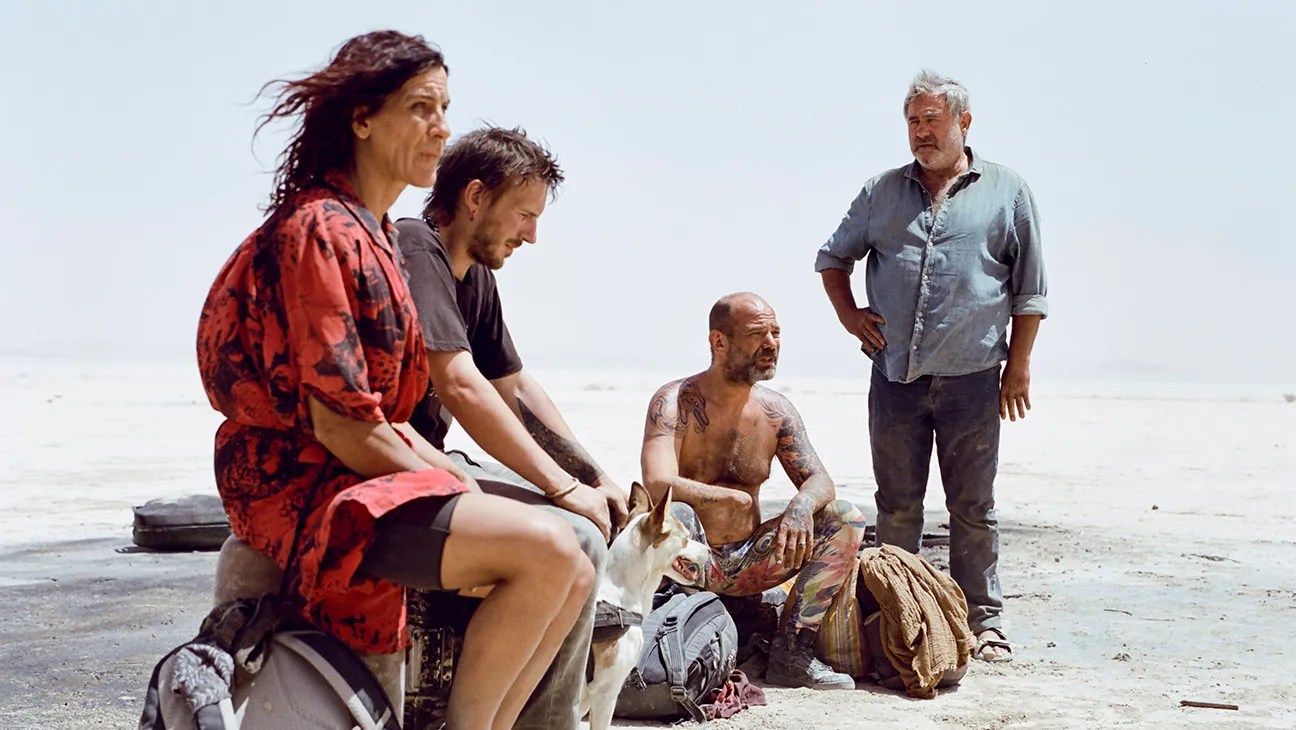

This sprawling wonderment from director Óliver Laxe unfolds as a stark meditation on faith, displacement, and moral endurance. Set in the harsh, borderless landscape of the endless Moroccan Sahara — and its precipitous mountains — a father and son go looking for their missing daughter/sister who’s last been seen embedded with a nomadic rave collective partying its way through the vast, arid nowhere. The film’s spiritual journey is shaped as much by silence and ritual (the rave parties are transfixing) as by events that often startle and shock. Laxe frames fate and belief not as certainty but as friction between devotion and doubt, discipline and compassion, and isolation and responsibility. Beneath its austere beauty, “Sirât” (loosely meaning the path to spiritual enlightenment or paradise) engages quietly but pointedly with contemporary political tensions, touching on migration, gender identity, radicalization, and the fragile line separating faith from ideology.
Driven by a pulsating techno score from David Letellier, known professionally as Kangding Ray, “Sirât” resists easy allegory while allowing meaning to emerge through gesture and repetition. The ensemble’s nuanced performances are restrained and inward, grounding the film’s metaphysical inquiry in palpable human vulnerability. \
“War Machine”
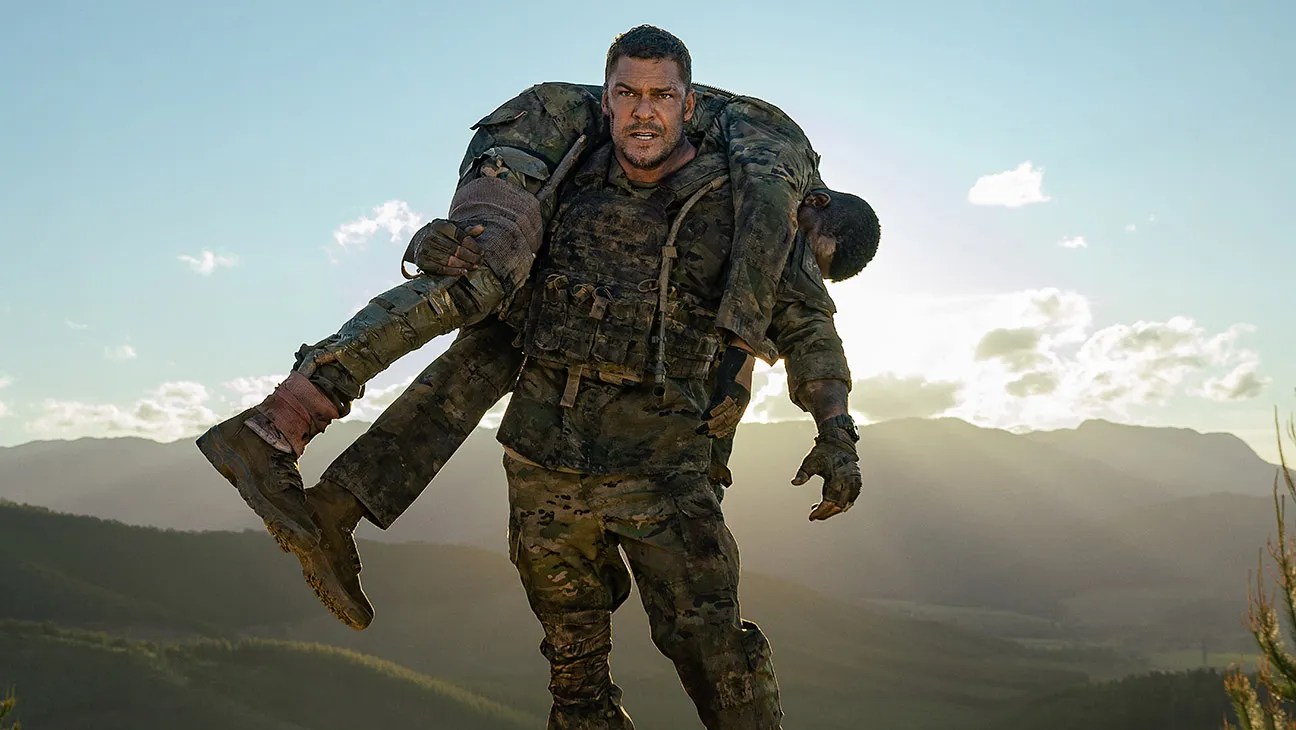

This is mostly a breakout vehicle for Alan Ritchson, the jacked-up “Reacher” star, who plays “81,” a nearly aged-out Army Ranger (paging Colonel Kurtz from “Apocalypse Now”), driven by a promise to his brother after they were part of an Army convoy in Kandahar ambushed by the Taliban.
A good chunk of the film covers Ranger Training 101 at the elite forces facility in the wooded bowels of Colorado. It’s a fairly dull, robotic immersion, light years away from the messy, high-stakes genius of “Full Metal Jacket” (1987) or “An Officer and a Gentleman” (1982).
More than halfway in, the only real speed bumps are two Ranger head honchos (Dennis Quaid and Esai Morales) who try to wash out 81 for not being a team player, even though he nearly wins every challenge. That is, until 81 and the remaining hopefuls are deployed on a controlled mission to destroy a downed aircraft, so it doesn’t fall into enemy hands, and rescue the pilot, taken hostage at an adjacent compound.
The aircraft that 81 and his squad strap with C4 explosives looks like a B-2 stealth bomber sliced in half. When they detonate it, not much happens. Then the wreckage rises up on two legs — think the bipedal military droid from “RoboCop” mashed up with a Tesla Cybertruck — and starts blasting RPGs at the squad.
That “Transformer”-lite entity is the title’s “War Machine” — a convenient alien-invasion twist that doubles as a not-so-subtle metaphor for the PTSD and inner conflict swirling in 81’s head. As gonzo as that pivot is, it’s the defibrillator jolt needed to make the film remotely interesting again. Ritchson likely deserves better, but then again, John Cena and The Rock started out in tinny, lesser fare, too.
“The Dutchman”
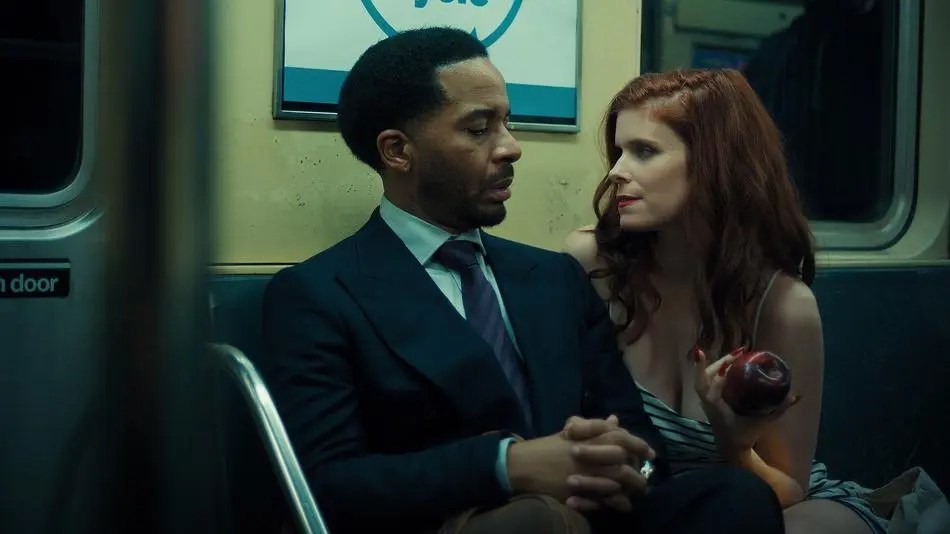
Amiri Baraka’s one-act 1964 play about a Black man confronted by a white woman on a New York City subway train gets a piquant update and metaphysical spin from filmmaker Andre Gaines. It’s a bold undertaking, especially given our current, racially charged climate.
Despite its lo-fi bones, “Dutchman” boasts strong acting timber, with André Holland (known for his roles in “Moonlight” and “Selma”) as Clay, a successful New York City professional with an accomplished wife, Kaya (Zazie Beetz), and deep political connections. We settle in with Clay and Kaya during a therapy session — the avuncular and always excellent Stephen McKinley Henderson (“Civil War,” “Good Fortune”) guides the conversation — as Kaya admits infidelity. Clay is indirectly given the green light to stray.
Later, on a subway ride to a political fundraiser, Clay encounters Lulu (Kate Mara, “The Martian,” “Morgan”), who, after some saucy innuendo, invites him over for a drink (he has time to kill) and more. In the postcoital aftermath, Lulu insists on accompanying Clay to the party in Harlem — where Kaya will be in attendance, and Lulu will be the only white guest — and starts spouting off racial provocations — “Uncle Tom” slurs and more. When Clay tries to disengage, Lulu threatens allegations of rape.
“The Dutchman” is edgy, to be sure. Holland and Henderson provide an anchor, but Mara’s Lulu feels adrift. Much is asked of the actress, and she’s game, but the script and direction too often strand her on an island of hyperbole.
The film’s title evokes the legend of the doomed Flying Dutchman ship and the legacy of European colonialism: slavery and its corrosive downstream residues. Gaines’s take on Baraka is a daring revival that provokes more than it persuades.
 For What it's Worth
Leave a comment