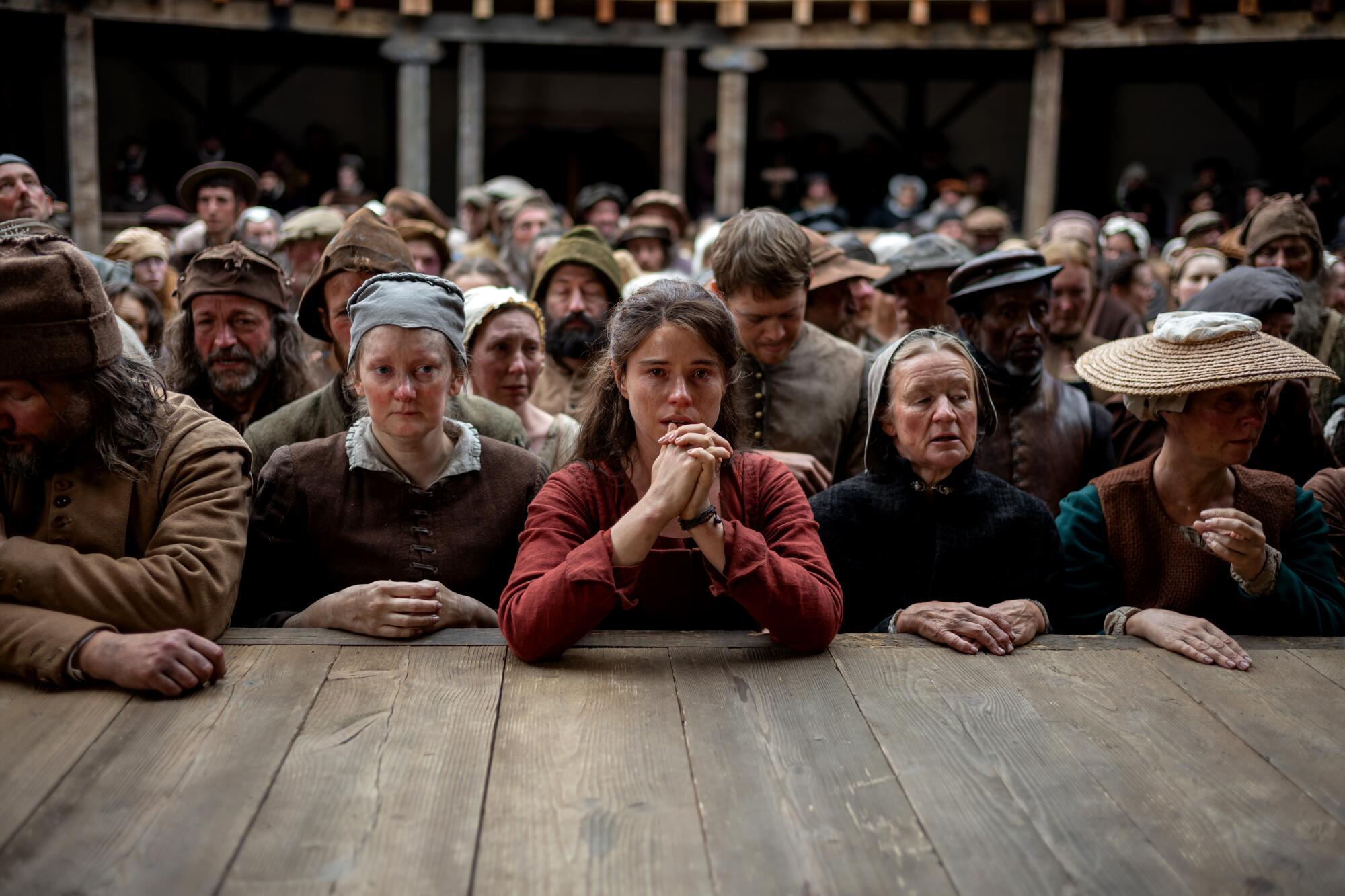

The mere mention of the name Shakespeare and the conversation gets serious real fast. Gone for more than 400 years, the man has achieved transcendent cultural, intellectual and pop icon status. Who today could lay claim to such four centuries from now – Taylor Swift? Akira Kurosawa based the bulk of his samurai westerns on Shakespearean tragedies. “The Forbidden Planet” (1956), “10 Things I Hate About You” (1999) and “My Own Private Idaho” (1991) are just a handful of the many pop films based on the works by the Bard of Avon. The man himself was reimagined on screen in “Shakespeare in Love” (1998) and the lesser-known Kenneth Branagh outing, “All is True” (2018). Add to that “Hamnet,” a portrait of grief directed by Oscar winner Chloé Zhao and bolstered by strong performances from leads Paul Mescal and Jessie Buckley.
It’s a heartfelt effort that despite the talent takes too long to find its wings. Drawn from Maggie O’Farrell’s much-ballyhooed 2020 novel – the author contributes to the script too – there’s a lot of emotion poured out onto the screen, seeking our sympathies without necessarily earning them. Much is obfuscated too, to the point of annoyance: The name Shakespeare is held back, so if you did not know the basis for the film, for much of it you’d see just an earnest young man (Mescal’s Will) lovestruck by his neighbor’s daughter (Buckley’s Agnes), a peculiar woman with witchy tendencies from a higher social strata.
Our smitten scribe is a tutor with scant financial resources, further saddled by the debts of his overbearing and quick-to-judge father. Money and class loom as impediments, yet Will professes his ardor with such conviction and eloquence that he and Agnes are allowed to wed (it helps that she is older and quirky to the point that her brother and father fear her becoming a spinster). They have three children – including twins Judith and the Hamnet of the film’s title.
There’s a lot of tension on screen. Financial pressures mount, and Will’s always away in London doing something murky – just what we never really know, even though we do. Other works of the Bard are never mentioned. I’m no Shakespearean scholar, but as the film has it, Shakespeare was largely a nobody until this play becomes a hit; for those looking to history, “Hamlet” lands chronologically somewhere midway in the Bard’s canon of works.
More of the timeline seems blurred. Will was quite young (he and Agnes/Anne Hathaway were married when he was 18 and she was 26), though the twins are near 10 when the movie nears the tipping point. Judith (Olive Lynes) falls ill and there’s a long scene with Hamnet (Jacobi Jupe) dutifully at her side, comforting her through the night and willing the illness from her body and into his. Ultimately a death in the family occurs and, as O’Farrell imagines history, and others have said the same, that tragedy becomes the catalyst for Shakespeare’s story of “Hamlet.”
“Hamnet” is a fairly overwrought roil of emotions that carries on with much ado about nothing until a deeply cathartic final 10 or 15 minutes that nearly redeem all. Beyond that, other scenes that click include Will leading lessons at the dinner table or his kids staging a sword fight from something Will has scribbled. Then there’s Agnes and the draw of the woods, be it whimsical wanders, falconry or the impulsive desire to birth her children in a pine-surrounded dell. It feels mystical if not macabre, and one could see this being the inspiration for witches and furies in the Bard’s later works.
Overall, “Hamnet” makes for a well-constructed disappointment. It’s nice to see Zhao back after an inert foray into the Marvel universe with “Eternals” (2021), but “Hamnet” is not in the sphere of “Nomadland” (2020) or “The Rider” (2017). Mescal (“Aftersun,” “Gladiator II”) and Buckley (“Men,” “The Lost Daughter”) can’t be faulted. They feel like they are bringing to life characters who are fully formed in their minds, which Zhao and O’Farrell undermine with efforts to stage a big reveal and overly long wallow in pathos.
As for the names real and fictional and the flip of a letter – an N for an L – the play’s action is based on the Danish tale of Amleth from the 12th century or earlier; Anglo-Saxon phonetics have it transitioning to Amlet, and then as we know it today. Hamnet and Hamlet are variations of the same name, like Bob and Rob. To be, or not to be.
 For What it's Worth
Leave a comment