Reviewed “Presence,” “I’m Still Here” and “You’re Cordially Invited”
‘You’re Cordially Invited’ (2025)


A pat comedy with few surprises and several gags that don’t quite land makes it over the hump – just barely – on the likability and natural chemistry of Will Ferrell and Reese Witherspoon. They play Jim and Margot, charged with coordinating and executing the weddings of their daughter and sister, respectively. Los Angeles-based Margot is a bit distant from her Atlanta clan but dutifully books the revered Palmetto House, a quaint island inn on a Georgia bay that the family has always gathered at. Jim, who married there – but a single parent since his wife got sick and died years ago – books his daughter’s wedding for the same day. Whoops: Old-school pen and paper and a sudden heart attack are to blame for a booking gaffe at an inn not really equipped for two large parties. After some push and shove, all agree to make a go of it, but infringements, jealousy and sabotage turn the happy nuptials into something of “The Wedding Crashers” (2005) by way of “The War of the Roses” (1989). Jim is also having a hard time letting go of his daughter, Jenni (a fiery Geraldine Viswanathan, “Drive Away Dolls”), while Margot wrestles with the down-home narrow-mindedness of her extended family around her sis’ choice of husband, a Chippendale dancer. A rogue alligator, “Islands in the Stream” duets, Nick Jonas and Peyton Manning all make their way into the jumble with varying effect. Comedians Rory Scovel and Leanne Morgan are effective in small parts as part of Margot’s “chaos monkey” inner circle, and Jack McBrayer works as the befuddled innkeeper. The strength of the film, written and directed by Nicholas Stoller (“Forgetting Sarah Marshall,” “Get Him to the Greek”), is the rom-com power pairing of Farrell and Witherspoon, who seem like they could do this all day long and we’d be only happy to tag along.
‘I’m Still Here’ (2024)
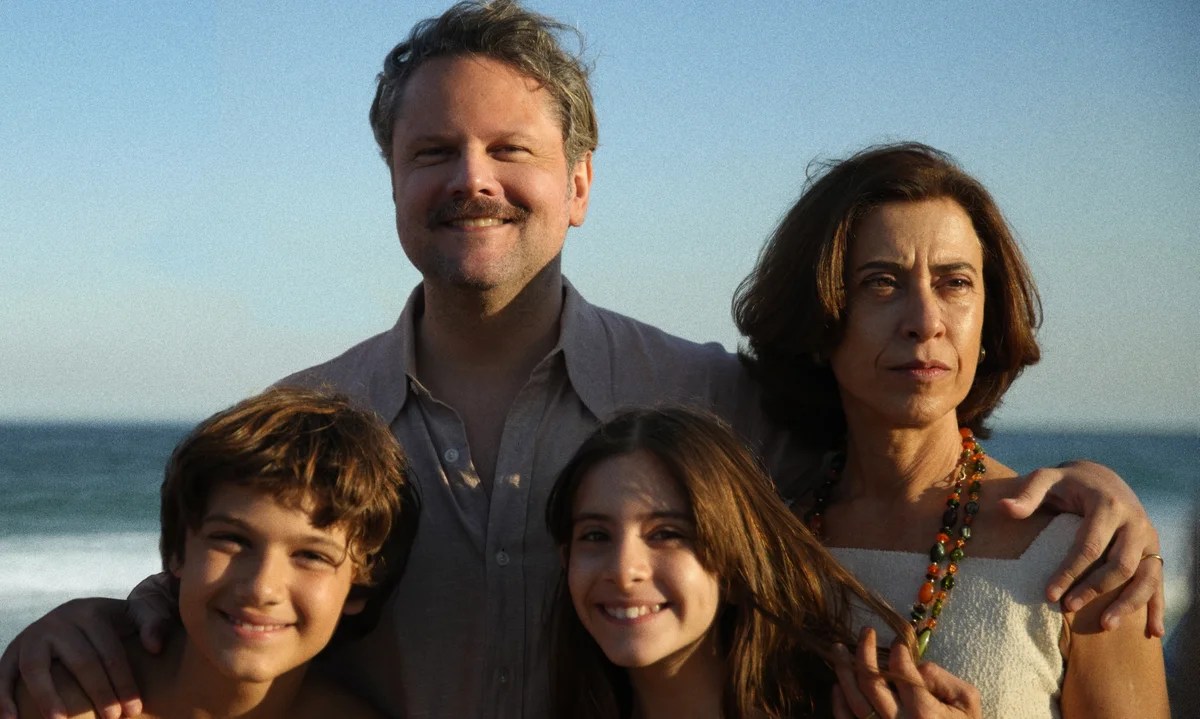

Walter Salles, the deft director whose films such as “Central Station” (1998) and “The Motorcycle Diaries” (2004) bear the subtle barb of political social commentary, goes one deeper with this true tale of suppression and political retribution – which, given where we are today, feels a tad too close for comfort. The film chronicles a decadeslong pursuit for answers by Eunice Paiva (Fernanda Torres) after her husband, Rubens (Selton Mello), a former congressman, disappears when taken in for questioning by the military dictatorship. A buttoned-up detachment show up one day in 1971 at their seaside villa; Rubens and Eunice endure the ordeal with a performative calm for their five young children, but then Rubens is whisked out the door. Before that chilling scene and Eunice’s never relenting mission, which is the body of the film, we get to know the Paiva family intimately. We learn that Reubens had fled Brazil after a coup d’etat and that his return to Rio de Janeiro sparked suspicion. In her quest, Eunice is also detained and questioned. Thankfully, loyal housekeeper Maria José (Pri Helena) is on hand, but the prospect of parentless children never abates. Salles and cinematographer Adrian Teijido do a fantastic job of immersing us into the trauma of a film akin in texture and execution to the great Costa-Gavras political disappearance films, “State of Siege” (1972) and “Missing” (1982), also based on real occurrences. “I’m Still Here” rightfully scored three Oscar nominations for Best Picture, Best International Feature and Best Actress for Torres. Her portrayal of Eunice is an emotional tour de force. She’s the only Brazilian actor to be nominated for the Academy Award besides Fernanda Montenegro, who was nominated for her lead in Salles’ “Central Station” and fittingly, appears briefly in the film as the elder Eunice.
‘Presence’ (2025)
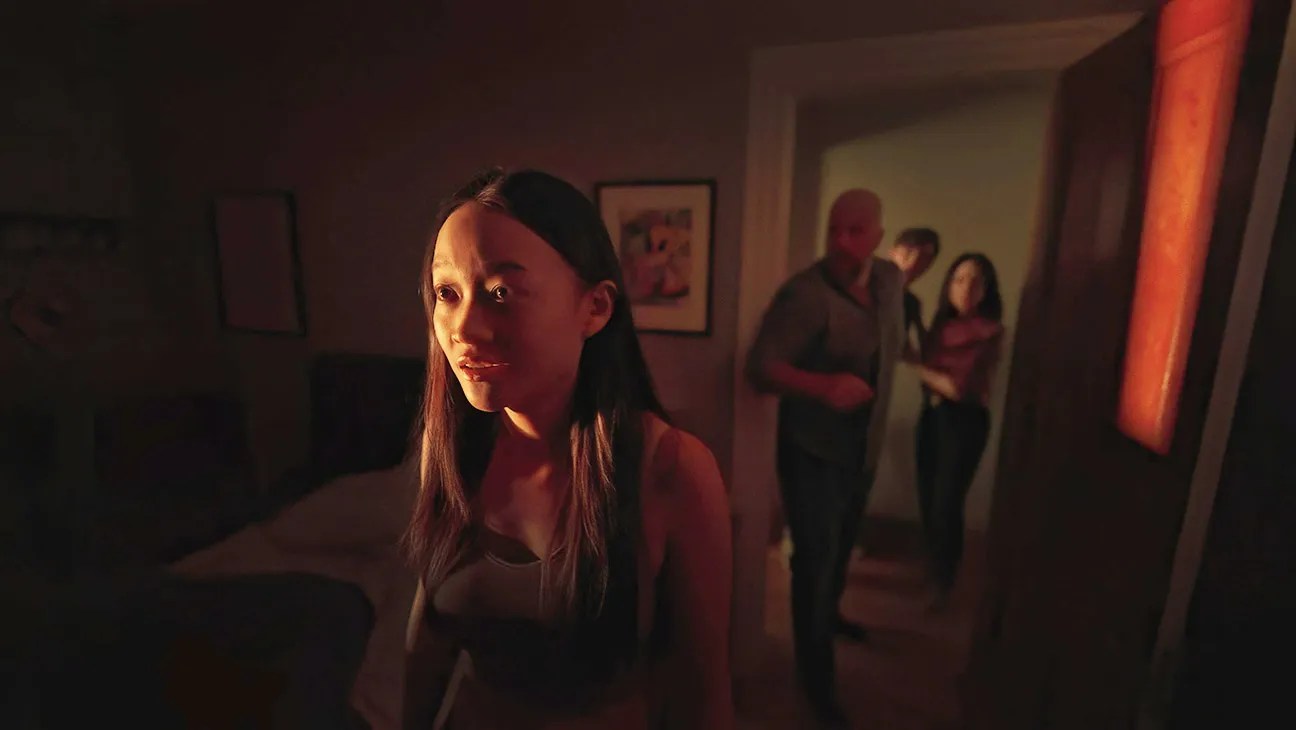

Good ghost or bad ghost? That’s the driving question in the latest lo-fi film from genre-shifting director Steven Soderbergh. It’s more in line with DIY fare “Unsane” (2018) and “Kimi” (2022) than Soderbergh’s big-budget projects such as “Traffic” (2000), “Out of Sight” (1996) or the “Ocean’s” series. The action takes place in one suburban abode, a stately but aged Victorian with a neat wrap-around porch that a nuclear family refurbishes and moves into. The first hint at trouble is a housepainter who refuses to go into the room destined for the daughter, Chloe (Callina Liang), because of a “presence.” It’s less the paranormal blip and more the skewed family dynamic that draws attention, however. The mom, Rebekah (Lucy Liu), heavily favors her son Tyler (Eddy Maday) over Chloe, whom Rebekah asks the most of in the film. Rebekah is annoyed by Chloe’s neediness despite the recent deaths of two of Chloe’s friends – “Heathers” (1988) this is not. Tyler is also hard on Chloe and her downer routine, though they’re in the same popular clique at high school. The dad, Chris (Chris Sullivan), also seems fraught, and his relationship with Rebekah is strained. Constantly on her computer and phone, she ignores him, the tension between their children and their daughter’s depression. She often shields the screen of her devices, implying an affair or something quietly illegal, prompting Chris to call an attorney and seek advice about a spouse’s potential illegal activity. It’s a terrific hook that goes nowhere, though it’s a sharp MacGuffin courtesy of “Jurassic Park” and “Kimi” writer David Koepp. Chloe’s books start to float around her room, and when she’s about to get intimate with “it boy” Ryan (an effectively menacing West Mulholland), the shelves in her closet come crashing down. Lights flicker and a paranormal expert is called in. How the film evolves and resolves is pretty neat for a done-and-redone concept. The technique that drives the film is the fisheye lens POV (the same one that was overused in “Unsane”) that is, in theory, the supernatural being’s view. The film doesn’t totally hold together, but it’s enough to make this under-90-minute eerie thriller stick.
 For What it's Worth
Leave a comment