‘Pretty Woman’ for a darker age of Russian oligarchs and goons
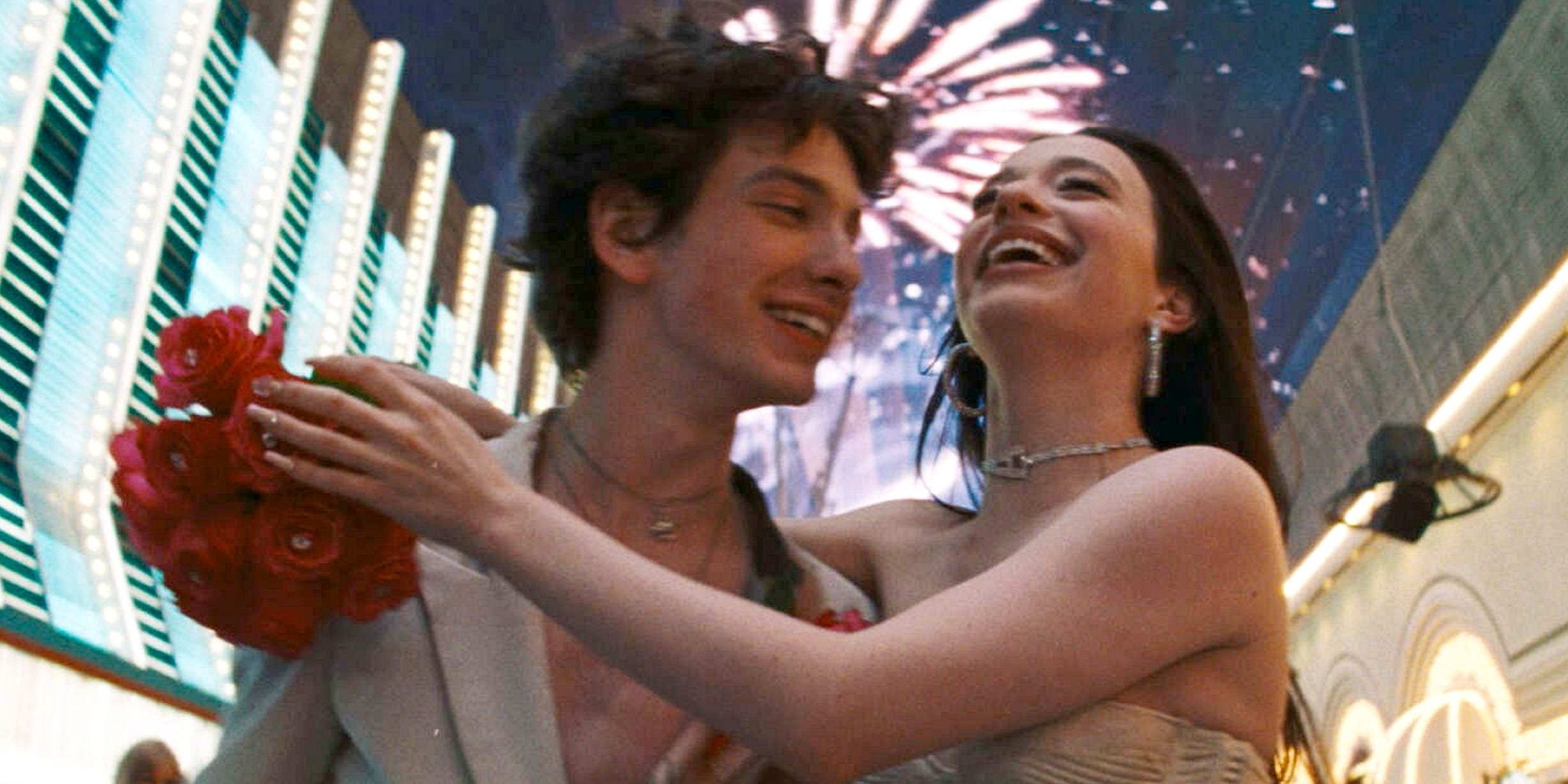

Sean Baker, who caught fire with “Tangerine,” the punchy 2015 trans dramedy shot on iPhones, and scored with follow-ups “The Florida Project” (2017) and “Red Rocket” (2021), nabbed the Palme d’Or at Cannes for this Cinderella tale about a sex worker whose fortunes change when she hooks up with a freewheeling ne’er-do-well with limitless financial resources. “Pretty Woman” (1990) this is not, though. Given it’s a Baker film, fairy-tale endings are strictly verboten.
The title character (Mikey Madison), who insists on the moniker “Ani,” works at a Brighton Beach strip club where many of the pole dancers have such control and skill you wonder if they couldn’t make the U.S. Olympic gymnastics team. Ani, who dabbles as an escort, has Eastern bloc roots and can manage her way in Russian; one night she meets a raffish, well-off Russian named Ivan (Mark Eydelshteyn) whose boyish good looks beg Timothée Chalamet comparisons. Ivan lives in a seaside manse and hasn’t quite mastered English, which, besides Ani’s sensual skill set and large luminous eyes, is key to why they click. In the majority of their scenes, he speaks in Russian and she retorts in tough Jersey girl “tawk.” His regular English miscues endear him to her (and us) and he pays her $15,000 for a weeklong excursion to Vegas where vigorous sex and raucous, all-night parties in a posh, VIP suite are a daily routine.
It’s all blissful indulgence that feels bottomless, but reality steps in. Turns out that big house is really Ivan’s parents’ U.S. pied-à-terre and Ivan is due back in Russia, his lack of citizenship a ticking clock on his stay. When Ivan explains this to Ani, the two opt for Plan B and get hitched. It’s here that the tenor of the film shifts. Alerted to their son’s marriage to a sex worker, Ivan’s parents (Aleksey Serebryakov and Darya Ekamasova, both fantastic and the very definition of oligarch) dispatch their stateside fixer, an Armenian cleric named Toros (Karren Karagulian), to collar Ivan, secure an annulment and ship their son home on the chop-chop. Toros enlists Russian enforcers (Vache Tovmasyan and Yura Borisov), but when they show up to the gated estate, Ivan flees. Much of the rest of the movie becomes a “Hangover”-like quest to track down Ivan as Toros and his goons head out into the seedy New York night with a reluctant Ani, who proves to be more than a handful as she breaks noses and shatters priceless relics.
As compelling as “Anora” is, the film is long and bears a tinge of tinny hollowness that annoyingly never gets filled – until perhaps the final scene. It feels authentic and has an earned, gritty sheen, but much of the onscreen action feels scripted instead of character driven. The performers more than earn their pay, especially Madison (a Manson girl in “One Upon a Time … in Hollywood”); this film could not be made without her ability to flip on a dime between vulnerable and fierce. Eydelshteyn holds the prepubescent party boy note well, serving as plot catalyst. Karagulian brings a comical, resolute puckishness to his part, reminiscent of F. Murray Abraham in “Scarface” (1983) without the worminess. More nuanced and robust is Borisov as Igor, the more hands-on muscle who lives with his nana and, despite his low-brow occupation, is a sharp reader of souls and often as compassionate as he is intimidating. Like Ivan, he butchers the English language; for him too, Ani is there to bridge the gap. The evolution of their relationship is the ember that smolders throughout. Thematically “Anora” is not that far from “Tangerine” and “Red Rocket,” focusing on angles of the sex industry and those caught in it seeking to find their next stage in life.
 For What it's Worth
Leave a comment