Archive | October, 2023

Anatomy of a Fall’

27 Oct

Simmering in the snow, marriage ends in a fatal storm of uncertainty

Justine Triet’s “Anatomy of a Fall,” winner of the Palme d’Or at Cannes, dissects the slow, vicious implosion of a marriage. The reasons why are the usual suspects: grief, blame and jealousy. But there’s little else usual about Triet’s emotionally eviscerating narrative, which begins with the death of one spouse and, in carefully curated frames, rewinds as the survivor is put on trial for murder.

As the film opens, a writer (Sandra Hüller) sips wine in a rustic chalet amid the snowy white backdrop of the French Alps and attempts to answer the questions of an adoring grad student (Camille Rutherford) who has come to the cozy high to perform an interview. What cuts the Q&A short is the regular blasting of an instrumental version of “P.I.M.P.” by 50 Cent from somewhere above. The intrusive ruckus comes from the writer’s husband, Samuel (Samuel Theis), whom we learn is also a writer. Hüller‘s Sandra sees her interviewer dutifully to her car and instead of going upstairs to confront Samuel, decides to take a nap. It’s interrupted shortly by the screams of her eyesight-impaired 11-year-old son, Daniel (Milo Machado Graner), who went for a walk with the family dog along a ravine during the interview and returned to find a lifeless Samuel, head cracked and with considerable blood splatter, on the packed snow where the interviewer’s car had been parked. Did he fall, did he jump or was he pushed? Police seek answers, tossing dummy after dummy out the window to reconstruct events. Their findings don’t point to an accident or suicide, so Sandra – the only other one in the house – gets tagged with the murder.

What ensues is a courtroom trial in which the grad student, the son and Samuel, though recorded conversations Sandra was unaware of, are the key witnesses. Things that bubble up are the German-born Sandra’s resentment of being shoehorned into French culture (many times she wants to speak English, but the court, investigators and others insist on French) the result of the French-born Samuel’s reasoning that his ancestral lodge will serve as an Edenic inspiration for their words to flow. The reality is – and Triet uses obvious devices with surprising inventiveness to take us back in time to these moments – prose does not flow, and Samuel resents Sandra for being the more successful writer. Then there’s the matter of who was the more negligent during the accident that greatly dimmed Daniel’s vision, and the trailing fact that Sandra has a favoring for younger women of a certain intellect. The facts of the union, the fall and familial life are told with a guarded hand; “Rashomon”-like reinterpretations roll out as Samuel’s recordings are used by the prosecution to reframe that opening interview as a seduction. Daniel’s allegiances seems to waver and shift as the trial becomes more steeped in the unpleasant details of domestic decay.

Beyond Triet’s masterful orchestration, it’s Hüller and her fellow cast members who take the provocative who-did-it to viscerally resonating highs. Much is asked of Hüller, as the camera regularly hangs close on her emotive face and its high, creased forehead and distinctively  pronounced nose. She delivers, scene in and scene out. It’s a film-defining performance, and her conspirators are up to the task too, especially the young Graner, who portrays Daniel as vulnerable and unsettled; Theis, who delivers a seething husband looking to pin his anger and frustration on another; and Swann Arlaud, beguiling and David Byrne-impish as Sandra’s patient and sympathetic defense attorney. The culmination is a slow burn, with many muffled explosions along the way that pull you into the trapped souls – who has more self-esteem issues than writers? – looking for a release, creative, sexual or otherwise.

Killers of the Flower Moon

19 Oct

True story of greed brings out the worst in men, the best in De Niro

By Tom Meek

Martin Scorsese’s latest period epic after such works as “Gangs of New York,” (2002), “Age of Innocence” (1993) and “The Aviator” (2004) should serve not only as a history lesson to many, but more importantly as a bloody smear of shame and, hopefully, an uneasy point of reflection. For those who were here first, “Killers of the Flower Moon” will likely be a sad reminder of what was and continues to be. 

Working from journalist David Grann’s 2017 real-life account with the additional tag “The Osage Murders and the Birth of the FBI, ” there’s much in the film that leverages Scorsese’s mean-streets, gangland roots and much that unfurls that, if not stated as nonfiction, would be hard to believe. Set on an Osage reservation post-World War I, “Killers of the Flower Moon” has the grand, neo-western feel of Michael Cimino’s “Heaven’s Gate” (1980) and even Sergio Leone’s “Once Upon a Time in the West” (1968) as Leonardo DiCaprio’s Ernest Burkhart, returning from the war (a cook, not a soldier, because he has a weak stomach) steps off a train in Fairfax, Oklahoma, and is picked up by a dapper member of the Osage tribe by the name of Charlie Whitehorn. Charlie has better duds than Ernest, and a shiny new car. As they drive up lush prairie hills lined with prime-specimen cattle and oil derricks, Ernest asks: “Whose land is this?” “Mine,” Charlie beams. From there, newsreel footage explain how the Osage, part of the forced Indian relocations of the mid-late 1800s, became the richest per capita community in the world because under a scrubby landscape once deemed of little value lay a limitless bounty of oil. Happy riches this is not; by government decree the Osage were deemed not capable to manage their money and were given guardians – white attorneys, bankers, trustees and the like – to look after and allocate their riches. You can only imagine how well that worked out. 

Grann’s focus isn’t so much the oil money but the associated Reign of Terror, several years in the 1920s when some 60 Osage were outright murdered, died under suspicious circumstances or went missing, with local law enforcement doing little more than nodding their head. (That number is considered conservative.) Indifference to the plight of native peoples ripples onward: according to the FBI, the number of missing and murdered indigenous women now is nearly three times higher than the next demographic segment, a stark point underscored in Taylor Sheridan’s “Wind River” (2017).

What goes on in Scorsese’s “Killers of the Flower Moon” (the name taken from the Osage expression for the wildflowers that bloom across the prairie under a full moon) is a slow unraveling – the movie is more than three and a half hours – of an insidious, systematic plot to bilk and bleed the Osage. Ernest, a lazy idealist at best and not the sharpest of young men, has come to Fairfax under the prospect of prosperity that he expects to find in the employment of his rich uncle William “King” Hale (Robert De Niro), a cattle baron and, as we first meet him, a self-proclaimed great friend of the Osage. That couldn’t be further from the truth.

One of Hale’s early maneuverings is to employ Ernest as chauffeur to a young Osage woman named Mollie (Lily Gladstone), coincidentally next in line to inherit the family’s oil-rights share as the health of her mother, the matriarch of the clan (Tantoo Cardinal) is on the wane. They don’t live past 50, Hale remarks, implying that diabetes is a plague among the Osage (the “wasting disease,” he calls it). That initial sentiment seems to be one of genuine concern and pity, but scenes later, it’s revealed that modern medicine is employed as a ruse; insulin laced with poison is being administered to the Osage. The town’s doctors are among those in on the scheme; even the wide-eyed, simple-minded Ernest clearly knows something’s askew as he injects an ailing Mollie, now his wife, with the solution.

Hale’s long game is to marry, leech and inherit; when that doesn’t work quickly enough, a bullet to the head’s just as good, because without an eyewitness – and there never is one – the case is put atop of pile of similar unsolved deaths to gather dust.

It’s a hard emotional watch, the parasitic gutting of a community from the inside out. Even more deviously treacherous is Hale attending meetings of the Osage elders in an advisory capacity as they assemble in an effort to suss out who is behind the deaths, not knowing the devil is in the room. Hale and Ernest, along with Ernest’s brother, Byron (Scott Shepherd), married to Mollie’s sister Anna (Cara Jade Myers, excellent as the boozy flapper who speaks her mind freely and pays for it), aren’t anything like Henry Hill (Ray Liotta) in “Goodfellas” (1990) or even Jordan Belfort in “The Wolf of Wall Street” (2013). Those guys were wolves who bared their fangs publicly and bit into the necks of other wolves; here, Hale and his crew cloak themselves in wool and go after the ewes and lambs while acting the bull ram that keeps the non-existent wolf at bay.

To Scorsese’s credit, he doesn’t render the Osage as victims. Mollie is at her most capable when at her most physically weakened; Gladstone plays her with a wry, knowing and deep internal resolve, not only holding her own with the two Oscar winners but wresting several scenes from them. Several efforts to elicit outside aid get snuffed violently by Hale, though ultimately, entreaties to President Harding by Mollie result in the arrival of a team of undercover investigators led by a gentlemanly former Texas Ranger (Jesse Plemons, perfect in the part) from the Bureau of Investigation, soon to be the FBI and newly overseen by a young J. Edgar Hoover (once played by DiCaprio in a Clint Eastwood biopic). Even then, Hale’s teflon armor and ability to spin and control the narrative feels uncrackable. How it all plays out is noted by history and Scorsese and his co-writer Eric Roth (“Dune,” “Munich”), inventively playing fast and loose with the fourth wall and formal law proceedings. It’s an inspired wrap-up that sees Brendan Fraser channeling his room-commanding heavy in “No Sudden Move” (2021), an ageless John Lithgow and rocker Jack White in sharp small turns.

De Niro, who seems minted for the unenviable role, hasn’t been this good in years and DiCaprio, with something of a Brando-esque mouthpiece, manages to make Ernest understandable, if not marginally sympathetic in a Greek tragedy of avarice-and-wrongs-realized sort of way. The other apt, emotionally evocative accent is the era-embracing score by rocker Robbie Robertson, peppered with Native American influences and southern slide-guitar twangs reminiscent of Ry Cooder’s work in “Southern Comfort” (1981). Robertson, the former guitarist of the Woodstock-era folk band The Band, is no stranger to Scorsese; the group’s farewell concert was the subject of Scorsese’s great 1978 rock-doc “The Last Waltz”; more to the point, Robertson, whose father is Mohawk, grew up on the Six Nations Reservation in Canada. His contribution are the heart and soul embers that burn within each frame. 

“Foe” and “Fair Play”

12 Oct

A couple with troubles: ‘Foe’ and ‘Fair Play’ flicks challenge love by offering escape and imbalance

Tense couples make for riveting drama. Within such, it’s amazing how a small event can trigger a rapid downward slide: A lascivious sext from a lover discovered by a previously unaware spouse or the covert depletion of the family nest egg are surefire detonations of trust and passion, but how about the promotion of one partner over the other or, even more out there, one who gets selected for a multiyear post on an idyllic space station while the other has to remain in the barren dust bowl of the Midwest? That’s what happens in “Fair Play” and “Foe,” films that despite their vast scope come off as boxed stage plays centered around the fracturing of two souls.

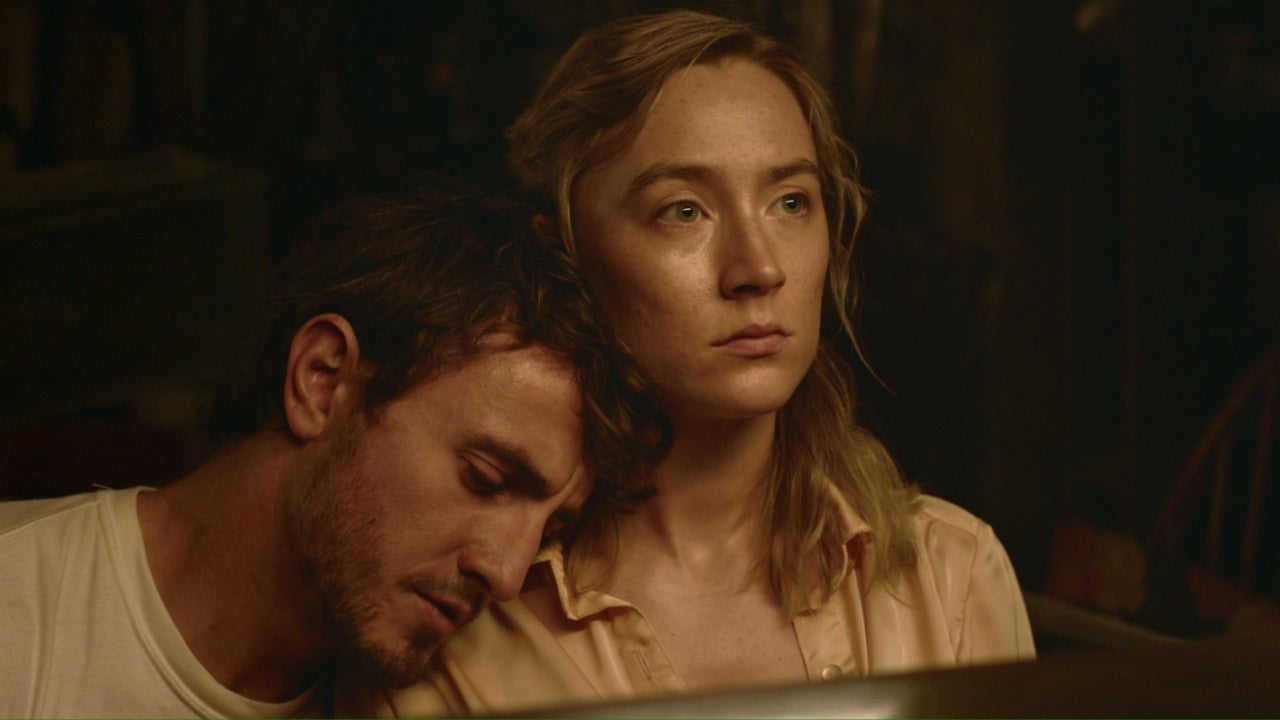
“Foe” boasts Oscar timber with Saoirse Ronan (“Lady Bird”) and Paul Mescal (“Aftersun”) as Hen and Junior, a couple trying to live off the grid in 2065. Much of the Americas are the dying, dust-choked, wasteland-in-waiting that we witnessed in Christopher Nolan’s “Interstellar” (2014). Because of climate change and human avarice, folks are in dire need of a place to breathe clean air, which in this case means humanmade colonies floating in the dark beyond. Hen and Junior are definitely not simpatico when we meet them: She regularly sends him to the guest room to sleep. One night, a dapper stranger (Aaron Pierre), well-composed and all business, comes knocking. Turns out he’s from the agency that runs the colonies and informs the two that Junior has been selected for an outer world stint to help boot up a station. To make things whole and fair in the interim, they will deliver a replicant-like (yes, “Blade Runner”) facsimile of Junior to keep Hen company. The process of cloning Junior’s persona is arguably more intense – blood, sweat and tears are literally shed – than simply mapping the memories of Tyrell’s niece.

The edgy emotional play between Hen and Junior rivets, and Pierre’s interloper (he’s staying with them for the cloning process) adds fuel to the fire with pronounced notes of sexual and racial tension. The rendering of a dying earth and industrial chicken harvesting plant that Junior works at – a sterile, cavernous maze of conveyers issuing an endless supply of plucked fowl – are wonderments of grim revelation well done by director Garth Davis (the acclaimed “Lion,” which paired Nicole Kidman with Dev Patel), cinematog Mátyás Erdély (“The Nest”) and the set design team. That said, one has to wonder: If Junior remains so apprehensive about the mission, why not send the clone? It’s one of many such questions that nearly submerge the film, but the visuals, moody, immersive score and Ronan and Mescal’s clear talents hold the fragile, end-of-the-world bait-and-switch together, just barely.

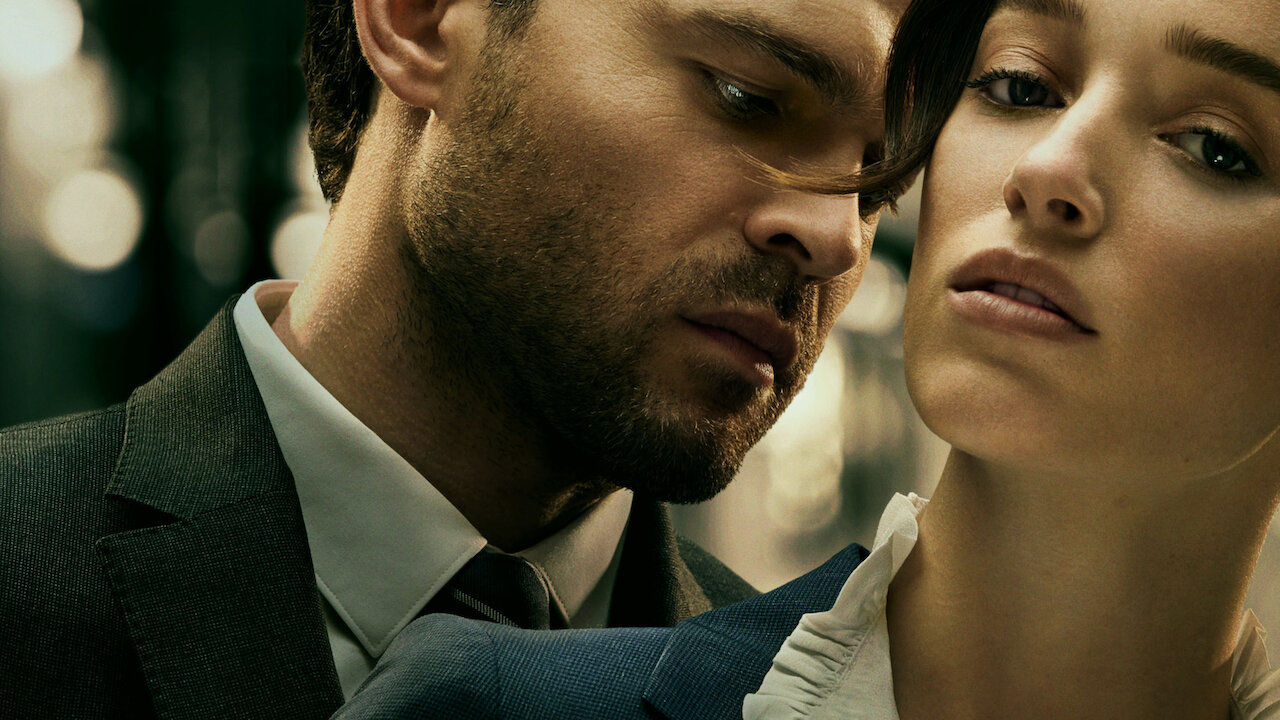
More in the now, nestled in the male-dominated hedge fund biz, Chloe Domont‘s “Fair Play” tackles issues of gender and class in devious, piquant ways. Emily (Phoebe Dynevor) and Luke (Alden Ehrenreich) are a secretly engaged couple who work at One Crest Capital, a big Manhattan investment firm that forbids employees to date. Each morning they take separate routes to the office to keep suspicious minds at bay. Luke got his gig through connections, while Emily comes from the other side of the tracks and is just happy to be there. Luke’s expects to be promoted to the newly open VP slot, but guess what: Em gets the nod, and Luke has to report to his betrothed. That bump up in rank shuffles a lot of dynamics in their cozy Midtown flat, and not for the best. Em now stays out until 2 a.m. with head honcho Campbell (Eddie Marsan, so good in “Happy Go Lucky” and intimidating here, with a calm, tacit aloofness) in which conversations about Luke’s value to the company oft come up – never pleasant, as Luke recently got Campbell to bite on a $50 million hunch that imploded wildly.

Despite that, and in the name of love, Em goes above and beyond to put in a good word for Luke, but it doesn’t ease the tension at home. You could call “Fair Play” an erotic psycho-thriller of sorts, but don’t think Michael Douglas and Glenn Close in “Fatal Attraction” (1987); it’s much racier than that, without the bloodletting but with an early scene in which the act of oral sex results in a broad, bloody smile. What Domont puts under the scope here is the fragile white male ego. The performances by Ehrenreich (“Solo: A Star Wars Story”) and Dynevor, a slap-in-the-face discovery, are paramount to pushing the shill into reasonable credibility as it ebbs into its less-than-credible final act. Domont clearly has her finger on something, but just can’t quite close, and you can’t ignore that these two (and all in their sphere) are doing quite well by comparison to most, and in an industry known for its greed. Still, there’s Dynevor, and she rings the bell in every scene she’s in with resounding tintinnabulation.