Tag Archives: Saoirse Ronan

“Foe” and “Fair Play”

12 Oct

A couple with troubles: ‘Foe’ and ‘Fair Play’ flicks challenge love by offering escape and imbalance
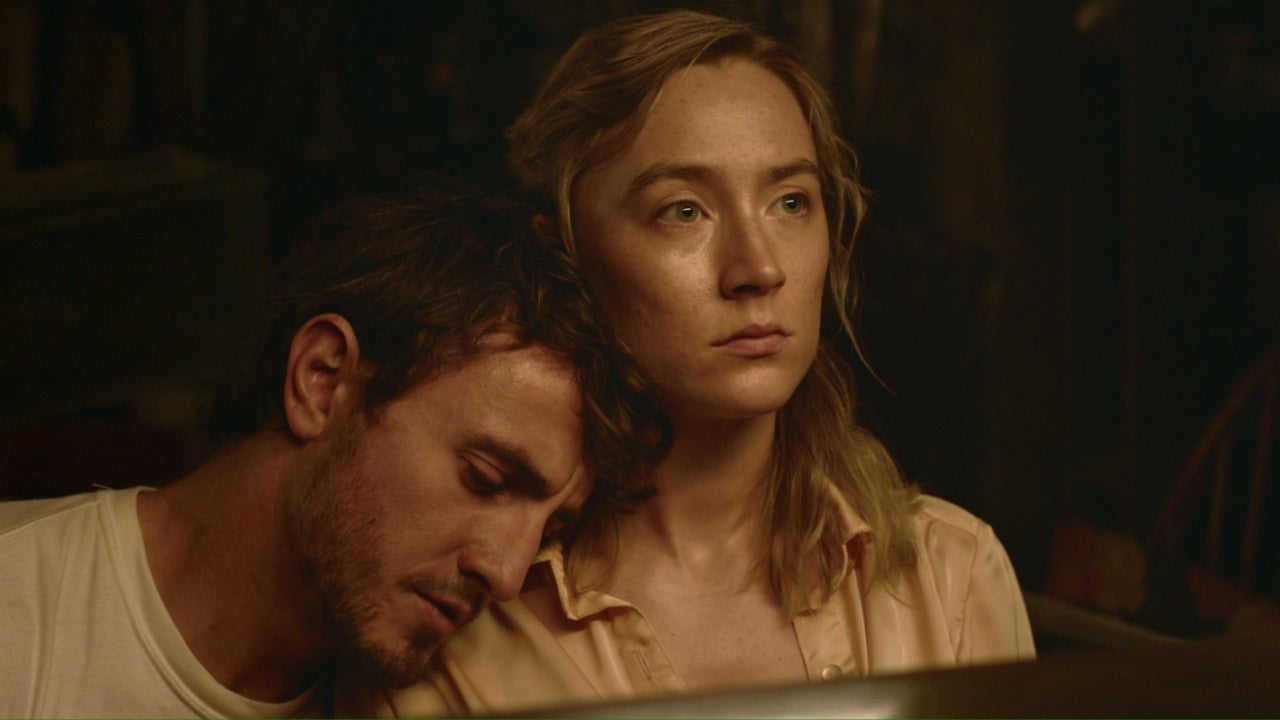
Tense couples make for riveting drama. Within such, it’s amazing how a small event can trigger a rapid downward slide: A lascivious sext from a lover discovered by a previously unaware spouse or the covert depletion of the family nest egg are surefire detonations of trust and passion, but how about the promotion of one partner over the other or, even more out there, one who gets selected for a multiyear post on an idyllic space station while the other has to remain in the barren dust bowl of the Midwest? That’s what happens in “Fair Play” and “Foe,” films that despite their vast scope come off as boxed stage plays centered around the fracturing of two souls.

“Foe” boasts Oscar timber with Saoirse Ronan (“Lady Bird”) and Paul Mescal (“Aftersun”) as Hen and Junior, a couple trying to live off the grid in 2065. Much of the Americas are the dying, dust-choked, wasteland-in-waiting that we witnessed in Christopher Nolan’s “Interstellar” (2014). Because of climate change and human avarice, folks are in dire need of a place to breathe clean air, which in this case means humanmade colonies floating in the dark beyond. Hen and Junior are definitely not simpatico when we meet them: She regularly sends him to the guest room to sleep. One night, a dapper stranger (Aaron Pierre), well-composed and all business, comes knocking. Turns out he’s from the agency that runs the colonies and informs the two that Junior has been selected for an outer world stint to help boot up a station. To make things whole and fair in the interim, they will deliver a replicant-like (yes, “Blade Runner”) facsimile of Junior to keep Hen company. The process of cloning Junior’s persona is arguably more intense – blood, sweat and tears are literally shed – than simply mapping the memories of Tyrell’s niece.

The edgy emotional play between Hen and Junior rivets, and Pierre’s interloper (he’s staying with them for the cloning process) adds fuel to the fire with pronounced notes of sexual and racial tension. The rendering of a dying earth and industrial chicken harvesting plant that Junior works at – a sterile, cavernous maze of conveyers issuing an endless supply of plucked fowl – are wonderments of grim revelation well done by director Garth Davis (the acclaimed “Lion,” which paired Nicole Kidman with Dev Patel), cinematog Mátyás Erdély (“The Nest”) and the set design team. That said, one has to wonder: If Junior remains so apprehensive about the mission, why not send the clone? It’s one of many such questions that nearly submerge the film, but the visuals, moody, immersive score and Ronan and Mescal’s clear talents hold the fragile, end-of-the-world bait-and-switch together, just barely.
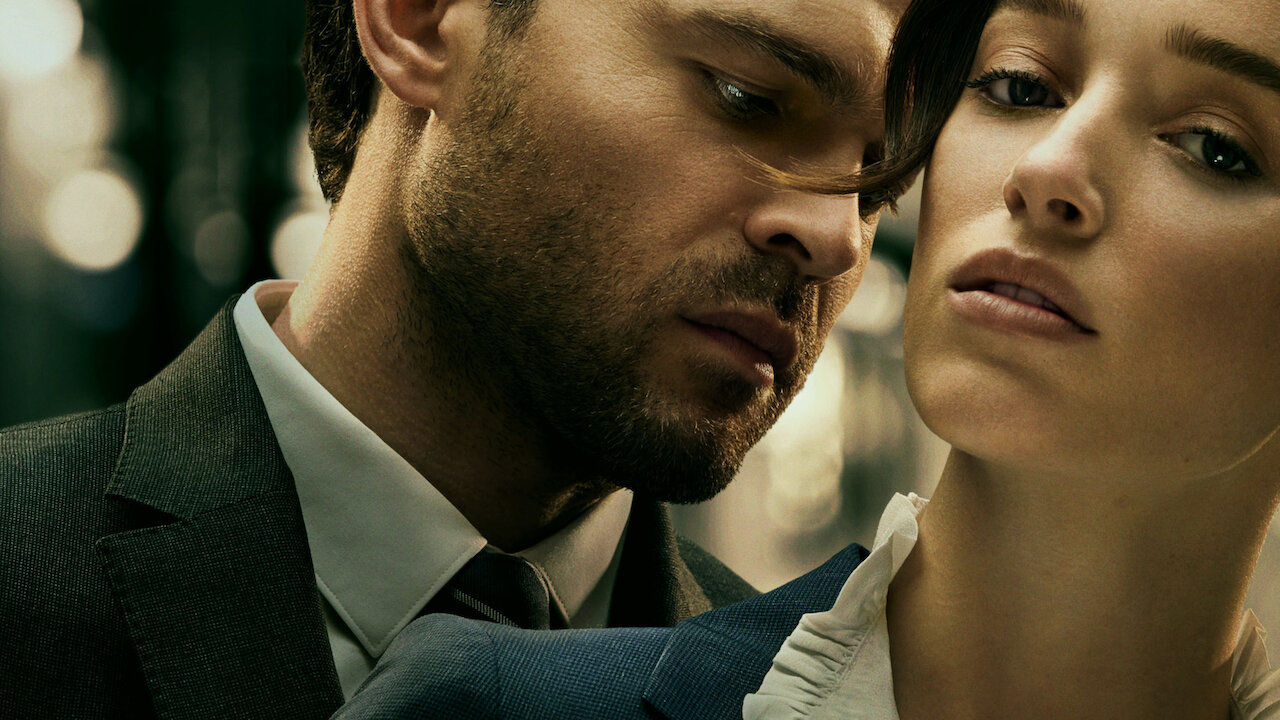
More in the now, nestled in the male-dominated hedge fund biz, Chloe Domont‘s “Fair Play” tackles issues of gender and class in devious, piquant ways. Emily (Phoebe Dynevor) and Luke (Alden Ehrenreich) are a secretly engaged couple who work at One Crest Capital, a big Manhattan investment firm that forbids employees to date. Each morning they take separate routes to the office to keep suspicious minds at bay. Luke got his gig through connections, while Emily comes from the other side of the tracks and is just happy to be there. Luke’s expects to be promoted to the newly open VP slot, but guess what: Em gets the nod, and Luke has to report to his betrothed. That bump up in rank shuffles a lot of dynamics in their cozy Midtown flat, and not for the best. Em now stays out until 2 a.m. with head honcho Campbell (Eddie Marsan, so good in “Happy Go Lucky” and intimidating here, with a calm, tacit aloofness) in which conversations about Luke’s value to the company oft come up – never pleasant, as Luke recently got Campbell to bite on a $50 million hunch that imploded wildly.

Despite that, and in the name of love, Em goes above and beyond to put in a good word for Luke, but it doesn’t ease the tension at home. You could call “Fair Play” an erotic psycho-thriller of sorts, but don’t think Michael Douglas and Glenn Close in “Fatal Attraction” (1987); it’s much racier than that, without the bloodletting but with an early scene in which the act of oral sex results in a broad, bloody smile. What Domont puts under the scope here is the fragile white male ego. The performances by Ehrenreich (“Solo: A Star Wars Story”) and Dynevor, a slap-in-the-face discovery, are paramount to pushing the shill into reasonable credibility as it ebbs into its less-than-credible final act. Domont clearly has her finger on something, but just can’t quite close, and you can’t ignore that these two (and all in their sphere) are doing quite well by comparison to most, and in an industry known for its greed. Still, there’s Dynevor, and she rings the bell in every scene she’s in with resounding tintinnabulation.

The French Dispatch

23 Oct

‘The French Dispatch’: Bienvenue to the latest precious pages from the desk of Wes Anderson

By Tom Meek Friday, October 22, 2021

Fans of Wes Anderson, cinema’s official maestro of all things quirky and twee, may be in for a bit of a letdown with this loving smooch to “The New Yorker” and other intellectually curious magazines of the latter half of the 20th century – i.e., “The Paris Review.” Sure, it has a tremendous cast: Anderson regulars Bill Murray, Owen Wilson, Jason Schwartzman, Edward Norton, Tilda Swinton, Saoirse Ronan, Adrien Brody, Frances McDormand and Léa Seydoux, as well as new players Timothée Chalamet, Benicio del Toro, Elisabeth Moss and Jeffrey Wright are invited to the party. But in the league of “Moonrise Kingdom” (2012), “The Royal Tenenbaums” (2001) and “The Grand Budapest Hotel” (2014) it is not.

True to the object of its affection, “The French Dispatch” has the assemblage of a glossy flip-through, laid out in sections with a different story told by a different writer. Holding it all together is Murray’s George Plimpton-esque publisher Arthur Howitzer Jr. as he talks with various staffers in the book-lined confines of the Dispatch, the European desk of the Liberty, Kansas, Evening Sun located in the fictional French village of Ennui-sur-Blasé (yes, there’s that twee). Of the four chapters, the least interesting is the opener with Wilson as a bike-riding journalist who pretty much gives us a guided tour of of Ennui, which proves to be true to its name – ouioui, yawn. The best segment has Swinton’s art critic presenting a long lecture about a criminally insane prison artist (Del Toro) who becomes a modern abstract expressionist sensation inspired by his guard, lover and model (Seydoux). The two actors have outstanding chemistry. Then there’s the political bit in which McDormand’s on-the-scene reporter jumps into the 1968 French student revolt (de Gaulle be gone) and embeds with (and beds) the movement’s young leader (Chalamet, whom you can also catch on screen in the next theater over in “Dune”). Lastly, we get the food critic (Wright, Billy Dee smooth) on a Dick Cavett-like talk show recalling a massive kidnapping plot (lots of bodies) for which culinary skills prove essential and lethal. 

The snazzy scenes that take place between the segments, either amid the halls of the Dispatch or in Howitzer’s office with most of the ensemble huddled to together, are gift bonbons that cleanse the palate between the plats principaux. Overall, “The French Dispatch” never rises to Anderson’s high bar. It’s a savory, indulgent mess, something of a fallen soufflé. 

Little Women

24 Dec

‘Little Women’: The Alcott classic updated, richer in themes of feminism and family


tmp-lw2

The updated version of Louisa May Alcott’s autobiographical classic may prompt many to question the need, as there’s been multiple versions (TV included) of “Little Women” across the decades. But in execution, Greta Gerwig’s reworking makes good sense on many levels. First off, there’s a subtle layering in of female gaze and modern take one the era’s chauvinism. Then there’s answering the questions: Can Gerwig really make films, or was her autobiographical debut, “Lady Bird” (2017), a one-off? (A resounding yes to the first, no to the second.) And finally, this is one of the better-cast takes on Alcott’s tale. The 1994 version directed by Gillian Armstrong also boasted an amazing cast, led by Winona Ryder; the George Cukor 1933 and Mervyn LeRoy 1949 versions starring Katherine Hepburn and June Allyson respectively as Alcott’s alter ego, Jo March, hung it all on their leads. And might I add, this updating was shot here, with scenes in Alcott’s real Concord abode (Orchard House); the others were mostly local sites posing as Concord, shot on sound stages or north of the border, in Canada.

When we first catch up with Jo (Saoirse Ronan, so affecting as Gerwig’s alter ego in “Lady Bird”) she’s barely eking out a living in New York selling women-themed serials to a publisher (Tracy Letts, perfectly intimidating here, as he is in “Ford v Ferrari”) who demands endings that place the female character in a happy marriage and/or domestic servitude. We then wind back to her days in Concord where her father (Bob Odenkirk, “Better Call Saul”), a pastor and an idealist, and mother (Laura Dern, having a banner year with a warm turn here to pair with her edgy go in “Marriage Story”) have turned the house into something of an artists’ colony for their daughters’ bohemian pursuits; Jo, the writer, Amy (Florence Pugh, from “Midsommar” who crushes it here walking a fine line between vanity and vulnerability), the artist, Beth (Eliza Scanlen), a pianist and the oldest, Meg (Emma Watson) fancying the stage. Pretty rad for the time, while across the way are the well-to-do Laurences (Chris Cooper as the staunch patriarch) whose son Theodore (a passable Timothée Chalamet, who feels a long way off from his Oscar nominated “Call Me By Your Name” turn), referred to as “Laurie,” creates something of a love triangle with Jo and Amy. When younger, he and Jo were close, and the prospect of a rekindling is ever present despite Amy lurking about when young Laurence comes by to visit.

If not for financial ills and affairs of the heart, let alone the tucking under of women – offset by Jo and the March ladies’ irrepressible spirit – “Little Women” might come off simply as first-world problems. Gerwig, who scripted as well, adds a nuanced, feminist spin that renders a new essence while embracing Alcott’s work and classic context. In her treatment, Gerwig also expands the autobiographical aspect of the material – namely about money and the unconventional pursuits of her parents and the family. Alcott’s father, Amos, was an abolitionist, radical education reformer, founder of the ill-fated Fruitlands colony in Harvard, Massachusetts, and part of the Transcendentalist movement. It was Louisa May and her tales that helped hold onto and pay for the grand Orchard House. Beyond the fine direction and performances, folks will revel in the periodization of local spots (the Crane Estate, the Colonial Theatre, Arnold Arboretum and even the Fruitlands Museum) and seeing parts of Boston and Lawrence stand in for 19th century New York.