Archive | Review RSS feed for this section

“Foe” and “Fair Play”

12 Oct

A couple with troubles: ‘Foe’ and ‘Fair Play’ flicks challenge love by offering escape and imbalance

Tense couples make for riveting drama. Within such, it’s amazing how a small event can trigger a rapid downward slide: A lascivious sext from a lover discovered by a previously unaware spouse or the covert depletion of the family nest egg are surefire detonations of trust and passion, but how about the promotion of one partner over the other or, even more out there, one who gets selected for a multiyear post on an idyllic space station while the other has to remain in the barren dust bowl of the Midwest? That’s what happens in “Fair Play” and “Foe,” films that despite their vast scope come off as boxed stage plays centered around the fracturing of two souls.

“Foe” boasts Oscar timber with Saoirse Ronan (“Lady Bird”) and Paul Mescal (“Aftersun”) as Hen and Junior, a couple trying to live off the grid in 2065. Much of the Americas are the dying, dust-choked, wasteland-in-waiting that we witnessed in Christopher Nolan’s “Interstellar” (2014). Because of climate change and human avarice, folks are in dire need of a place to breathe clean air, which in this case means humanmade colonies floating in the dark beyond. Hen and Junior are definitely not simpatico when we meet them: She regularly sends him to the guest room to sleep. One night, a dapper stranger (Aaron Pierre), well-composed and all business, comes knocking. Turns out he’s from the agency that runs the colonies and informs the two that Junior has been selected for an outer world stint to help boot up a station. To make things whole and fair in the interim, they will deliver a replicant-like (yes, “Blade Runner”) facsimile of Junior to keep Hen company. The process of cloning Junior’s persona is arguably more intense – blood, sweat and tears are literally shed – than simply mapping the memories of Tyrell’s niece.

The edgy emotional play between Hen and Junior rivets, and Pierre’s interloper (he’s staying with them for the cloning process) adds fuel to the fire with pronounced notes of sexual and racial tension. The rendering of a dying earth and industrial chicken harvesting plant that Junior works at – a sterile, cavernous maze of conveyers issuing an endless supply of plucked fowl – are wonderments of grim revelation well done by director Garth Davis (the acclaimed “Lion,” which paired Nicole Kidman with Dev Patel), cinematog Mátyás Erdély (“The Nest”) and the set design team. That said, one has to wonder: If Junior remains so apprehensive about the mission, why not send the clone? It’s one of many such questions that nearly submerge the film, but the visuals, moody, immersive score and Ronan and Mescal’s clear talents hold the fragile, end-of-the-world bait-and-switch together, just barely.

More in the now, nestled in the male-dominated hedge fund biz, Chloe Domont‘s “Fair Play” tackles issues of gender and class in devious, piquant ways. Emily (Phoebe Dynevor) and Luke (Alden Ehrenreich) are a secretly engaged couple who work at One Crest Capital, a big Manhattan investment firm that forbids employees to date. Each morning they take separate routes to the office to keep suspicious minds at bay. Luke got his gig through connections, while Emily comes from the other side of the tracks and is just happy to be there. Luke’s expects to be promoted to the newly open VP slot, but guess what: Em gets the nod, and Luke has to report to his betrothed. That bump up in rank shuffles a lot of dynamics in their cozy Midtown flat, and not for the best. Em now stays out until 2 a.m. with head honcho Campbell (Eddie Marsan, so good in “Happy Go Lucky” and intimidating here, with a calm, tacit aloofness) in which conversations about Luke’s value to the company oft come up – never pleasant, as Luke recently got Campbell to bite on a $50 million hunch that imploded wildly.

Despite that, and in the name of love, Em goes above and beyond to put in a good word for Luke, but it doesn’t ease the tension at home. You could call “Fair Play” an erotic psycho-thriller of sorts, but don’t think Michael Douglas and Glenn Close in “Fatal Attraction” (1987); it’s much racier than that, without the bloodletting but with an early scene in which the act of oral sex results in a broad, bloody smile. What Domont puts under the scope here is the fragile white male ego. The performances by Ehrenreich (“Solo: A Star Wars Story”) and Dynevor, a slap-in-the-face discovery, are paramount to pushing the shill into reasonable credibility as it ebbs into its less-than-credible final act. Domont clearly has her finger on something, but just can’t quite close, and you can’t ignore that these two (and all in their sphere) are doing quite well by comparison to most, and in an industry known for its greed. Still, there’s Dynevor, and she rings the bell in every scene she’s in with resounding tintinnabulation.

Stop Making Sense

28 Sep

Place among docs’ best suits Talking Heads in this 40-year rerelease

By Tom Meek

Hard to believe it’s been 40 years since “Stop Making Sense” came out and took its place as one of the best rock-docs ever made. The collaboration between late filmmaker Jonathan Demme (“Silence of the Lambs,” “Something Wild”) and the ’80s punk-art band Talking Heads registers the same immersive lightning-in-a-bottle effect today as it did back when the band was on tour to promote its fifth album, “Speaking in Tongues,” and near the apex of its success. Shot for a mere $800,000 (put up by the band and Demme) over three nights at the Pantages Theater in Hollywood, the need-to-see-that-again (and again) effect is the fusion of tight, judicious editing, visceral camera work and the band’s nonstop, infectiously energetic performance.

David Byrne, the band’s lean, tragically handsome frontman, proves to be something of a conductor of controlled chaos as he spasms rhythmically across the stage and bobs his head with the strange, alluring grace of an ostrich. Then there’s that big, boxy suit that feels stolen from the set of a David Lynch film. As captured, Byrne casts a suave, seductive magnetism akin to contemporary Brian Ferry (whose frenemy and former Roxy Music bandmate, Brian Eno, co-wrote and produced several Heads songs, including the seminal “Once in a Lifetime,” which gets a standout performance in the film) with a shot of Johnny Rotten’s spit-in-your-face punk defiance. Byrne’s own bandmates (they all met at the Rhode Island School of Design in the ’70s) are bassist Tina Weymouth, drummer Chris Frantz (married to Weymouth for 46 years, seven of them before the making of the film), and guitarist-keyboardist Jerry Harrison, all bearing gleeful smiles as they take in Byrne’s intoxicating mania like proud parents beaming over a child’s impish playground idiosyncrasies. Those who find their way into Byrne’s aura of quirk do so with a seamless, natural glide. Most adept are Heads accompanists Alex Weir, a high-kicking blues guitarist, and the killer backup tandem of Lynn Mabry and Ednah Holt, who make the cinematic “Take Me to the Water” – borrowed from the great Al Green – the soulful anthem that it is.

The film’s arc is crafted with care and purpose. The opening sequence renders a drab, open stage, something of an art studio without easels. There’s no risers, amps or instrument setups in sight, and Byrne, in Sperry Top-Siders and a mod suit, ambles out with a boombox and guitar to perform an acoustic version of “Psycho Killer,” the band’s big first album hit. “Have we been sold a bill of goods?” audiences in 1984 must have thought, but then come those snaky, goose-neck jerks that hold you rapt as this dressed-down alternative seeps into the bones. Stage pieces slowly – and furtively – roll out, band members sprinkle in and the lights go down, creating a minimalist, noir ambiance. From frame one, there’s no ebb. Sweat drips and the players achieve a synchronicity notched by the rare few: The Who at the Isle of Wight, or Santana doing “Soul Sacrifice” at Woodstock. One of the great gifts of the film comes when Byrne leaves the stage and Weymouth and Franz’s side project, Tom Tom Club, takes over for “Genius of Love,” a hippity-hop, bluesy rap ditty led by Weymouth, Mabry and Holt. The universally acknowledged highlight is that Eno-produced “Once in a Lifetime” number (though my fave is “Swamp”), in which Byrne, wearing that notoriously boxy suit, chops at his arm and smacks his head back, performing a limbo move that would make the lithest of yogis turn green. The side angle showing Mabry and Holt mirroring him is an aesthetic wonderment, ghostly in composition and ingenious in orchestration.

Among the other all-time best rock-docs, two similarly are collaborations between a celebrated filmmaker and iconic artists: “The Last Waltz” (1978), directed by Martin Scorsese capturing The Band’s farewell concert, and “Gimme Shelter” (1970), in which The Rolling Stones confront the stabbing at their Altamont Speedway concert (meant to be a Woodstock west) under the guidance of the legendary Maysles brothers (“Grey Gardens”). The top five also includes the concert-of-all-concerts, “Woodstock” (1970), which had a young Scorsese aboard as an editor, and “Dig!” (2004), the train wreck rock ’n’ roll parable driven by the mercurially self-destructive behavior of Brian Jonestown Massacre (speaking of the Stones) frontman Anton Newcombe and the band’s feud with The Dandy Warhols. 

Bottoms

1 Sep

‘Bottoms’: This queer high school fight club knocks you silly but ultimately doesn’t slay

With “Bottoms,” writer-director Emma Seligman turns up the dial a few notches from her darkly comedic first feature, “Shiva Baby” (2021), about a young, financially insecure Jewish woman (Rachel Sennott) trying to make it in New York City with the help of a poorly chosen sugar daddy. “Bottoms” is something of a rimshot off the raucous, sometimes sex-crazed high school hijinks of “Heathers” (1988), “Porky’s” (1981), “American Pie” (1999) and more recently, “Booksmart” (2019), topped with a dousing of social commentary.

This is told with a queer, feminist eye, though – and a wicked, nod-and-wink one at that. Lesbian besties PJ (Sennott) and Josie (Ayo Edebiri) stumble into a confrontation between prom-king/QB stud Jeff (Nicholas Galitzine, just seen in “Red, White & Royal Blue”) and his prom queen Isabel (Havana Rose Liu), who thinks he’s cheating on her again (he is, in a Mrs. Robinson/Stifler’s mom kinda way). The power duo form a firewall around Isabel and, in the aftermath, when they are accused of vehicular assault on a cherished local hero, form a fight club for women to empower and defend themselves. The sweet, semi-ironic twist is that the club is overseen by Mr. G., played convincingly by former NFL bad boy Marshawn Lynch in a casting choice that pays off nicely.

That said, a bigger budget doesn’t make for a better film. “Shiva Baby” was so intimate, subtly dark and lived in that you felt you were in every frame. That smaller film allegedly cost less than a half-mil to make, “Bottoms” has a cited budget of twenty-two times more ($11 million). Plenty of blood gets let between the under-the-radar girls, including ultimately pretty popular ones who join, ushered in by Isabel. Under the banner of self-defense, mantras of “just let loose” and “come at me” get issued within the fight circle, and there’s camaraderie as one scrapes the other off the floor. But it doesn’t make sense the way the psycho madness of David Fincher’s “Fight Club” did back in 1999, and it somehow doesn’t quite feel earned (I mean it’s funny, but a faculty member sanctioning such a thing?). Further, the skewers regarding racism, anti-LGBTQ+ and misogyny – all fair and necessary – just prick the surface, and feel platitudinal in the same way Greta Gerwig and Noah Baumbach articulated things in “Barbie.” It feels raw and edge-pushing as you sit through it, but afterward there’s a want for something more from folks who have shown they can hold us further out on the edge.

But then there’s the ability to make people laugh. The fight club lasses, gay, bi, straight and in between, popular, nerdy and arty, unite to, well, save the resident asshole in a “West Side Story” kinda showdown. It’s grim, hilarious, over the top and ephemeral, but a blessedly gonzo crescendo that you could see gender-pushing visionary John Waters smiling at in smug approval.  

Oppenheimer

21 Jul

‘Oppenheimer’: Mass destruction, dirty politics and a messy personal life, down to the atom

At one juncture in Christopher Nolan’s last outing, the mind-bending, time-rewinding spy thriller “Tenet” (2020), a scientist in the future able to weaponize and manipulate the past to alter history is likened to J. Robert Oppenheimer, lead scientist at the Manhattan Project, which produced the nuclear warhead that in effect ended World War II. Foreshadowing for this next project?

That future scientist killed themselves to take their secrets with them and prevent further ripples in time; Oppenheimer, as the Cold War set in, became outspoken against nuclear proliferation and subsequently – with the help of FBI dirty trickster J. Edgar Hoover – had his security clearance revoked by the Atomic Energy Commission. It didn’t help that his wife, lover and several other personal associates had ties to the American Communist Party. 

Nolan began work on his “Oppenheimer” in January, shortly after the Biden administration conferred public wrongdoing on the AEC and U.S. government for its lack of process and credible evidence against Oppenheimer, who died in 1967 at the age of 62.

The film plays loyally to its roots, the 2005 biography “American Prometheus: The Triumph and Tragedy of J. Robert Oppenheimer” by Kai Bird and Martin Sherwin, and both embrace Oppenheimer (“the father of the atomic bomb”) as a committed yet complicated man, caught at many crossroads: the morality of mass destruction, the dirty politics of Cold War paranoia and messy personal relationships. As Oppenheimer, frequent Nolan collaborator Cillian Murphy portrays the scientist as a reserved, buttoned-up sort with a kind, demurring affect. He’s charismatic and approachable, with piercing blues and a gaunt sheen clearly deepened for the part; Oppie’s signature wide-brim porkpie fedora goes a long way to cement the image. It’s a bravura performance that rightly sends Murphy, best known for the series “Peaky Blinders” and Danny Boyle’s  “28 Days Later” (2002), to the fore after many years of almost getting there. He feels custom minted for the part.

Nolan is a filmmaker who likes to play with time – the brilliant weaving of three timelines that converge at singular moment in “Dunkirk” (2017) as well as “Tenet” and “Memento” (2000) – and works another triptych here: the race to build the atomic bomb before the Nazis at the Las Alamos complex (something of a Western mining town) in the middle of the New Mexican desert; Oppenheimer’s 1954 hearing before the AEC inside a cramped conference room; and the senate proceedings on Eisenhower’s secretary of commerce nominee Lewis Strauss, who had been Oppenheimer’s boss at the commission. The clear but kinetic interweaving that frames the Strauss hearings in black and white and the rest in color is eerily evocative of Oliver Stone’s energetically edited and sharply acted bit of nearby history, “JFK” (1991); in “Oppenheimer,” that then-junior senator from Massachusetts poetically has a small hand in one of the three timelines. 

“Oppenheimer” for the most is a deeply internal film, and Nolan deepens our access to Oppenheimer’s mental and emotional state with tearaways to stars colliding in the cold dark universe, people in a celebratory audience suddenly melting in a hot white light and, at one point during his AEC security access hearing, sex with his lover Jean Tatlock (Florence Pugh, fantastic in the small part) and him confessing to the tryst to his wife Kitty (Emily Blunt, fantastic in a larger part). The soul-rattling aural immersion and meticulous imagery by Nolan regulars composer Ludwig Göransson and cinematographer Hoyte Van Hoytema, as well as an ace team effort by the sound department, fill out the spectacular, collective achievement. The cast beyond Murphy and Robert Downey Jr., who manages to make the eely Strauss human, is a long list of potential competing supporting-actor award nods, starting with Matt Damon as general (to be) Lesley Groves, who oversees the Manhattan Project and gets to deliver a fiery back-and-forth that’s almost on par with his indelible rant in “Good Will Hunting” (1997). Also notable are director Benny Safdie (“Uncut Gems,” “Good Time”) as H-bomb scientist Edward Teller; Josh “where have you been?” Hartnett solid as Oppenheimer’s department mate at Berkeley, Ernest Lawrence; Kenneth Branagh as physicist Niels Bohr; Jason Clarke, insidious as AEC special counsel Roger Robb; and Tom Conti (another “where have you been?”) avuncular and dead on as Albert Einstein. The list goes on. Less effective are Casey Affleck as military investigator Boris Pash interrogating Oppenheimer and Gary Oldman as President Harry Truman.

How Nolan pulls it all together is interesting in how much you see – or don’t – of the actual use of the atomic bomb and the devastation it had on Hiroshima and Nagasaki (thought it’s in the corner of every frame) versus the high of the Trinity experiment at Los Alamos (well orchestrated cinematically) and chaotic proceedings in the rooms and halls of government. Ever meticulous, Nolan also does a masterful job of taking subthreads and small gestures and weaving them into surprising and disparate places with subtle poetic panache that doesn’t scream, “Did you just see what I did there?” I wouldn’t want to call them Easter eggs, but …

As to Oppenheimer’s initial reluctance to signing onto the Manhattan Project due to the potential moral and historical implications, one fellow Jewish colleague says, “We don’t know if we can’t trust ourselves with it, but we know we can’t trust the Nazis.” A point well taken, with added personal appeal. Later, after the Germans have been defeated and Truman drops the two bombs, he justifies it by saying it saved American lives and allowed him “to bring our boys home.” Truman, like Strauss, comes off as a bit of a runaway ego (he calls Oppenheimer a “crybaby” when not quite out of earshot) and the film poses whether the bombings were necessary. It’s another good pique, and a complex one for me – this was when my father, a teenage member of the 101st  Airborne, had just finished his service in Europe and was on a slow boat to Japan. Heavy stuff all around.

Rewinding back to “Tenet,” Nolan’s tightly controlled 2020 release during the height of the pandemic and the first big theatrical release at a time we were still in masks, eating outside under heater lamps and spaced apart in theaters. That release signaled the revival of the filmgoing biz and a return to normal; with “Oppenheimer” we have Hollywood writers and actors on strike, which could mark a notable damper to the release schedule come holiday season and beyond. For now we have “Oppenheimer,” which is more than a movie or a just a biopic; it’s an immersed contemplation on destiny, control and power, and obligations to the future. Looking at the political shenanigans then and now, it’s easy to see where we came from and where we are. “Oppenheimer” may not quite be an American history lesson, but it is most certainly an American fable.

Mission: Impossible – Dead Reckoning Part 1

12 Jul

Mission: Impossible – Dead Reckoning Part 1’ casts AI as villain and climate change as fallout

By Tom Meek

If you’re a “Mission: Impossible” fan, you’re gonna be tickled pink by “Mission: Impossible – Dead Reckoning Part One.” It’s not anything new, but the stunts and thrills are all there and you get to see Tom run and jump, tuck and roll to avoid the exploded carcass of an armored Humvee hurtling at him. But the appeal of a Tom Cruise “Mission Impossible” flick is that his Ethan Hunt has no superpowers to teleport through walls, smash through a steel bunker or bend the wills of the weak, though he is pretty good with a rubber mask. He’s a can-do everyman just like you and me – not really, but that’s the facade we buy into – and Cruise, who at 60 clearly has an all-access pass to the fountain of youth, famously does all his own stunts (perhaps too famously?), which inherently adds to the M:I pizzaz.

Cruise co-opted the 1960s TV series nearly 30 years ago with Brian De Palma in the director seat and an all-star screenwriting team that included Steven Zaillian (“Schindler’s List”), David Koepp (“Jurassic Park”) and Robert Towne (“Chinatown”). In that first big-screen liftoff, the old IMF Team lead by Jim Phelps (played by Peter Graves on TV and by Jon Voight in the film) get killed off – mission disk-wipe and rebrand accomplished! “Dead Reckoning,” not to be confused with the 1946 film noir starring Humphrey Bogart (did Bogie ever leap between planes or speeding locomotives in his films?), is the seventh Cruise-led M:I chapter, and we know there’s going to be no less than eight including next year’s “Dead Reckoning Part Two.” Besides De Palma, Cruise has worked with some of the industry’s most distinguished directors just over the crest from their cinematic highs, including action auteur John Woo (“Bullet in the Head,” “Face/Off”), J.J. Abrams (the later “Star Trek” and “Star Wars” chapters) and animator Brad Bird (“The Incredibles”), but for these last four he’s settled on Christopher McQuarrie as his director and pen man. If you’re unfamiliar with McQuarrie, he’s the rapier wit who smartly played us all in “The Usual Suspects” (1995) and has since gone on to write many a Cruise film: “Edge of Tomorrow” (2014), the World War II Hitler assassination plot “Valkyrie” (2008), “Jack Reacher” (2012) and even the failed Dark Universe monster movie “The Mummy” (2017). McQuarrie also did Cruise’s most recent box office blast, last year’s unanimous crowd pleaser “Top Gun: Maverick.” The point being, Tom and Mr. McQuarrie are tight and have a good thing going, and are sure to keep at it until it’s not.

That said, “Dead Reckoning: Part One” is a lot of hand waving and techno claptrap about something known as “The Entity.” It’s a McGuffin within a breakfast muffin – that is, bread on top of bread, a lot to chew on with no meat to bite into. Just what The Entity is, we’ll all have to wait for “Part Deux,” but as best I can tell it’s something of a hybrid of a ChatGPT artificial intelligence nursing a bottle of Jim Beam and that pained virtual incarnation know as SID (sadistic, intelligent and dangerous) from the 1995 sci-fi whimper known as “Virtuosity,” a movie that people only went to see because it starred Denzel Washington and forgot about quickly because of McQuarrie’s “Usual Suspects.” Hunt knows whoever has the key to The Entity will decide who lives and dies when world-sustaining resources such as water, food and fresh air become critically scarce in the foreseeable tomorrow. If that sounds like there’s serious climate change talking points afoot, it’s just more of that bread filler so Hunt, out to get the two halves of the key (in this digital era, it is a literal key, and an antiquated one that looks like it could have been used to unlock a crypt in “The Mummy”), can ride a motorcycle at breakneck speed through Roma followed by Italian police and Pom Klementieff, more widely known as a demurring empath in the “Guardians of the Galaxy” films, as an able assassin named Paris behind the wheel of a muscular military vehicle. The sequence feels far too akin to the Vatican crash-bang in the recently released “Fast X” (which has an annoying part two, too). As a result, there’s a bit of early letdown; but when atop a runaway locomotive or dashing through a claustrophobic maze of Venetian alleyways (the murky haziness of it all hauntingly reminiscent of Nicholas Roeg’s “Don’t Look Now”) or at an Entity-hosted rave with baddies toting Glocks just three writhing bods away, the action is “Tár”-timing taut, superbly choreographed and maintaining its grip from first blow to final fall.

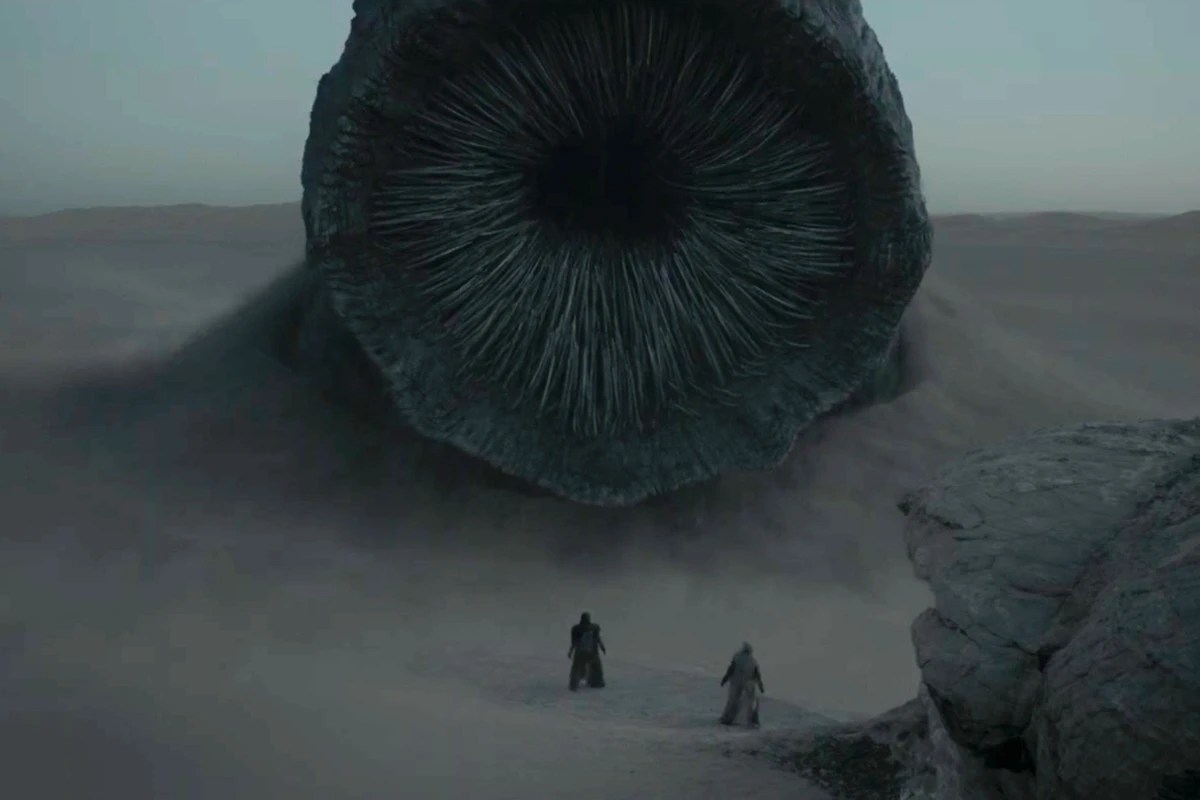
Old pals show up: The Geek Squad Greek chorus of Luther (Ving Rhames) and Benji (Simon Pegg) are back, as is adversary turned ally Ilsa Faust (Rebecca Ferguson, who’s got another part two on the horizon with the conclusion of “Dune” this summer) with Henry Czerny’s eely IMF director Eugene Kittridge ever making us ponder if we can trust him. Back too, but in less of a commanding role, is Vanessa Kirby, the enigmatic arms dealer called the White Widow. But the true face of nefarious deeds this time isn’t so much the never-really-seen Entity or Klementieff’s Joker-faced assassin, but Esai Morales’ diabolically debonair Gabriel, an old foe of Hunt’s who takes great pride in his demonic gamesmanship. Adding to Hunt’s ever-expanding sea of troubles and checklist of those who may or may not need saving is a stately yet shifty pickpocket named Grace (Hayley Atwell), who lifts a key half from an unwary bearer nearly every other scene. She’d make a good running mate with Phoebe Waller-Bridge’s come-what-may opportunist in “Indiana Jones and the Dial of Destiny.” Just where “Dead Reckoning Part Two” goes doesn’t really matter; it’s all about Tommy under the gun, and it is good fun to see Tom run.

No Hard Feelings

22 Jun

‘A boy will become a man and a woman will get a Buick Regal

By Tom Meek

We’ve seen it all from Jennifer Lawrence: gritty, hard-bitten drama (“Winter’s Bone”), culturally critical satire (“Don’t Look Up,” “American Hustle”), spy thriller (“Red Sparrow”), a YA franchise (“The Hunger Games”), even a foray into the superhero ’verse (the “X-Men” series reboot), but a rom-com or straight-up comedy? “Silver Linings Playbook” (2012) kinda fit that bill (though it’s a dark one, as it deals with loss and mental illness) and Lawrence would win an Oscar for her part as a grieving widow looking for release and a way to move on. But in “No Hard Feelings,”  Gene Stupnitsky’s not-quite-a-rom-com, Lawrence gets to open up and be free in a way she’s never done – think Cameron Diaz in “Bad Teacher” (2011) or Charlize Theron in “Long Shot” (2019). The thing that will be made the most of is Lawrence’s birthday suit scene. It is an eye popper, but not in the (racy, smutty) way you may think – it’s a punctuation mark in triplicate in a film that otherwise charms on its comedic merits and moments of humanity.

Lawrence’s Maddie lives in swank Montauk, Long Island, but is not one of the living-large summer weekenders looking to escape the dog days of Manhattan; she’s a townie living in the modest one-story bungalow in which she grew up. Mom died not so long ago, and the house is about to be taken away for back taxes. Maddie gets by gig-economy style bartending at the marina to those wealthy sorts and by giving Uber rides – that is, until her car is repossessed. No car, no house, no cash, what’s a youngish single woman to do?

Plan B comes in the form of a Craigslist ad posted by a wealthy couple (a dutiful Laura Benanti and Matthew Broderick, rocking a Rasputin ’do) who want a 20-ish woman to help instill confidence in their Princeton-bound son, Percy (Andrew Barth Feldman, on leave from Harvard for the filming). What that translates into: Make our son a man (take his virginity) and we’ll give you a Buick and enough cash to handle the back taxes. Percy is unaware of the plot, and the task for Maddie – who is in her early 30s and barely passes the mom-and-dad interview – becomes more complicated than expected.

Maddie’s a hot mess, and endearingly self-deprecating. She’s also vulnerable, up against it and has can-do resolve. There’s a whole backstory about her dad and plenty of attempts to get Percy to Buick land. Stupnitsky, a veteran of “The Office” TV series pulling double duty as writer, does a nice job with the comedic timing and plots changeups. Lawrence, believe it or not, is adroit as a physical comedian, be it her Maddie trying to rob her car back from a tow truck, or that buck-naked throwdown on a beach that involves crotch shots (both punches and sightings of) and sleeper holds. Maddie and Feldman’s geeky, sensitive Percy also score some truly tender moments. It’s evocative of “Risky Business” (1982) and “Booksmart” (2019) without being derivative. it’s also refreshing to see Lawrence take a chance, and Stupnitsky does a nice job of playing with the have-and-have-not dynamic the way “One Crazy Summer” (1986) and “Caddyshack” (1980) did, but more affectingly and subtly.

The Flash

16 Jun

By Tom Meek

This speedster, even with guest stars, shows the multiverse idea is running out of time

Go ahead, call me a curmudgeon, hater or whatever, but I’m done with the whole consuming concept of the “multiverse.” Yeah, it rocked the Oscars with “Everything Everywhere All at Once,” but the Daniels are a cheeky, creative tandem whose projects are driven by wit and verve – and that had Michelle Yeoh. Otherwise (with a hall pass given for the animated “Spider-Verse”), it’s a lazy way to just keep the same-old-same-old going around, a toilet bowl eddy of narrative ineptitude that no studio exec will flush as long as it can rack up boffo box office mojo. With “The Flash,” I have reached the end of my tether. Is anyone out there holding onto super fond memories of this year’s “Ant-Man and the Wasp: Quantumania” or “Spider-Man: No Way Home” (2021)?

That said,“The Flash” does pass the time. But then it begins to rewind it – too often – and in the end, feels pointless. In the rebooted DCU (Detective Comic Universe), many of the Justice League entries besides Batman and Superman have fallen flat – sorry “Aquaman” and “Wonder Woman 1984” – and “The Flash” shows even less flair. The plot has Barry Allen (Ezra Miller), aka the Flash, using his super speed to go back in time to save his mother (Maribel Verdú) from a deadly supermarket run-in that left his dad (Ron Livingston) on the hook for murder. Natch, there’s a fly in the time continuum ointment, and Barry drops out and in with his 18-year-old self and loses his superpowers. Also in the mix of this alter ’verse is old foe General Zod (Michael Shannon), trying to terraform the Earth to his desired specs (which would mean the annihilation of the human race), and now there is no Superman, but Supergirl (Boston-born Sasha Calle, in a generic part). And while we do get Ben Affleck’s Batman in a cool opening sequence, the one here giving Barry an assist is a gray-haired kook in a Wayne Manor that’s a weedy, seedy mess, (though the Batcave still rocks) played by none other than Michael Keaton, who pretty much steals the show and saves the film as well as the universe and Barry’s slow-moving ass.

Miller, so good as the troubled, titular Kevin in “We Need to Talk About Kevin” (2011) and as Credence Barebone in the “Fantastic Beasts” flicks – and a controversial figure given some recent offscreen incidents – is adequate as Barry Allen. The problem is that the character just isn’t that deep. That mom is lost and there’s that pining to bring her back and the idea that a superhero without powers still has to be superhuman feel borrowed from another movie and sprinkled in. The time rewinds, so much fun in “Groundhog Day” (1993) and “Edge of Tomorrow” (2014), just don’t add anything, and at nearly two and a half hours, a film with a speedy protagonist should feel faster. Directed by Andy Muschietti (“It”) and penned by Christina Hodson (the dully flat “Birds of Prey”) the film does have some neat action sequences – the breakout of Supergirl from a Russian prison – and the Batcycle and Batplane are pretty dope. Besides that and Keaton’s screen time, this “Flash” is pretty much treadmill superhero 101. 

Beau is Afraid

22 Apr

‘Beau is Afraid’: Mission to mommy

The latest from Ari Aster doesn’t quite swerve off into a macabre occult or seasonal cult rite the way “Heredity” (2018) and “Midsommar” (2019) did to the delight of art house horror fans, though “Beau is Afraid” has its own special flourishes of outré that disturb as much as they provoke. The film moves in a very A-then-B fashion with flashbacks to inform us on the trauma unfolding in the present. We begin in the dark with a series of dull thuds and agonized groans. There’s occasional bolts of white light and peers through murky pink filament. What’s going on, you might ask, trench warfare at night? Soon the answer is delivered as Beau is birthed and slapped awake into his new world. We leap ahead to find the mature, balding 40-something Beau (Joaquin Phoenix) in therapy, where we learn he has a lot of mommy issues. Given his father died at the very moment of his conception, this makes sense. His mother calls several times during the session; he doesn’t answer, but tells his therapist (Stephen McKinley Henderson) he’s supposed to go visit her the next day – a task Beau doesn’t fully want to do.

We wander through chaotic streets, or is this unsettled world a projection of Beau’s inner turmoil? A berserk tattoo-faced man chases him with maniacal intent on his way home to a high-rise roost, where he hears news of a naked man stabbing people randomly. That evening, as Beau sleeps, a neighbor keeps sliding notes under his door asking him to turn down the music, yet his apartment is mute, and when Beau takes a bath, another neighbor literally drops in, in nearly the same demonic fashion a possessed soul does in the “Evil Dead” reboot out this week. Getting to mom proves elusive too. Lost keys, lost luggage – he never makes it to the airport, and when he calls his mother a UPS driver (Bill Hader, though you’d never know because you never really see him) answers and blathers on about police on the way and something about a chandelier and a missing head.

Beau remains absurdly calm and tries a plan B. The end result is that he gets stabbed, hit by a car and wakes up two days later in the bucolic home of Roger (Nathan Lane) and Grace (Amy Ryan, so good in “Gone Baby Gone”), kind medical professionals who nurse him back to health. Lurking around is a menacing looking “former war hero” (Denis Ménochet) who I’m not sure ever speaks, and the couple’s surly, sassy daughter (Kylie Rogers), who offers to drive Beau to his mother’s house. It turns out to be something of a blunt-smoking, kangaroo-court shenanigan. 

With effusive control, Aster keeps working us – and Beau – in a downward spiral where the sense of what’s real and what’s not is as murky as that birth canal opener. Lost in the woods, Beau stumbles upon a theater group enacting the play of his life, and there’s a neat segue into animation, further gonzo, dark turns and Parker Posey, superb in a brief yet pivotal part. Mom’s in nearly every frame even when she’s not there, but about midway through we get her in the flesh, in flashbacks (played by Zoe Lister-Jones) and breathing fire in the now (Patti LuPone, bringing it). The line-blurring journey is reminiscent of the award-winning Daniels’ film “Swiss Army Man” (2016), with Aster’s frenetic edginess and dread imbued in nearly every frame. It’s a near three-hour odyssey that rivets right up to the Orwellian finale. Not all of it works, and Beau never seems genuinely afraid at times others might hit the panic button, but Aster’s film, like his others, has that lingering provocative tease that’s both a sign and a gift.

How to Blow Up a Pipeline

14 Apr

Taking charge, explosively, of fight against climate change

Daniel Goldhaber’s eco-terrorist (his word) thriller rides a sharp edge while executing some sneakily cool plot twists. The frenetic techno score by Gavin Brivik rivets as it breathes dread into nearly every frame – it’s essential. That said, there’s also something naggingly twee and subtly insincere to “How to Blow Up a Pipeline” that robs it of what could have been an earnestly earned victory lap.

You can’t argue with the film’s high-alert climate change messaging – I mean you can, but I won’t. Adapted by Goldhaber, Ariela Barer (who also stars and is one of the producers) and Jordan Sjol from Andreas Malm’s 2021 nonfiction work, the movie settles in with a group of young climate change activists who are looking to up their game from slashing the tires of diesel-chugging SUVs to the event of the title. The assemblage is one of diverse backgrounds, but all are focused on the same thing: Stopping climate change now, by any means. Xochitl (former “Modern Family” star Barer) lost her mom during a heat wave; the bomb-making expert Michael (Forrest Goodluck, who played Leonardo DiCaprio’s son in “The Revenant”) is angered by the presence of oil crews on his native lands; another, a square-jawed Texan (Jake Weary), is pissed off a pipeline is being put through his backyard; and then there’s the Bonnie and Clyde hipster couple (Kristine Froseth and Lukas Gage) who seem to do this kind of thing just for the fun of it.

Goldhaber, who came to notoriety for his taut Internet chiller “Cam” (2018) about a camgirl who encounters her doppelgänger on the Web, shows a deft eye for plot orchestration and messaging, but when it comes to depth of character, not so much. How the principals come together – by happenstance, Internet forums, current relations and even a documentary – is well baked, but once we meet them and learn their “Dirty Dozen” expertise, we never really get much more; most come off as posturing idealists with an ax to grind and no grindstone.

There are, at varying key junctures, punctuated flashbacks in which each activist’s backstory is meted out. Some add great relevance to the current action, others feel like ill-advised meanders, a detraction from the main mission, like the driver of a getaway car who decides to go into a bar for a burger and a beer moments before the heist goes down. Of the characters, Barer’s Xochitl feels the most developed (wearing the writer’s hat likely having something to do with that) along with Theo (Sasha Lane), who grew up with Xochitl and, like several others in the group, withholds critical information from other players – though her’s is more organic and real, less a plot-twist gotcha. Thankfully on tap is Theo’s girlfriend Alisha (Jayme Lawson), the group’s Greek chorus (“people are going to get hurt,” “this won’t work” and so on).

The group’s decision to go over the line into violence is rationalized as justified because global corporations bow only to their boards and the bottom dollar, and the only way to stem climate change now is to trigger a domino effect of eco-terrorist acts. I’d argue that getting legislation passed that would put a stiff tax on non-green corporations and those lazily reliant on fossil fuel would be the way to go, but, hey, if someone asked me that back in my bar-brawling days (probably at the apex of fossil fuel consumption), I’ll likely be up for lighting it up. Then again, I don’t think I was that interesting or deep back then either. 

AIR

7 Apr

‘Air’: Some slam dunk cinema from Ben Affleck about a Nike deal that was far from a shoo-in

When it’s hard to imagine humble beginnings for corporate giants, origin stories reframe, refocus and provide new context. Microsoft and Apple started out of garages, right? Nike, the now-mega sports apparel conglomerate, took flight when founder and longtime chief executive Phil Knight started selling shoes out of the trunk of his car in the ’60s. The company became a leader in the track and running market in the ’70s, but as far as basketball went, it was a JV wannabe behind Converse and Adidas. The push to garner a greater market share is what “Air” is all about, and we all know who his royal Airiness is and how the story goes – but that union wasn’t as easy or even as probable as many might imagine, and that is where this film, directed by Ben Affleck and sharply written by Alex Convery, finds its sweet spot.

The lens falls on portly basketball scout Sonny Vaccaro (Matt Damon), who’s given a quarter-million dollars by Knight (played with shaggy-dog gusto by Affleck) to sign an NBA draftee and help the company move up in market share. The problem is that Converse and Adidas have millions at their disposal; Vaccaro and crew (a chatty, avuncular Chris Tucker and Jason Bateman, stealing every scene as a smug marketing maven) have to look past the cream of the crop – Charles Barkley, No. 1 pick Hakeem Olajuwon, Sam Bowie and Michael Jordon – to the next tier of John Stockton, Jeff Turner and Melvin Turpin (who, you might ask?) for a realistic signee that may, against steep odds, become a marquee player in the NBA and give Nike a brand blastoff. Instead of spreading the money around on a few late, first-round long shots, Vaccaro fixates on Jordan, proclaiming him a once-in-a-generation superstar. History shows he wasn’t wrong, but few at the time, including Knight and the Nike board, were willing to take a chance. Vaccaro persists, though, coloring outside the lines by bypassing Jordan’s agent (played with hilarious, foulmouthed vitriol by Chris Messina in a breakout role) and driving to North Carolina to connect with Jordan’s parents, James (a gentlemanly Julius Tennon) and Deloris (Oscar winner Viola Davis, bringing her A-game to the pivotal role).

Like the journalistic investigation that sussed out the evils of Harvey Weinstein in “She Said” (2022) – granted, the contexts are worlds apart – you never really see or hear the object of the film’s focus, though Jordan haunts nearly every frame. It’s good to see Damon and Affleck together again. They played together most recently in Ridley Scott’s “The Last Duel” (2021) but most Boston-famously in “Good Will Hunting” (1997); this is the first time one Cambridge Rindge and Latin buddy gets to direct the other, and their casual familiarity deepens the scenes between old colleagues Vaccaro and Knight. Speaking of Rindge, there are some cheeky references to Mike Jarvis and that phenom from Jamaica, Patrick Ewing. Rounding out the ingeniously cast ensemble is Matthew Maher as Peter Moore (who passed away last year), the designer who came up with the iconic logo of Jordan hanging in the air, and Marlon Wayans as George Raveling, a college basketball coach and sounding board for Vaccaro.